


10 Great Movies Based on True Stories, From Lawrence of Arabia to Oppenheimer
Movie Reviews 2nd August 2018 Leo Wilson
The best movies based on true stories include Lawrence of Arabia (1962), Chariots of Fire (1981), The King’s Speech (2010), Pride (2014) and Oppenheimer (2023), alongside wartime classic The Dam Busters, Philomena, The Theory of Everything, Lion and The Greatest Showman. In the UK, several are free to stream right now: Lawrence of Arabia on BBC iPlayer, The King’s Speech on ITVX and The Theory of Everything on Channel 4, while Pride is on Prime Video and Chariots of Fire and The Greatest Showman are on Disney+.
Quick Facts
- What this is: 10 films based on real people and events, from 1955 to 2023
- Oldest pick: The Dam Busters (1955, dir. Michael Anderson)
- Newest pick: Oppenheimer (2023, dir. Christopher Nolan)
- Best Picture Oscar winners on the list: Lawrence of Arabia, Chariots of Fire, The King’s Speech and Oppenheimer
- British stories on the list: The Dam Busters, Chariots of Fire, The King’s Speech and Pride
- Last checked: UK streaming availability checked on 4 October 2026
In the UK
- Free to stream: Lawrence of Arabia (BBC iPlayer), The King’s Speech (ITVX, with ads), The Theory of Everything (Channel 4)
- Subscription: Pride (Prime Video), Chariots of Fire and The Greatest Showman (Disney+), The Dam Busters (StudioCanal Presents channel on Prime Video or Apple TV)
- Rent or buy: Philomena, Lion and Oppenheimer are available to rent or buy digitally from stores including Amazon, Apple TV, Sky Store and Rakuten TV
- Note: Streaming deals change often; the services above were listed by JustWatch UK on 4 October 2026
This is a list of 10 great films based on true stories, chosen for how well they tell a real story on screen and how well they have lasted. We have ordered them by release date, oldest first, and leaned towards British stories, because that is where a lot of the best true-story filmmaking has come from.
| # | Film | Year | Director | Real story | Where to watch in the UK |
|---|---|---|---|---|---|
| 1 | The Dam Busters | 1955 | Michael Anderson | 617 Squadron’s 1943 raid on the Ruhr dams | StudioCanal Presents channel; rent or buy |
| 2 | Lawrence of Arabia | 1962 | David Lean | T.E. Lawrence and the Arab Revolt | BBC iPlayer |
| 3 | Chariots of Fire | 1981 | Hugh Hudson | Harold Abrahams and Eric Liddell at the 1924 Olympics | Disney+ |
| 4 | The King’s Speech | 2010 | Tom Hooper | George VI and speech therapist Lionel Logue | ITVX |
| 5 | Philomena | 2013 | Stephen Frears | Philomena Lee’s search for her adopted son | Rent or buy |
| 6 | Pride | 2014 | Matthew Warchus | Lesbians and Gays Support the Miners, 1984 | Prime Video |
| 7 | The Theory of Everything | 2014 | James Marsh | Stephen and Jane Hawking | Channel 4 |
| 8 | Lion | 2016 | Garth Davis | Saroo Brierley finds his birth family | Rent or buy |
| 9 | The Greatest Showman | 2017 | Michael Gracey | P.T. Barnum’s circus (loosely) | Disney+ |
| 10 | Oppenheimer | 2023 | Christopher Nolan | J. Robert Oppenheimer and the atomic bomb | Rent or buy |
1. The Dam Busters (1955, UK, Associated British)
What makes it stand out: It is the defining British war film of the 1950s, built around one of the most daring raids of the Second World War.
Key data: Directed by Michael Anderson, with Richard Todd as Wing Commander Guy Gibson and Michael Redgrave as engineer Barnes Wallis; it dramatises Operation Chastise, the raid of 16 to 17 May 1943.
Why it matters: Its march, its bouncing-bomb test footage and its final bombing run have been borrowed by everything from war comics to Star Wars.
The film spends its first half on Wallis, a quietly stubborn engineer trying to convince the Air Ministry that a bomb can skip across water like a stone and hit a dam wall below the waterline. That section is the film’s secret weapon. You understand the physics, the risk and the bureaucracy before a single Lancaster takes off, so the raid itself carries real weight.
The second half follows 617 Squadron, formed specially for the job, as Gibson’s crews train for low-level night flying and then attack the Möhne, Eder and Sorpe dams in Germany’s Ruhr valley. The Möhne and Eder were breached. The cost was heavy, and the film doesn’t hide it: the closing scenes count the empty chairs, and it is more sombre than its reputation.
2. Lawrence of Arabia (1962, UK, Columbia)
What makes it stand out: David Lean’s desert epic is still the benchmark for what a historical film can look like on a big screen.
Key data: Starring Peter O’Toole as T.E. Lawrence with Alec Guinness, Anthony Quinn and Omar Sharif; it won seven Academy Awards, including Best Picture and Best Director.
Why it matters: It made O’Toole a star and set the template for the intelligent, morally complicated epic.
Lawrence was a British army officer who helped lead the Arab Revolt against the Ottoman Empire during the First World War. Lean’s film follows him from a bored map-room lieutenant in Cairo to a celebrity guerrilla leader, and then watches the celebrity curdle.
What keeps it from being a postcard is O’Toole. His Lawrence is vain, brave, theatrical and increasingly unsettled by what he is capable of, and the film never quite decides whether he is a hero. Historians have argued for decades about how fair it is to the real Lawrence and to the Arab leaders around him, and that argument is part of its afterlife. It is free on BBC iPlayer at the moment, which is the cheapest way to see one of the best-looking films ever made, though a cinema re-release is the ideal.
3. Chariots of Fire (1981, UK, Enigma Productions)
What makes it stand out: A modest British sports drama that went on to win the Best Picture Oscar.
Key data: Directed by Hugh Hudson, with Ben Cross as Harold Abrahams and Ian Charleson as Eric Liddell; four Oscars, including Best Picture, Best Original Screenplay and Best Original Score for Vangelis.
Why it matters: That synthesiser theme over runners on a beach is one of the most recognisable openings in British cinema.
The film follows two athletes heading to the 1924 Paris Olympics. Abrahams, a Jewish student at Cambridge, runs partly to beat the snobbery he meets at every turn. Liddell, a devout Scottish missionary, runs because he believes God made him fast, and he refuses to race in a heat held on a Sunday. Liddell switched to the 400 metres and won gold; Abrahams won the 100 metres.
Colin Welland’s script takes some liberties with dates and details, as most sports films do, but the core of it is true and the two men’s motivations are the real subject. It is a film about why people compete, and about faith and class in 1920s Britain, rather than a highlights reel. It is streaming on Disney+ in the UK.
4. The King’s Speech (2010, UK, See-Saw Films)
What makes it stand out: It turns a royal biography into an intimate two-hander about a man who is terrified of talking.
Key data: Directed by Tom Hooper, starring Colin Firth as George VI, Geoffrey Rush as Australian speech therapist Lionel Logue and Helena Bonham Carter; four Oscars, including Best Picture and Best Actor for Firth.
Why it matters: It proved a small, talky British drama could be a worldwide hit and an awards sweeper.
Prince Albert, Duke of York, has a stammer that makes public speaking an ordeal. When his brother Edward VIII abdicates in 1936, Albert becomes King George VI, and with Britain heading for war he has to speak to the nation on the radio. His wife finds Logue, an unorthodox therapist with no formal qualifications, who insists on first names and treats the King like any other patient.
The film’s pleasure is the friendship between the two men, and Firth’s performance never plays the stammer for laughs. The climactic broadcast, announcing the declaration of war in September 1939, is staged almost like a sports finale. The film compresses the real timeline, since Logue had been treating Albert since the 1920s, but the relationship is real. It’s currently free with ads on ITVX.
5. Philomena (2013, UK, Pathé/BBC Films)
What makes it stand out: It tells a devastating story about Ireland’s mother and baby homes with warmth and a surprising amount of comedy.
Key data: Directed by Stephen Frears, starring Judi Dench and Steve Coogan, adapted from Martin Sixsmith’s 2009 book The Lost Child of Philomena Lee; four Oscar nominations, including Best Picture.
Why it matters: It brought the real history of forced adoptions from Irish institutions to a mainstream audience.
As a teenager, Philomena Lee became pregnant and was sent to Sean Ross Abbey in Roscrea, where her son was adopted to an American family without her consent. Fifty years later she teams up with Sixsmith, a former BBC journalist and government adviser, to find out what happened to him.
Coogan co-wrote the script with Jeff Pope, and their BAFTA-winning screenplay gets a lot from the odd-couple pairing: Sixsmith is a cynical Oxbridge type, Philomena a cheerful reader of romance novels with a faith he can’t understand. Their friendship, not any romance, is the heart of it. Dench is superb, and the film’s anger at the institutions involved is real without ever turning into a lecture. It is available to rent or buy in the UK.
6. Pride (2014, UK, Pathé/BBC Films)
What makes it stand out: It is the most joyful film on this list, and it is about the 1984 miners’ strike.
Key data: Directed by Matthew Warchus from a script by Stephen Beresford, starring Bill Nighy, Imelda Staunton, Dominic West, Paddy Considine, George MacKay and Ben Schnetzer; it won the Queer Palm at Cannes in 2014.
Why it matters: It rescued a largely forgotten piece of British history and introduced it to a new generation.
In 1984 a group of lesbian and gay activists in London, led by Mark Ashton (Schnetzer), start collecting money for striking miners’ families. Most mining communities won’t take their cash, so they drive it in person to a village in the Dulais Valley in south Wales. What follows is a clash of cultures that slowly becomes a real alliance, which the film suggests had a lasting impact on the Labour movement’s support for gay rights.
Warchus keeps the tone light enough that the film is genuinely funny, with Staunton and Nighy stealing every scene, but it doesn’t dodge the hard parts, including the shadow of AIDS. It was nominated for the Golden Globe for Best Musical or Comedy and for three BAFTAs. It’s currently on Prime Video in the UK, and it is a very easy recommendation for anyone who hasn’t seen it.
7. The Theory of Everything (2014, UK, Working Title)
What makes it stand out: A physicist’s biopic told as a love story, from the point of view of the woman who lived it with him.
Key data: Directed by James Marsh, starring Eddie Redmayne as Stephen Hawking and Felicity Jones as Jane Hawking, based on Jane Hawking’s memoir Travelling to Infinity; Redmayne won the Best Actor Oscar.
Why it matters: It gave Jane Hawking’s side of a very public life the same weight as the science.
The film starts in 1960s Cambridge, where Stephen is a bright, untidy PhD student and Jane studies languages. Soon after they meet he is diagnosed with motor neurone disease and given about two years to live. They marry anyway, and the film follows their life together over the next 25 years as his body fails and his reputation grows.
Redmayne’s physical performance is remarkable, but Jones carries just as much of the film, and the later sections about the strain on the marriage are more honest than most biopics manage. If you want the black holes and the maths, this isn’t that film; it’s about a family. It won the BAFTA for Outstanding British Film, and it’s currently free to stream on Channel 4.
8. Lion (2016, Australia/UK, See-Saw Films)
What makes it stand out: A true story so unlikely it would be dismissed as fiction, solved in the end with Google Earth.
Key data: Directed by Garth Davis, starring Dev Patel, Sunny Pawar, Rooney Mara and Nicole Kidman, based on Saroo Brierley’s memoir A Long Way Home; six Oscar nominations, and a BAFTA for Patel.
Why it matters: It gave Dev Patel his best grown-up role and became a word-of-mouth hit.

Aged five, Saroo falls asleep on a train in India and wakes up hundreds of miles away in Calcutta (Kolkata), unable to tell anyone the name of his home town. He survives on the streets, ends up in an orphanage and is adopted by a couple in Tasmania. As an adult in Australia, he begins searching satellite images for the landmarks he remembers.
The first half, carried by the astonishing young Sunny Pawar, is the stronger part of the film, almost wordless and quietly frightening. Patel’s half is more conventional, but the ending lands hard, and the real footage over the credits makes it harder. It is available to rent or buy in the UK.
9. The Greatest Showman (2017, US, 20th Century Fox)
What makes it stand out: The only musical here, and by far the loosest with the facts.
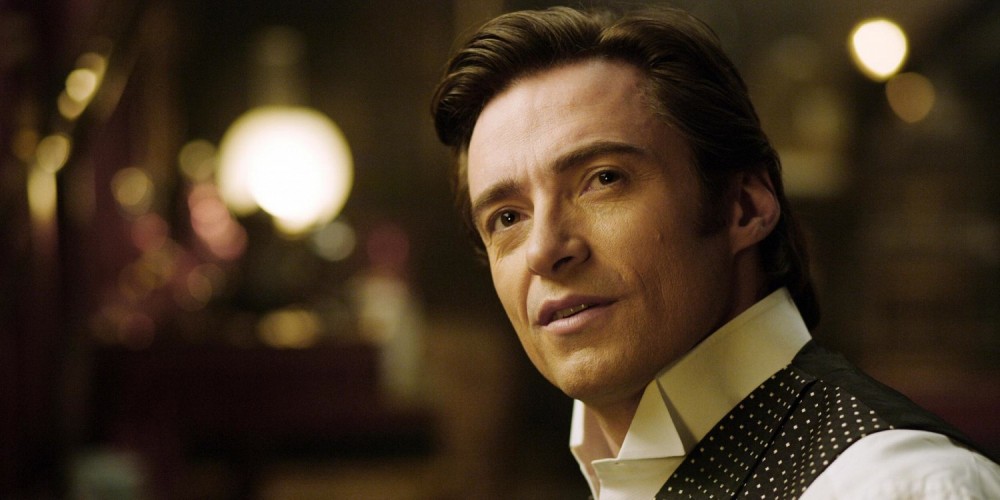
Key data: Directed by Michael Gracey, starring Hugh Jackman as P.T. Barnum with Zac Efron, Michelle Williams and Zendaya; songs by Benj Pasek and Justin Paul, whose This Is Me won the Golden Globe for Best Original Song.
Why it matters: Its soundtrack was the UK’s best-selling album of 2018, and the film became a singalong staple.
The film takes the outline of Phineas Taylor Barnum’s life, the poor beginnings, the museum of curiosities, the circus, the tour with Swedish singer Jenny Lind, and turns it into a feel-good story about outsiders finding a family. The real Barnum was a far more complicated figure, and his treatment of the people he exhibited was often exploitative. Several characters, including Efron’s partner and Zendaya’s trapeze artist, were invented for the film.
So treat it as a musical first and a true story a distant second. As a musical, though, it is hard to resist: the songs are huge, Jackman is fully committed, and it grew from a modest opening into a long-running hit. It’s streaming on Disney+ in the UK.
10. Oppenheimer (2023, US/UK, Universal)
What makes it stand out: A three-hour biopic about a physicist that became one of the biggest films of its year.
Key data: Written and directed by Christopher Nolan, starring Cillian Murphy, Emily Blunt, Matt Damon and Robert Downey Jr., based on Kai Bird and Martin J. Sherwin’s book American Prometheus; seven Oscars, including Best Picture, Best Director and Best Actor; about $975 million worldwide according to The Numbers.
Why it matters: It showed that a serious, dialogue-heavy true story can still fill IMAX screens.
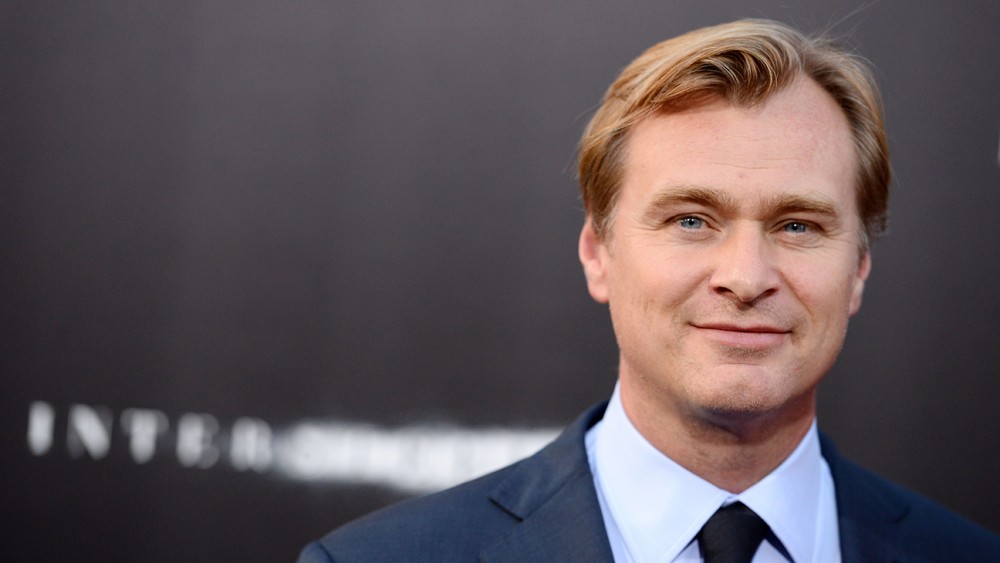
J. Robert Oppenheimer led the Los Alamos laboratory that built the first atomic bombs during the Second World War. Nolan’s film cuts between three timelines: his rise as a physicist, the race to the Trinity test in July 1945, and the 1954 security hearing that stripped him of his clearance, alongside the later Senate hearing for Lewis Strauss, played by Downey Jr.
The Trinity sequence is the showpiece, but the film’s real interest is what came after: a man who changed the world and then had to live with it. Murphy, in his first leading role for Nolan after years of supporting parts, is extraordinary. In the UK it is available to rent or buy digitally.
Honourable Mentions and the Bottom Line
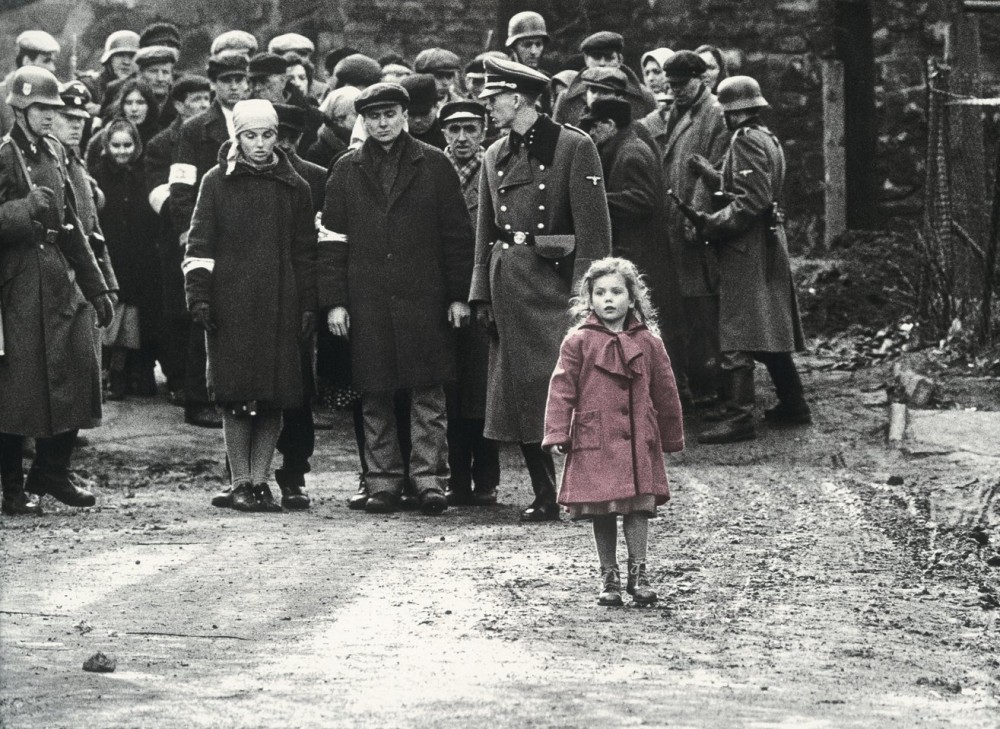
Ten is a tight limit for a genre this rich. Steven Spielberg’s Schindler’s List (1993), which won seven Oscars and tells how Oskar Schindler saved more than a thousand Jewish workers during the Holocaust, would be on most lists like this, and it’s currently on Prime Video in the UK. Hidden Figures (2016), about the Black women mathematicians whose work at NASA helped put John Glenn into orbit, is on Disney+.
If you only have time for one evening, start with Pride for something uplifting, The King’s Speech for something comforting, or Oppenheimer if you want to be knocked flat. And if a film on this list sends you looking up what really happened, it has done its job.
Last updated: 4 October 2026.
Sources: JustWatch UK (streaming availability, checked 4 October 2026); Academy Awards database; The Numbers: Oppenheimer box office; BFI: gay activism and British film; BAFTA Film Awards.
Frequently Asked Questions
What is the best movie based on a true story?
There is no single answer, but Lawrence of Arabia (1962) is the one most often named. It won seven Oscars, including Best Picture, and is still ranked among the greatest films ever made.
Is The Dam Busters a true story?
Yes. The 1955 film dramatises Operation Chastise, the RAF 617 Squadron raid on the Ruhr dams on 16 to 17 May 1943, using Barnes Wallis’s bouncing bomb. The Mohne and Eder dams were breached.
Where can I watch Lawrence of Arabia in the UK?
Lawrence of Arabia was free to stream on BBC iPlayer when we checked on 4 October 2026. It is also available to rent or buy from Amazon, Apple TV and Sky Store.
How accurate is The King’s Speech?
The core story is true: George VI had a stammer and was treated by Australian speech therapist Lionel Logue. The film compresses the timeline, since Logue had been working with him since the 1920s, long before the 1939 war broadcast.
Is Pride based on a real group?
Yes. Pride is based on Lesbians and Gays Support the Miners, a London group led by Mark Ashton that raised money for mining families in the Dulais Valley in south Wales during the 1984 to 1985 miners’ strike.
How accurate is The Greatest Showman?
Not very. It follows the outline of P.T. Barnum’s career, but several characters were invented and it leaves out the darker, exploitative side of his shows. It is best treated as a musical inspired by Barnum.
What true story is Lion based on?
Lion is based on Saroo Brierley’s memoir A Long Way Home. Separated from his family in India at the age of five, he was adopted by an Australian couple and later found his home town using Google Earth.
What book is Oppenheimer based on?
Christopher Nolan’s Oppenheimer is based on American Prometheus, the Pulitzer Prize-winning biography of J. Robert Oppenheimer by Kai Bird and Martin J. Sherwin.
How many Oscars did Oppenheimer win?
Oppenheimer won seven Academy Awards in March 2024, including Best Picture, Best Director for Christopher Nolan, Best Actor for Cillian Murphy and Best Supporting Actor for Robert Downey Jr.
Did Eric Liddell really refuse to run on a Sunday?
Yes. Liddell, a devout Christian, would not run in the 100 metres heats at the 1924 Paris Olympics because they were held on a Sunday. He ran the 400 metres instead and won the gold medal.
📸 Follow us on Instagram for daily film, TV & gaming news: @filmoriauk

Leo Wilson
The byline used for guest contributions to Filmoria. Individual pieces credit their own writer wherever one has been supplied.