
10 Things to Know About Hollywood’s New AI Deal-Making Boom
AI & Future of Film 21st September 2026 Kevin Bennett
By the Filmoria News Desk
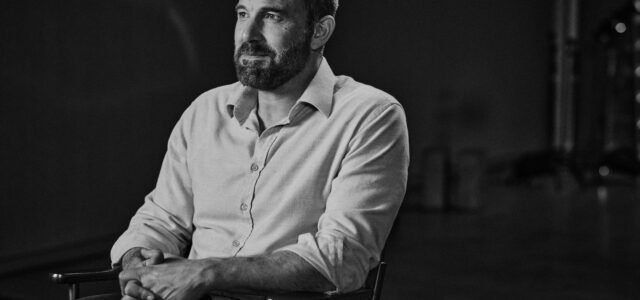
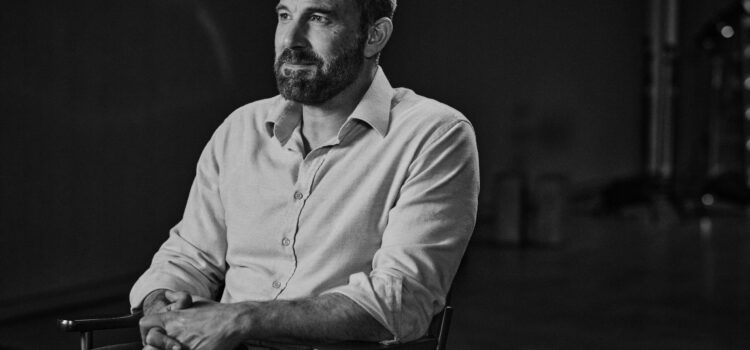
Ben Affleck’s AI filmmaking startup InterPositive was bought by Netflix for $587 million, one of several deals reshaping how studios use AI. Image: official press image via About Netflix.
Quick Facts
- The trigger: Axios reported on 19 September 2026 that major studios are striking a fresh wave of generative-AI partnerships as adoption spreads across the industry
- Biggest cheque: Netflix paid $587 million in cash for Ben Affleck’s AI post-production startup InterPositive
- Biggest reversal: Disney walked away from a reported $1 billion OpenAI investment after OpenAI shut down its Sora video app
- Newest equity move: Lionsgate has taken a stake in Runway and plans AI-generated short-form series built from its own franchises
- Box-office proof point: Wonder Project and Angel Studios’ AI-assisted Young Washington finished its run with $48.6 million worldwide
- What the union wants: SAG-AFTRA’s ratified 2026 contract adds consent-and-compensation rules for digital replicas, after floating a “Tilly tax” on AI performers during bargaining
This is a ranked list of the ten biggest AI deals, tools and flashpoints currently reshaping how Hollywood studios make film and television, drawn from a wave of new agreements, investments and one high-profile reversal reported through September 2026.
Items are ranked by financial size and industry weight — how much money changed hands, how many productions a deal actually touches, and how directly it feeds the argument between studios racing to adopt generative AI and the guilds trying to put guardrails on it.
| Company | AI Partner | Type of Deal | Date | Key Figure |
|---|---|---|---|---|
| Netflix | InterPositive (Ben Affleck) | Acquisition | July 2026 | $587 million |
| Netflix | In-house generative tools | Production use | Ongoing, 2026 | ~300 titles |
| Lionsgate | Runway | Equity stake + custom model | 2024, expanded 2026 | Not disclosed |
| Wonder Project | Luma (AWS-backed) | Hybrid studio launch (“Innovative Dreams”) | April 2026 | Not disclosed |
| Wonder Project / Angel Studios | — | Feature film (Young Washington) | July 2026 release | $48.6 million gross |
| Amazon MGM Studios | AWS | GenAI Creators’ Fund | May 2026 | 3 series greenlit |
| A24 | Investment | June 2026 | $75 million | |
| Fox Entertainment | HOLYWATER | Equity stake | October 2025 | 200+ titles planned |
| Disney | OpenAI (Sora) | Collapsed investment | 2026 | $1 billion (scrapped) |
| SAG-AFTRA | AMPTP studios | Contract / proposed AI levy | Ratified June 2026 | Not disclosed |
1. Netflix Buys Ben Affleck’s InterPositive for $587 Million (July 2026, USA)
What makes it stand out: This is the single largest AI-specific acquisition any major studio has made to date, and it came from an unlikely source — a production company Affleck quietly co-founded back in 2022. Key data: Netflix paid $587 million in cash for InterPositive, a company built around generative-AI tools for post-production work like colour grading, plate cleanup and visual-effects assembly. Why it matters: It signals that Netflix sees AI less as a content-generation gimmick and more as an infrastructure play — something to fold into the plumbing of how every show gets finished, not just a novelty used on one or two projects.
Affleck built InterPositive quietly, reportedly while still acting and directing, on the theory that the most useful AI in filmmaking wouldn’t replace actors or writers at all but would instead chew through the unglamorous, expensive grind of post-production. Netflix’s own materials describe the deal as folding that technology directly into its production pipeline rather than spinning it out as a separate consumer product. Co-CEO Ted Sarandos has been publicly consistent on this point for over a year, arguing that AI’s “bigger opportunity” in filmmaking is making movies incrementally better rather than just cheaper — shaving time off VFX turnarounds so more of the budget and schedule can go toward the parts of production that still require a human eye. Netflix has said generative-AI workflows, largely tools like the kind InterPositive builds, have now touched something in the region of 300 of its titles, concentrated overwhelmingly in post rather than in anything audiences would describe as “AI-generated” performance or story. The price tag alone makes this the deal every other studio is measuring itself against this year.
2. Netflix’s The Eternaut Becomes the Reference Case for AI VFX (2026, Argentina/Global)
What makes it stand out: Instead of burying its AI use, Netflix put a number on it in public, which almost nobody else in the AI-and-VFX conversation has been willing to do. Key data: Sarandos said a VFX sequence in the Argentine sci-fi series was completed roughly ten times faster using generative tools than a traditional VFX pipeline would have allowed. Why it matters: A concrete, sourced multiple — not a vague “AI helped us” line — gives both AI-friendly executives and AI-skeptical crews something specific to argue about, and it’s now the case study everyone in the VFX world cites, for or against.
The Eternaut, an adaptation of the cult Argentine graphic novel, wasn’t originally sold to audiences as an AI showcase. It became one after Netflix confirmed, following viewer speculation about one particular sequence, that generative tools had been used to help build it. The reaction split roughly along expected lines: some VFX artists pointed out that a ten-times speedup on one sequence says nothing about quality, continuity, or the thousands of shots where AI tools still fall apart under scrutiny; others noted that a streaming budget freed up by faster VFX turnaround is a budget that can go toward literally anything else, including more shooting days for actors. What makes the case genuinely useful, rather than just a talking point, is that it’s specific enough to be checked — unlike most “AI made this more efficient” claims that never survive contact with an actual finished frame.
3. Lionsgate Deepens Its Runway Bet With an Equity Stake (2024–2026, USA)
What makes it stand out: This isn’t a one-off pilot; it’s a multi-year relationship that’s now moved from licensing a tool to actually owning a piece of the company that makes it. Key data: Lionsgate first built a custom generative-AI model with Runway in September 2024 for pre-production, storyboarding and visual effects; in 2026 it took an equity stake in Runway outright and announced plans to mine its own franchise catalogue for AI-generated short-form series. Why it matters: A mid-sized studio betting its own capital on an AI vendor — rather than just licensing software — is a much stronger signal of confidence than a press-release partnership, and it ties Lionsgate’s fortunes directly to Runway’s technology actually working at scale.
Lionsgate has never been shy about the Runway relationship the way some studios have been about their own AI use. Since 2024, the custom model trained in part on Lionsgate’s own footage has been used across storyboarding, pre-visualization, effects work and even some marketing material, and executives have talked about it in trade press rather than trying to keep it quiet. The 2026 move to take an actual stake in Runway, alongside plans to build short-form series out of existing franchise IP using generative tools, pushes the relationship further than almost any other studio-vendor tie-up in town: Lionsgate isn’t just a customer anymore, it has a financial stake in Runway’s success. That also means Lionsgate now has real skin in the game if Runway’s tools draw the kind of copyright or labour scrutiny other generative-video companies have faced.

Runway, the generative-video company Lionsgate has both licensed and now taken an equity stake in. Image: Runway logo via Wikimedia Commons.
4. Wonder Project and Luma Launch “Innovative Dreams” (April 2026, USA)
What makes it stand out: Most AI-in-film deals bolt generative tools onto an existing studio; this one built an entirely new production company around the idea from scratch. Key data: Wonder Project and AI video company Luma launched Innovative Dreams in April 2026 as a dedicated home for what they call “hybrid filmmaking,” with backing from Amazon Web Services. Why it matters: It’s a bet that hybrid production — real actors and real sets, with generative tools filling in scope a modest budget couldn’t otherwise afford — is a durable business model rather than a one-off experiment, and its first real test came just a few months later.
Innovative Dreams was explicitly framed by its founders as neither a traditional studio nor an AI shop trying to cut humans out of the process, but something in between: live performances augmented, rather than replaced, by generative visual-effects work. Director and producer Jon Erwin, who fronted the venture’s highest-profile early project, put it bluntly in interviews: “Actors drive all the performances, and we use these tools to amplify the sets and the scope.” That framing matters because it’s precisely the distinction guilds have spent the past two years trying to enforce through contract language — AI as a tool operated by and in service of human performers and crews, not a replacement for them. Whether Innovative Dreams can keep that promise at scale, across projects with less directly involved oversight than Erwin gave his own film, is the open question the rest of the industry is watching for.
5. Young Washington Becomes the Box-Office Proof of Concept (July 2026, USA)
What makes it stand out: Plenty of studios have talked about AI-assisted filmmaking working commercially; this is one of the first mid-budget films to actually prove it in cinemas. Key data: The Wonder Project/Angel Studios biographical drama used AI augmentation on roughly 100 shots, opened to more than $19 million, and finished its theatrical run with $48.6 million worldwide before moving to streaming. Why it matters: A real box-office number, not a press-release estimate, gives AI-friendly executives their strongest talking point yet: audiences bought tickets without apparently noticing or caring that AI tools had touched the film, and a sequel is already in the works.
Reporting at the time pegged roughly 100 individual shots — a small fraction of the film’s total — as having been augmented using Luma’s generative tools, mostly for scope-expanding work like crowd and environment extension rather than replacing performances outright. Director Jon Erwin was unusually candid about the AI use rather than downplaying it, giving interviews specifically to walk through where and how the tools were applied. The film’s commercial performance, a solid result for its budget level, has become the go-to citation whenever a studio executive wants to argue that hybrid AI filmmaking doesn’t scare off ticket buyers. A follow-up, reportedly centred on 1776, is already in development, which will be the real test of whether this was a one-film success story or the start of a repeatable model.

“Young Washington,” the Wonder Project/Angel Studios drama that used AI on roughly 100 shots and grossed $48.6 million worldwide. Image: official poster via TMDB.
6. Amazon MGM Studios Launches the GenAI Creators’ Fund (May 2026, USA)
What makes it stand out: Amazon didn’t just fund AI research quietly in the background — it unveiled the fund at “AI on the Lot,” a conference specifically built around generative AI in film and entertainment, and immediately backed it with greenlit shows. Key data: Amazon MGM Studios and AWS launched the GenAI Creators’ Fund and simultaneously greenlit three animated projects for Prime Video, reported at the time as Cupcake & Friends, Love, Diana Music Hunters and Punky Duck. Why it matters: Tying a funding vehicle directly to specific, named, ordered shows — rather than a vague promise of future investment — is a much more concrete commitment than most “innovation fund” announcements in this space.
The fund is explicitly designed to hand professional-grade production tools to smaller, digital-first creators who wouldn’t otherwise have access to a studio-level animation pipeline, folding AWS’s cloud and AI infrastructure directly into the production process. All three initial orders are animated series rather than live-action, which sidesteps — for now — the thornier synthetic-performer questions surrounding actors’ likenesses and voices. That distinction is doing real work here: animation has always used heavily computer-assisted pipelines, so leaning into generative tools there draws far less guild pushback than doing the same thing with photorealistic human performers would. Amazon MGM Studios has said it expects the roster of GenAI-backed projects to grow, positioning the fund as an ongoing pipeline rather than a single splashy announcement.

Amazon MGM Studios, which launched the GenAI Creators’ Fund with AWS and greenlit three AI-assisted animated series for Prime Video. Image: Amazon MGM Studios logo via Wikimedia Commons.
7. Google Invests $75 Million in A24 for AI Filmmaking Tools (June 2026, USA)
What makes it stand out: A24 has built its entire brand on prestige, director-driven, distinctly human filmmaking — making it one of the least likely major studios to be seen taking a nine-figure AI investment. Key data: Google put $75 million into A24 specifically to help develop AI-powered filmmaking tools, according to trade reporting in June 2026. Why it matters: If even A24 — the studio behind auteur-driven titles that market themselves on craft and directorial vision — is taking AI tooling money, it undercuts the idea that generative AI adoption is confined to franchise factories and streaming volume plays.
Details of exactly what the tools will do remain relatively thin, which is itself notable: A24 has been far more guarded about specifics than Netflix or Lionsgate, neither confirming which of its productions might use the resulting technology nor ruling out that it could remain purely experimental. The investment reads less like A24 pivoting its identity and more like hedging — taking Google’s money and expertise to make sure it has a seat at the table if AI production tools become industry-standard, without publicly committing to using them on the kind of prestige titles that built the label’s reputation. For a studio whose whole appeal rests on films feeling handmade, how loudly (or quietly) A24 eventually talks about what this money produced will say a lot about where the broader industry line on AI ends up being drawn.

A24, the prestige studio that took $75 million from Google to help build AI filmmaking tools. Image: A24 logo via Wikimedia Commons.
8. Fox Entertainment Bets on Vertical AI Drama With HOLYWATER (October 2025, USA/Global)
What makes it stand out: While most studio-AI stories are about traditional film and TV, this one is squarely about the fast-growing, phone-first “microdrama” format that barely existed a few years ago. Key data: Fox Entertainment took an equity stake in HOLYWATER, an AI-driven vertical-video platform, with a stated commitment to more than 200 titles over two years. Why it matters: It shows a legacy broadcaster hedging toward an entirely different content format and audience — short, vertical, serialized drama built for phone screens — using AI production tools to hit a volume of output that traditional TV production simply couldn’t sustain economically.
Vertical microdramas, typically a few minutes per episode and often released in daily instalments, have already built a large audience overseas before generating much attention from major US broadcasters. HOLYWATER’s pitch to Fox was reportedly built around volume and speed: AI-assisted production lets the platform greenlight and finish far more of these short-form series than a conventional production house could manage on similar budgets. Fox’s stake gives it a foothold in a format that, if it keeps growing the way similar platforms have overseas, could end up drawing meaningfully younger audiences away from traditional television entirely. It’s a smaller and quieter deal than Netflix’s or Google’s, but it points at a category of AI-driven content — high-volume, low-per-episode-cost, vertical drama — that most of the guild-versus-studio debate hasn’t caught up to yet.

Disney walked away from a reported $1 billion OpenAI investment after the Sora video app was shut down. Image: The Walt Disney Company logo via Wikimedia Commons.
9. Disney Scraps Its $1 Billion OpenAI Bet as Sora Shuts Down (2026, USA)
What makes it stand out: Every other item on this list is a studio moving further into AI; this is the cautionary counter-example, a big bet that didn’t survive contact with the technology’s own instability. Key data: Disney had reportedly lined up around $1 billion in investment tied to OpenAI, with access for video generation to more than 200 Disney characters via the Sora app, before OpenAI shut Sora down and Disney walked away, reportedly telling associates “the future is human.” Why it matters: It’s the clearest evidence yet that not every AI bet in Hollywood is a safe one — the underlying technology and the companies building it can simply change course, leaving a studio’s investment and its character licensing exposure stranded.
The Disney-OpenAI arrangement had been framed, when it first emerged, as one of the more ambitious studio-AI tie-ups on the table: a legacy entertainment giant licensing its most valuable characters for AI-generated video at real scale, backed by a genuine equity stake rather than a pilot program. Its collapse when OpenAI pulled the plug on Sora left that framing looking considerably shakier. Disney has reportedly redirected its internal AI efforts across Industrial Light & Magic, Disney Research, Disney+ and Imagineering instead of the external consumer-app route it had been pursuing with OpenAI, effectively betting that building and controlling its own tools in-house is safer than tying its fortunes, and its characters’ likenesses, to a third-party product that can be shut down without much notice. For every studio now signing new external AI partnerships, Disney’s reversal is the reminder sitting in the back of the room: the vendor on the other side of the deal might not be around, or might not want the same thing, a year later.

SAG-AFTRA ratified new digital-replica consent and compensation rules in 2026 after floating a “Tilly tax” on AI performers during bargaining. Image: SAG-AFTRA logo via Wikimedia Commons.
10. SAG-AFTRA Ratifies AI Protections — and the “Tilly Tax” Idea Doesn’t Go Away (2026, USA)
What makes it stand out: While studios sign one AI deal after another, the performers’ union has spent the same year trying to build a financial disincentive against exactly that kind of adoption. Key data: SAG-AFTRA’s board approved, and members ratified, a new four-year AMPTP contract in 2026 with expanded consent-and-compensation requirements for digital replicas and a merged pension structure, after the union spent early 2026 publicly floating a so-called “Tilly tax” — a proposed studio-side levy on AI-generated performers, named after the AI “actress” Tilly Norwood. Why it matters: It’s the clearest piece of organized pushback against the entire deal-making wave described above, and it puts a price, at least conceptually, on the thing every other item on this list treats as pure upside.
The “Tilly tax” concept, as reported by Variety and Fortune earlier this year, was never simply a ban on synthetic performers; it was an attempt to make using them cost studios something comparable to what a human performer’s wages and benefits would have cost, so that AI stops being an automatic saving on a budget line. Whether that specific levy structure survived intact into the ratified contract’s final language is less clear than the fact that digital-replica consent and compensation rules did make it in, alongside the contentious pension-fund merger that dominated most ratification coverage. What’s unambiguous is the timing: this contract was locked in during the same year Netflix, Lionsgate, Google and Amazon all deepened their own AI commitments, and the same month a different Tilly Norwood story — her live on-air malfunction during a press interview — put the whole synthetic-performer debate back in the headlines. The guild’s protections and the studios’ deal-making are happening in parallel, not in sequence, and neither side shows much sign of slowing down to wait for the other.
What This Wave of Deals Actually Adds Up To
Look across all ten of these and a pattern emerges that’s more interesting than “Hollywood is doing AI now”: studios are choosing very different points on the spectrum between tool and replacement, and the money is following caution more than hype. Netflix, Lionsgate and Wonder Project’s bets are concentrated in post-production, pre-visualization and VFX — places where speeding up a process doesn’t require anyone to pretend a computer wrote a scene or gave a performance. Amazon MGM’s fund leans into animation, where AI-assisted pipelines have precedent going back decades. Even Fox’s HOLYWATER stake is chasing a new content category rather than replacing an existing one. The deals that get the most scrutiny — anything touching synthetic performers directly — are exactly the ones tangled up in SAG-AFTRA’s new contract language and, this past week, in Tilly Norwood’s on-camera glitch. Disney’s scrapped billion-dollar bet is the outlier that proves the rule: the AI deals surviving contact with the real industry are the narrower, tool-focused ones, not the ones betting a studio’s entire character library on a single external partner’s product roadmap. Expect the next twelve months to bring more targeted infrastructure deals like InterPositive and Runway, not fewer, alongside a guild fight over digital replicas that’s nowhere close to finished.
Frequently Asked Questions
What is InterPositive, the company Netflix bought from Ben Affleck?
InterPositive is an AI post-production startup co-founded by Ben Affleck in 2022 that builds generative tools for tasks like colour grading and visual-effects assembly. Netflix acquired it in July 2026 to fold that technology directly into its production pipeline.
How much did Netflix pay for Ben Affleck’s AI startup?
Netflix paid $587 million in cash for InterPositive. It’s the largest AI-specific acquisition by a major studio reported to date.
When did Ben Affleck start InterPositive?
Affleck co-founded InterPositive in 2022, years before Netflix’s 2026 acquisition. He reportedly built the company around the idea that AI’s most useful film application was speeding up post-production rather than generating performances.
How many Netflix shows and movies have used generative AI?
Netflix has said generative-AI tools have touched roughly 300 of its titles, largely in post-production work such as VFX and colour grading rather than in scripts or performances.
How much faster was AI-assisted VFX on The Eternaut?
Netflix co-CEO Ted Sarandos said one VFX sequence in the Argentine series The Eternaut was completed roughly ten times faster using generative AI tools than a traditional VFX workflow would have taken.
What AI company does Lionsgate work with?
Lionsgate works with Runway, a generative-video AI company. The relationship started in September 2024 with a custom AI model for pre-production and VFX, then deepened in 2026.
Did Lionsgate buy a stake in Runway?
Yes. In 2026, Lionsgate took an equity stake in Runway and announced plans to draw on its own franchise catalogue to make AI-generated short-form series.
What is Innovative Dreams and who founded it?
Innovative Dreams is a production company launched in April 2026 by Wonder Project and AI video company Luma, built around what they call “hybrid filmmaking” — real actors and sets combined with generative visual effects.
Is Amazon Web Services involved in Innovative Dreams?
Yes, Innovative Dreams is backed by Amazon Web Services, which supports the venture’s cloud and AI infrastructure.
How much money did Young Washington make at the box office?
Young Washington opened to more than $19 million and finished its theatrical run with $48.6 million worldwide before moving to streaming.
How many shots in Young Washington were made with AI?
Reporting at the time indicated roughly 100 individual shots in Young Washington were augmented using Luma’s generative AI tools, mostly for scope-expanding work like crowd and environment extension.
Is there a sequel to Young Washington in the works?
Yes, a follow-up reportedly centred on 1776 is already in development following Young Washington’s box-office performance.
What is Amazon MGM Studios’ GenAI Creators’ Fund?
The GenAI Creators’ Fund is a production and funding initiative launched by Amazon MGM Studios and AWS in May 2026 to give digital-first creators access to professional-grade, AI-assisted production tools.
What shows came out of the GenAI Creators’ Fund?
Amazon MGM Studios greenlit three animated series for Prime Video under the fund, reported at launch as Cupcake & Friends, Love, Diana Music Hunters and Punky Duck.
How much did Google invest in A24?
Google invested $75 million in A24 in June 2026 specifically to help develop AI-powered filmmaking tools.
What does A24 plan to do with Google’s AI investment?
A24 has been relatively guarded about specifics, neither confirming which productions might use the resulting AI tools nor ruling out that the work could remain largely experimental for now.
What is HOLYWATER and why did Fox Entertainment invest in it?
HOLYWATER is an AI-driven vertical-video platform that makes short, phone-first “microdrama” series. Fox Entertainment took an equity stake in it in October 2025 to get a foothold in the fast-growing vertical-drama format.
How many shows has Fox committed to making with HOLYWATER?
Fox Entertainment’s deal with HOLYWATER included a stated commitment to more than 200 titles over two years.
Why did Disney cancel its $1 billion OpenAI deal?
Disney walked away from the investment after OpenAI shut down its Sora video app, the product the deal was built around. Disney reportedly told associates “the future is human” and redirected its AI efforts in-house across Industrial Light & Magic, Disney Research, Disney+ and Imagineering.
What is the “Tilly tax” that SAG-AFTRA proposed?
The “Tilly tax,” named after the AI performer Tilly Norwood, is a studio-side levy SAG-AFTRA floated during 2026 bargaining that would make using AI-generated performers cost studios something closer to what a human actor’s wages and benefits would cost.
📸 Follow us on Instagram for daily film, TV & gaming news: @filmoriauk

Kevin Bennett
Covers genre cinema for Filmoria: horror, thrillers and the sort of low-budget film that finds its audience years after release. Also writes on physical media and restorations.