

10 Things to Know About Prime Video’s Baffling Ride or Die Cancellation
OTT News 20th September 2026 Oliver Laurent
By the Filmoria News Desk

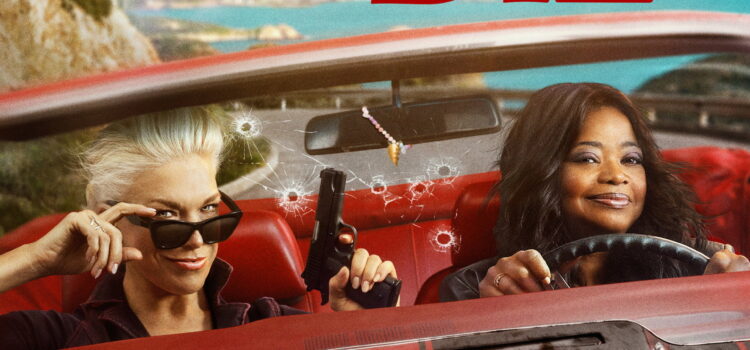
Key art for Ride or Die – Prime Video cancelled the Octavia Spencer and Hannah Waddingham series after a single season. © Paramount Television Studios / Prime Video, via TMDB.
Quick Facts
- Show: Ride or Die
- Platform: Prime Video
- Cancellation announced: 19 September 2026
- Seasons made: One (8 episodes, released all at once)
- Premiere date: 15 July 2026
- Stars: Octavia Spencer and Hannah Waddingham
- Producing studio: Paramount Television Studios
- What’s next: Paramount is shopping the series to other networks and streamers
This is a ranked list of the ten most important things to know about Prime Video’s cancellation of Ride or Die, the Octavia Spencer and Hannah Waddingham action-comedy that critics loved and audiences actually watched. The items are ordered to build the full picture in sequence: what got cancelled and when, who made it, the performance data that makes the decision so hard to square, and finally what can realistically happen from here.
| Show | Platform | Status (as of 20 Sep 2026) | RT Critics Score | Chart Performance | Note |
|---|---|---|---|---|---|
| Ride or Die | Prime Video | Cancelled after S1 | 96% | #1 US debut; 5 straight weeks in cross-platform Top 10 Originals; 506M minutes viewed in one August week | Outperformed every renewed show it’s being compared to |
| Elle | Prime Video | Renewed for S2 | Not disclosed | Not disclosed | Legally Blonde prequel; renewed around its release date announcement |
| Off Campus | Prime Video | Renewed for S2 | Not disclosed | Not disclosed | Renewed before its series premiere even aired |
| Every Year After | Prime Video | Status not disclosed | Not disclosed | Cited by Forbes as trailing Ride or Die | Named as one of the shows Ride or Die beat |
| Sterling Point | Prime Video | Status not disclosed | Not disclosed | Cited by Forbes as trailing Ride or Die | Named as one of the shows Ride or Die beat |
| Ponies | Peacock | Cancelled after S1 | 94% | #1 debut, strong ratings throughout its run | Emilia Clarke spy thriller cut under near-identical circumstances |
1. What Prime Video Actually Cancelled, and When
What makes it stand out: This wasn’t a quiet non-renewal buried in a year-end list — it was reported as a Deadline exclusive on 19 September 2026, then picked up within hours by Variety, TVLine and The Wrap. Key data: Prime Video has cancelled Ride or Die after one season of eight episodes, all of which dropped together on 15 July 2026. Why it matters: A cancellation announced this fast, this publicly, and this close to a show’s debut is unusual, and it’s part of why the story spread the way it did.
Most streaming cancellations dribble out slowly — a show quietly vanishes from a “coming soon” slate, or the news breaks months after anyone stopped paying attention. This one didn’t work that way. Ride or Die wrapped its first and only season roughly nine weeks before the cancellation news broke, which is a genuinely short runway even by the compressed standards of streaming. Deadline framed it as an exclusive, which means the trade got the story before Amazon put out any public statement of its own, and neither Prime Video nor Amazon MGM Studios has issued the kind of “we’re incredibly proud of this show” farewell statement that usually accompanies these announcements. That silence has become part of the story in its own right, feeding the exact confusion that’s driving coverage of this one story across entertainment media this week.
2. The Premise: Two Best Friends, One Assassin, All of Europe

A scene from Ride or Die’s only season. © Paramount Television Studios / Prime Video, via TMDB.
What makes it stand out: The show built its whole engine around a betrayal-of-trust twist that’s simple to pitch and hard to get right — your best friend of 25 years turns out to be someone else entirely. Key data: Debbie Claybourne discovers her best friend Judith Burton isn’t a forensic accountant but an international assassin, and when a hit goes wrong the pair flee across Europe pursued by law enforcement, professional killers and Debbie’s own corrupt husband’s associates. Why it matters: That premise is exactly the kind of high-concept, star-driven action-comedy Prime Video has spent years trying to manufacture in-house, which makes cutting a version that actually landed even harder to parse.
Series creator Tessa Coates has been explicit about what she was going for: “What I love to watch and to write is ordinary people caught up in extraordinary events,” she told UPI around the show’s July premiere. The other half of the pitch was age and representation — Coates wanted Debbie and Judith to read as women in their 50s who are “badass and powerhouses” rather than sidelined into supporting roles, and reviewers largely agreed the show delivered on that promise. The road-trip structure took the story through multiple European countries and gave the series a visual scale that a smaller, single-location thriller couldn’t match, which is also, as you’ll see further down this list, part of what made it expensive to produce.
3. The Cast and the Two Stars Who Also Produced It

Octavia Spencer and Hannah Waddingham led Ride or Die as stars and executive producers. © Paramount Television Studios / Prime Video, via TMDB.
What makes it stand out: Both leads had creative and financial skin in the game beyond acting, which is unusual for a straight-to-series order and raises the stakes of the cancellation for everyone involved. Key data: Octavia Spencer (Debbie Claybourne) and Hannah Waddingham (Judith Burton) both starred and served as executive producers, alongside a supporting cast of Ed Skrein, Calam Lynch, Savannah Steyn, Jamie Parker, Sylvia Hoeks, Cathy Tyson and Bill Nighy. Why it matters: A cast this stacked, carrying producer credits on top of screen time, is exactly the kind of package streamers usually fight to keep rather than let walk after eight episodes.
Spencer, an Oscar winner, and Waddingham, fresh off her Emmy-winning run on Ted Lasso, gave Ride or Die a marquee-value pairing that few straight-to-series orders can claim. Showrunner Matt Miller said the two actors’ rapport was immediate rather than manufactured: “You genuinely believe that they’ve been friends for 25 years, and that just came naturally to both of them.” The supporting cast leaned heavily British and European — Skrein, Lynch, Parker and Nighy all working opposite the two American and British leads — which tracks with a production that shot almost entirely in Prague rather than chasing US soundstages. Miller has separately praised the Czech crew and stunt team the show built around, calling it “phenomenal,” which lines up with reviews that singled out the action choreography as a genuine strength rather than the usual streaming-budget compromise.
4. The Numbers That Make This Decision Genuinely Hard to Explain

Ride or Die spent five straight weeks in the cross-platform streaming Top 10 for original series. © Paramount Television Studios / Prime Video, via TMDB.
What makes it stand out: Nearly every cancellation story includes some version of “the numbers weren’t there.” This one doesn’t. Key data: Luminate tracked 927,000 views in the first two days; Nielsen had the show debut at #8 overall and #3 among original series with 869 million minutes viewed in its opening week, climbing to #4 overall and #2 among originals the following week; by August it was still pulling 506 million viewing minutes in a single tracked week, good for fifth overall across every streaming service, not just Prime’s own library. Why it matters: Sustained viewership months after a premiere, rather than a single opening-weekend spike, is usually the exact pattern streamers point to when justifying a renewal.
Trade reporting has described Ride or Die as Prime Video’s most-watched new scripted series over its first 14 days, and some outlets have gone further, calling it the platform’s biggest new scripted launch of the past year. What makes the trajectory notable isn’t just the size of the numbers but their shape: shows that get renewed usually show a big first weekend followed by a steep drop-off, while Ride or Die held a spot in the cross-platform Top 10 Originals list — a chart that includes Netflix, Disney+, Max and every other major service, not just Amazon’s own — for five consecutive weeks. That’s the kind of staying power streamers typically build entire renewal cases around, which is exactly why this cancellation has generated as much confusion as it has anger.
5. The Reviews Backed the Numbers Up, Too
What makes it stand out: It’s rare for a show to be both a ratings hit and a critical one; usually a series is forgiven weak reviews for big numbers or forgiven soft numbers for great reviews, not asked to justify a cancellation despite having both. Key data: Ride or Die holds a 96% critics score and an 85% audience score on Rotten Tomatoes, with reviewers describing it as “an engaging, escapist buddy caper.” Why it matters: Critical acclaim this consistent usually buys a show goodwill even when viewership is soft — here it’s stacked on top of strong viewership, which removes one of the usual excuses networks lean on when a cancellation needs explaining.
Reviews singled out the Spencer-Waddingham chemistry specifically, along with the show’s willingness to let two women in their 50s anchor big, R-rated action set pieces without the story constantly commenting on their age. That combination — broad audience appeal plus specific critical praise for representation — is precisely the profile Prime Video has said publicly it wants more of. Cancelling the one recent show that hit both marks simultaneously is part of why entertainment writers keep landing on words like “baffling” and “inexplicable” rather than the usual hedged language reserved for a borderline call.
6. It Beat the Shows That Got Renewed Instead

Ride or Die outperformed several Prime Video shows that were renewed around the same period. © Paramount Television Studios / Prime Video, via TMDB.
What makes it stand out: This is the comparison that’s done the most damage to Amazon’s case, because it isn’t Ride or Die against some abstract bar — it’s Ride or Die against shows on the exact same platform that got the opposite decision. Key data: Reporting has named Elle (the Legally Blonde prequel) and Off Campus as two Prime Video shows renewed for second seasons while performing below Ride or Die’s numbers, alongside Every Year After and Sterling Point. Why it matters: When a cancelled show is outperforming a platform’s own renewed titles, “the numbers didn’t support it” stops being a credible explanation.
Off Campus is the sharpest example: Amazon renewed it for a second season before its first season had even finished its premiere run, which necessarily means that decision was made on internal testing and pre-release confidence rather than live viewership data Ride or Die had already proven out by the time it was cut. Elle, the Reese Witherspoon-adjacent Legally Blonde prequel, got its season 2 pickup bundled with its release date announcement, another instance of a platform betting on a title before the audience had fully weighed in. Neither renewal is unreasonable on its own — platforms make forward bets on IP and stars all the time — but stacked next to a cancelled show that had already cleared the bar those two were still trying to reach, the contrast is the story.
7. Why a Third-Party Studio, Not Amazon, Actually Owns the Show

Ride or Die was produced by Paramount Television Studios, not Amazon’s in-house studio arm. © Paramount Television Studios / Prime Video, via TMDB.
What makes it stand out: Unlike shows made by Amazon MGM Studios itself, Ride or Die was produced by Paramount Television Studios and licensed to Prime Video, which is the specific structural detail that makes a revival possible at all. Key data: Deadline’s exclusive reported that Paramount Television Studios is now actively shopping Ride or Die to other networks and streaming services following Prime Video’s pass. Why it matters: A cancelled show that’s wholly owned by its streamer usually just disappears; a cancelled show made by an outside studio can, and often does, resurface somewhere else with the IP intact.
This distinction matters more than it might look like on the surface. When a streamer produces a show entirely in-house, cancelling it typically ends the story for good, because the streamer owns every frame and has no reason to help a competitor benefit from work it already paid for. A third-party studio deal works differently: Paramount financed and produced Ride or Die, licensed the finished episodes to Amazon for a fee, and retains the underlying rights to the format, scripts and any future seasons. That’s precisely the arrangement that let shows like Lucifer move from Fox to Netflix and Manifest jump from NBC to Netflix, and it’s the same mechanism industry watchers are now pointing to as Ride or Die’s most realistic path back to screens, just not necessarily on Prime Video.
8. The Budget Theory: The One Explanation That Actually Holds Up
What makes it stand out: Nobody outside Amazon has offered a concrete, sourced reason for the cancellation, but one theory keeps surfacing because it’s the only one that doesn’t require ignoring the viewership data. Key data: Forbes contributor Paul Tassi, writing the day the news broke, concluded the likeliest explanation is budget: “that is an unknown quantity for the public that only Amazon has full access to.” Why it matters: A European road-trip production shot across multiple countries with two A-list leads on producer-level deals is expensive in ways that don’t show up in a Nielsen chart.
The maths that streamers actually run internally weighs viewership against per-episode cost, not viewership in isolation, and a show built around international locations, elaborate stunt sequences and two stars drawing both acting fees and executive producer points is going to carry a materially higher price tag than a single-location drama with a cheaper ensemble. None of that has been confirmed on the record by Amazon, and Tassi is careful to frame it as the most plausible theory rather than a confirmed fact, but it’s the explanation multiple outlets have converged on precisely because every other angle — reviews, viewership, chart performance — points the opposite direction. As Tassi put it bluntly: “What else could it have done?”
9. This Isn’t the First Time: Peacock’s Ponies Followed the Same Script

Ride or Die’s cancellation follows a near-identical pattern to Peacock’s Ponies earlier this year. © Paramount Television Studios / Prime Video, via TMDB.
What makes it stand out: Just months earlier, Peacock cancelled its own critically adored, chart-topping spy thriller, and nobody ever got a satisfying explanation for that one either. Key data: Ponies, starring Emilia Clarke, held a 94% Rotten Tomatoes critics score and hit #1 on Peacock’s own charts, yet was cancelled after a single season with no public reasoning offered. Why it matters: Two near-identical cancellations from two different streamers within months of each other suggests this isn’t a one-off Amazon decision but a pattern showing up across the industry.
Tassi drew the comparison directly, calling the two situations “extremely similar” and noting that with Ponies “no clear answers ever emerged” even months on. The parallels are hard to miss: both were female-led genre shows with A-list stars, both topped their platform’s own internal charts, both scored in the low-to-mid 90s with critics, and both got cut after exactly one season with vague or nonexistent public explanations. The main difference Tassi flags is scale — Prime Video has a materially larger subscriber base than Peacock, which makes the Ride or Die decision the higher-profile case of the two, and the one more likely to actually change how outlets and audiences talk about streaming renewal metrics going forward.
10. What Happens Next: Could Ride or Die Actually Get Saved?

Paramount Television Studios is now shopping Ride or Die to other buyers after Prime Video’s cancellation. © Paramount Television Studios / Prime Video, via TMDB.
What makes it stand out: Because Paramount owns the show outright, this is a genuine “shopped, not buried” situation rather than a symbolic gesture, and there’s real precedent for it working out. Key data: No new buyer has been publicly named as of this writing; Paramount Television Studios is reported to be pitching the completed season and the format to other networks and streaming services. Why it matters: Streaming history has already shown that a cancelled show with an outside owner and a proven audience can land somewhere else and thrive — sometimes better than it did originally.
Lucifer is the reference case everyone in this conversation keeps returning to: Fox cancelled it, Netflix picked it up, and it went on to run for several more seasons as one of the platform’s most-watched titles. Manifest followed a near-identical arc from NBC to Netflix. Ride or Die has the two ingredients those revivals needed — a studio motivated to keep selling it, and a proven, vocal audience already primed to follow it wherever it lands — plus a finished, well-reviewed season ready to hand to a new platform with essentially no additional investment required. That doesn’t guarantee a second season gets ordered anywhere, and the same Prague-based production costs that may have driven Amazon’s decision would apply to any new buyer too, but of all the ways a cancelled show can end, “actively being shopped by a studio that owns it outright” is about as good a starting position as this kind of story ever gets.
What This Cancellation Says About How Streamers Actually Decide
Strip away the specifics of one show and what’s left is a pattern that’s becoming harder to ignore: strong reviews and strong viewership are no longer a reliable guarantee of renewal, because neither one captures the cost side of the ledger that streamers are actually weighing behind closed doors. Ride or Die and Ponies both cleared every publicly visible bar a show is supposed to clear, and both got cancelled anyway, which suggests the real renewal conversation now happening inside Amazon, Peacock and every other streamer is about per-episode economics that audiences and critics simply can’t see from the outside. For Filmoria readers hoping to actually watch a second season, the honest answer is that it depends entirely on whether another buyer decides the Prague-shot, star-driven format is worth the price Amazon apparently wasn’t willing to pay — and on that question, right now, nobody outside a handful of studio executives actually knows.
Frequently Asked Questions
Why was Ride or Die canceled by Prime Video?
Prime Video hasn’t given a public reason. Trade reports, including a Forbes analysis by Paul Tassi, suggest per-episode budget is the most likely factor, since the show’s reviews and viewership numbers don’t explain the decision.
When did Prime Video announce the Ride or Die cancellation?
The cancellation was first reported as a Deadline exclusive on 19 September 2026, roughly two months after the show’s season one premiere.
How many seasons of Ride or Die were made?
Only one season was made and released before the show was cancelled.
How many episodes are in Ride or Die?
Season one has eight episodes, all of which were released together on the same day.
When did Ride or Die premiere on Prime Video?
Ride or Die premiered on 15 July 2026.
Who are the two lead stars of Ride or Die?
Octavia Spencer and Hannah Waddingham star as best friends Debbie Claybourne and Judith Burton, and both also serve as executive producers.
Who plays Judith Burton in Ride or Die?
Hannah Waddingham plays Judith Burton, the character revealed to be an international assassin.
Who plays Debbie Claybourne in Ride or Die?
Octavia Spencer plays Debbie Claybourne, the best friend who discovers Judith’s secret life.
Who created Ride or Die?
Ride or Die was created by Tessa Coates, with Matt Miller serving as showrunner and executive producer.
Who is the showrunner of Ride or Die?
Matt Miller is the showrunner and an executive producer on the series.
What is Ride or Die about?
It follows best friends Debbie and Judith, who go on the run across Europe after Debbie learns Judith is secretly an international assassin and a hit goes wrong.
Where was Ride or Die filmed?
The series was filmed largely in Prague, Czech Republic, standing in for multiple European locations along the characters’ route.
What was Ride or Die’s Rotten Tomatoes critics score?
Ride or Die holds a 96% critics score on Rotten Tomatoes.
What was Ride or Die’s audience score on Rotten Tomatoes?
The show’s Rotten Tomatoes audience score is 85%.
How many viewing minutes did Ride or Die rack up on Nielsen’s chart?
Nielsen recorded 869 million minutes viewed in its debut week and 506 million minutes in a single tracked week that August, months after its premiere.
How did Ride or Die rank on Nielsen’s streaming chart?
It debuted at #8 overall and #3 among original series, then climbed to #4 overall and #2 among originals in its second week, and spent five consecutive weeks in the cross-platform Top 10 Originals.
Which studio owns Ride or Die, and why does that matter now?
Paramount Television Studios produced and owns Ride or Die, having licensed it to Prime Video. Because Paramount retains the rights, it’s now free to shop the show to other networks and streamers.
Which other Prime Video shows were renewed while Ride or Die was canceled?
Reports have named Elle, the Legally Blonde prequel series, and Off Campus, both renewed for second seasons with lower reported performance than Ride or Die, alongside Every Year After and Sterling Point.
What happened to Peacock’s spy thriller Ponies, and how does it compare?
Ponies, starring Emilia Clarke, was cancelled by Peacock earlier in 2026 after one season despite a 94% Rotten Tomatoes score and #1 chart performance, with no clear reason ever given â a pattern commentators say closely mirrors the Ride or Die decision.
Could Ride or Die still return on a different platform?
It’s possible. Paramount Television Studios is actively shopping the completed season to other buyers, and similar cancelled shows, including Lucifer and Manifest, have been picked up and continued by other streamers after being dropped by their original network.
📸 Follow us on Instagram for daily film, TV & gaming news: @filmoriauk

Oliver Laurent
Writes about mainstream releases and the business behind them for Filmoria — box office, studio strategy and the long tail of franchise filmmaking.