


Godzilla Minus Zero Breaks a 22-Year Record: 12 Box Office Takeaways From 6 to 8 November
Box Office 8th November 2026 Liz Bennett
By the Filmoria News Desk

Godzilla Minus Zero was No. 1 at the North American box office on 6 to 8 November 2026 with an estimated $31.6 million from 3,254 cinemas, the biggest opening ever for a live-action, non-English-language film in the US and Canada. It beat the $17.8 million record Jet Li’s Hero had held since 2004, and it added $31.4 million overseas for a $63 million global start. In the UK, Anime Limited released it in IMAX and standard cinemas, in Japanese with English subtitles, on Friday 6 November 2026.
Quick Facts
- Weekend: Friday 6 to Sunday 8 November 2026 (Sunday studio estimates; Monday actuals still to come)
- No. 1: Godzilla Minus Zero (GKIDS), $31.6 million from 3,254 cinemas
- Record: biggest North American opening for a live-action, non-English-language film, beating Hero’s $17.8 million from 2004
- IMAX share: about $12.7 million, roughly 40% of the weekend
- Worldwide opening: about $63 million, including around $17 million from Japan
- No. 2: The Cat in the Hat (Warner Bros.), about $20.5 million, the softest opening for a big-screen Dr. Seuss adaptation
- Whole market: roughly $114 million, reported as up 86% on the same weekend a year ago
In the UK
- Godzilla Minus Zero: in UK and Irish cinemas now, from Friday 6 November 2026, released by Glasgow-based Anime Limited (part of Toho Global) in IMAX and standard screens. Japanese with English subtitles. BBFC rating not yet confirmed in the sources we checked.
- The Cat in the Hat: Warner Bros. UK lists a UK and Ireland cinema release of Friday 4 December 2026, in cinemas and IMAX.
- Drummer Boy and Ramayana: UK release details not yet confirmed for the UK in the sources we checked.
- UK figures for this weekend: Comscore’s official UK numbers usually arrive on Tuesday, so the table below is the latest confirmed UK and Ireland chart, for 30 October to 1 November 2026.
UK and Ireland box office top 10, 30 October to 1 November 2026
| Rank | Title | Distributor | Weekend gross | Total to date | Weeks on release |
|---|---|---|---|---|---|
| 1 | Wicker | Black Bear | £1,757,184 | £1,757,184 | 1 |
| 2 | Primetime | A24 | £1,747,043 | £1,747,043 | 1 |
| 3 | Ghosts: The Possession of Button House | Lionsgate UK | £1,524,676 | £6,335,031 | 2 |
| 4 | Clayface | Warner Bros. | £1,230,586 | £4,685,884 | 2 |
| 5 | Wildwood | Not confirmed | £646,944 | £2,813,350 | 2 |
| 6 | Forgotten Island | Not confirmed | £621,928 | £5,162,524 | 3 |
| 7 | Street Fighter | Paramount | £477,940 | £5,722,764 | 3 |
| 8 | Shaun the Sheep: The Beast of Mossy Bottom | Not confirmed | £282,185 | £5,729,974 | 7 |
| 9 | Verity | Sony Pictures | £265,076 | £11,635,161 | 5 |
| 10 | Other Mommy | Universal | £258,515 | £5,382,468 | 4 |
Source: Comscore, via 25th Frame’s UK top 15 and Screen International. “Not confirmed” means the distributor wasn’t listed in the published chart we could verify.
This is a ranked list of the 12 biggest takeaways from the North American box office weekend of 6 to 8 November 2026, led by Godzilla Minus Zero’s record opening, with the latest confirmed UK and Ireland chart alongside it.
We’ve put the Godzilla story first and broken it into its parts (the record, the franchise comparison, IMAX and the global picture), then worked down the rest of the chart by weekend gross, and finished with the overall market and the UK. Every dollar figure is a Sunday studio estimate as reported by trade and wire outlets, so expect small changes when Monday’s actuals land.
| # | Film or story | Distributor | Weekend gross (US) | Running total | Milestone |
|---|---|---|---|---|---|
| 1 | Godzilla Minus Zero | GKIDS | $31.6m | $31.6m (US) | No. 1 and biggest GKIDS opening |
| 2 | Hero’s record falls | GKIDS vs Miramax (2004) | $31.6m vs $17.8m | Not applicable | 22-year record broken |
| 3 | Minus Zero vs Minus One | GKIDS / Toho | $31.6m vs $11.4m | Not applicable | Nearly triple the first film’s start |
| 4 | The IMAX bet | IMAX | About $12.7m | Not applicable | Roughly 40% of the weekend |
| 5 | Godzilla goes global | Toho and partners | $31.4m overseas | $63m worldwide | Japan about $17m |
| 6 | The Cat in the Hat | Warner Bros. | About $20.5m | $30.5m worldwide | Lowest Dr. Seuss opening |
| 7 | Drummer Boy | Angel Studios | $9.3m | $9.3m | Third place, A CinemaScore |
| 8 | You Can See Everything | A24 | $8.8m | $79.7m | Closing on $80m |
| 9 | Ramayana | Not disclosed | $8.6m | $12.1m (US), $55.7m worldwide | Top five in its first weekend |
| 10 | Clayface | Warner Bros. / DC Studios | $6.67m | $56.6m (US) | Past $100m worldwide |
| 11 | The rest of the chart | Various | $3.35m to $7m | Not applicable | Wildwood nears $40m |
| 12 | The market and the UK | All studios | About $114m | Not applicable | Up 86% year on year |
1. Godzilla Minus Zero (2026, GKIDS / Toho)
What makes it stand out: A subtitled, R-rated Japanese monster film is the most popular movie in North America, and it got there by a margin of more than $11 million.
Key data: An estimated $31.6 million from 3,254 cinemas between 6 and 8 November 2026, including $6.7 million from Thursday previews, with an A CinemaScore.
Why it matters: It’s the biggest opening in GKIDS’ history and proof that a foreign-language live-action film can open like a mid-sized Hollywood release.
Pre-release tracking had this pegged at $25 million to $35 million. Koimoi’s early read was about $25 million, while Box Office Pro and Box Office Theory both landed on $25 million to $35 million. Then Thursday happened. A $6.7 million preview number is the kind of figure you’d expect from a studio horror sequel, not a Japanese-language import, and World of Reel was already floating $40 million by Thursday night.
It didn’t get that high. $31.6 million is still at the top end of where serious forecasters had it, and it won the weekend comfortably. The Cat in the Hat, which Warner Bros. hoped would be a family-film juggernaut, finished more than $11 million behind.
The distributor is worth noting. GKIDS built its name on hand-drawn animation, from Studio Ghibli’s catalogue to Mamoru Hosoda’s films, and its previous best opening was The Boy and the Heron’s $12.8 million in December 2023, which was also its first No. 1. Toho bought GKIDS that same autumn. Three years later, Toho’s own flagship monster is the company’s biggest-ever release, and it more than doubled the old high-water mark.
The A CinemaScore matters as well. Fan-driven films often come in hot on Thursday and then fade, and Street Fighter’s B- grade last month showed what happens next. An A suggests the people who turned up on Friday and Saturday liked what they saw, which is the best predictor of a long run.
2. Hero’s 22-Year Record Falls (2004 vs 2026)
What makes it stand out: A record that had stood since August 2004 was beaten by almost $14 million.
Key data: Zhang Yimou’s Hero, starring Jet Li, opened to $17.8 million in North America in 2004; Godzilla Minus Zero’s $31.6 million clears it by roughly $13.8 million.
Why it matters: For two decades, $18 million looked like the ceiling for subtitled live-action films in US cinemas, and that ceiling has now gone.
The wording of this record is important, so here it is plainly. It’s the biggest North American opening for a live-action film not in English and produced outside the US. Anime is a separate category. Demon Slayer: Kimetsu no Yaiba Infinity Castle opened to about $70 million in September 2025, and that’s still the biggest foreign-language opening of any kind. What Godzilla Minus Zero has done is beat every live-action film made in another language.
Hero’s record was remarkable in its own right. Miramax sat on the film for two years, then released it under a “Quentin Tarantino presents” banner in late August 2004, a quiet slot with little competition. It opened at No. 1. Even Crouching Tiger, Hidden Dragon, which remains the highest-grossing foreign-language film in North American history with about $128 million, never had an opening weekend that big, because it started in a handful of cinemas and expanded slowly.
Godzilla Minus One came closest before now. In December 2023 it opened to about $11.4 million and was widely reported as the best start for a foreign-language live-action film since Hero. Three years on, its sequel has gone straight past both.
Dread Central summed it up neatly: an R-rated, subtitled Godzilla is No. 1 in America. Ten years ago, nobody would have bet on that sentence.
3. Minus Zero vs Minus One (2023 vs 2026, Toho)
What makes it stand out: The sequel opened to nearly three times the first film’s debut.
Key data: Godzilla Minus One opened to about $11.4 million in North America in December 2023 and went on to about $56 million domestically and about $116 million worldwide, before winning the Oscar for Best Visual Effects in March 2024.
Why it matters: Franchise sequels usually open bigger than the original, but rarely by this much, which shows how far Minus One’s reputation travelled after it left cinemas.
It’s hard to overstate how much Minus One surprised people. It arrived with a reported budget that critics put at under $15 million (director Takashi Yamazaki has pushed back on that exact figure), it was released in the US by Toho itself, and it was supposed to be a niche, short run. Instead it stayed in cinemas for weeks, came back in a black-and-white “Minus Color” version, and became one of the most profitable films of that year relative to its cost.
Then came the Oscar. Yamazaki and his small team at Shirogumi won Best Visual Effects, the first Godzilla film to win an Academy Award, and the story of a modest crew beating Hollywood’s VFX giants went everywhere. Streaming did the rest. Plenty of the people who bought tickets this weekend almost certainly discovered Minus One at home.
So the sequel had something the first film didn’t: an audience that already trusted it. That’s why it could open almost three times bigger. If it holds anything like Minus One did, overtaking that $56 million domestic total looks very likely.
Yamazaki, who wrote, directed and supervised the effects again, already seems open to more. Dread Central quoted him saying, “If Toho came to me with another offer to explore this world even further, I’d probably say yes.”
4. The IMAX Bet (2026, IMAX)
What makes it stand out: Roughly 40% of the weekend came from IMAX screens, an unusually large share for any film.
Key data: About $12.7 million of the $31.6 million came from IMAX, and the film is reported as the first Japanese feature shot for IMAX.
Why it matters: Premium screens are where the money is right now, and this shows a foreign-language film can fill them.
IMAX usually takes somewhere between 10% and 20% of a big release’s weekend. Christopher Nolan’s films push higher. Forty percent is unusual for anything, and that number tells you how audiences thought about this release. It wasn’t a curiosity to catch at a local multiplex. It was something to see on the biggest screen you could find.
That’s also a story about pricing. IMAX tickets cost more, so a film that sells a big share of its seats in IMAX makes more money per person. It helps explain why $31.6 million came from a film that didn’t have The Cat in the Hat’s 4,003-cinema footprint.
It’s good news for IMAX too, which has been trying to grow its slate of local-language films around the world. A Japanese monster film earning about $12.7 million on its US screens in three days is a strong argument for more. In the UK, Anime Limited also gave the film an IMAX release, which is the main reason it’s playing in far more British cinemas than a subtitled Japanese film normally would.
What’s harder to tell is how long it keeps those screens. Big Hollywood releases are queuing up for IMAX through the rest of November, so a strong second weekend matters even more than usual.
5. Godzilla Goes Global (2026, Toho and International Partners)
What makes it stand out: The film made almost exactly as much outside North America as inside it.
Key data: About $31.4 million overseas, including roughly $17 million in Japan, for a worldwide start of about $63 million; it opened in Japan on 3 November with about ¥910 million from roughly 590,000 tickets on its first day.
Why it matters: Toho now has a property that opens like a Hollywood film in both its home market and the world’s biggest box office.
The Japanese release started on 3 November, a public holiday and the date the original Gojira premiered in 1954, which Toho now marks as Godzilla Day. Toho said the opening day of about ¥910 million was a record for a live-action film in Japan. Some outlets converted it at around $5.7 million, while Koimoi used a lower figure, so treat the dollar version as approximate.
Deadline’s preview had the film tracking for around $60 million worldwide over its first stretch, and it came in a little above that. That’s especially impressive given how the international rollout works. Rather than one global studio handling everything, Toho is using regional partners. Piece of Magic Entertainment is releasing it in 46 territories across Europe and beyond, and Anime Limited has the UK and Ireland.
Those UK figures aren’t in yet, but they’ll be worth watching. Minus One was a sleeper here too, and with IMAX screens and a 6 November date, Minus Zero has a better platform than its predecessor ever had.
Japan, meanwhile, will decide the long-term picture. Minus One ended up as one of the biggest live-action Godzilla films ever at home, and the sequel is starting faster.
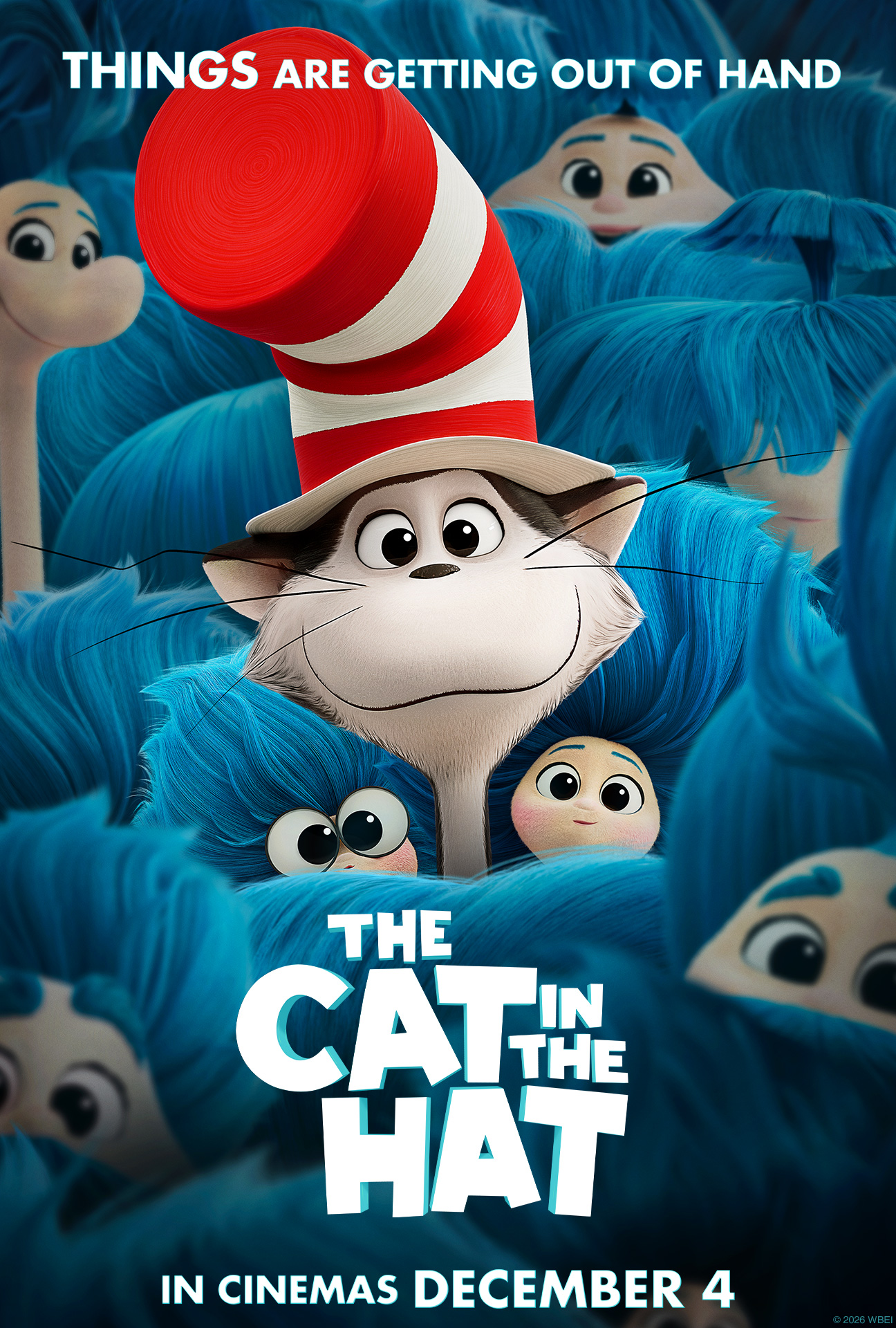
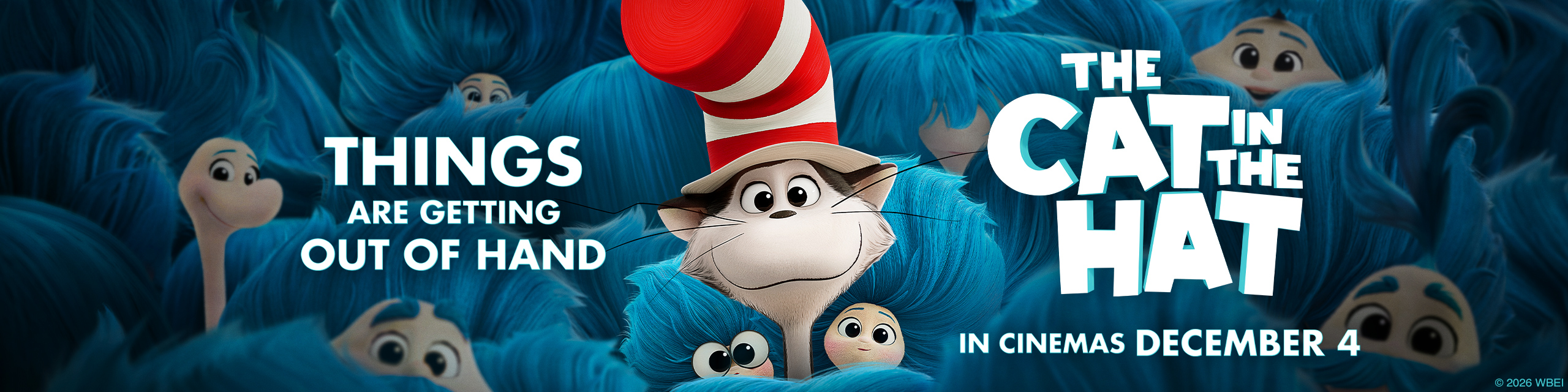
6. The Cat in the Hat (2026, Warner Bros. Pictures Animation)
What makes it stand out: Warner Bros.’ first animated Dr. Seuss film opened below every previous big-screen Seuss adaptation.
Key data: About $20.5 million from 4,003 cinemas, plus about $10 million from 60 international markets for a $30.5 million worldwide start, with an A CinemaScore; the 2003 live-action version opened to about $38 million.
Why it matters: Warner Bros. is building a whole Dr. Seuss animation slate, and this was meant to be the launchpad.
Look at the history and the problem is obvious. Universal’s How the Grinch Stole Christmas opened to about $55 million in 2000. Horton Hears a Who! started with about $45 million in 2008. Illumination’s The Lorax opened to about $70 million in 2012, and The Grinch did about $67 million in 2018. Even the poorly reviewed 2003 Cat in the Hat with Mike Myers managed around $38 million. This one did roughly half that.
Some outlets reported $20 million and others $20.5 million, but neither figure changes the story. Variety’s headline said it fizzled. Showbiz411 was kinder, calling it a needed boost for Warner Bros., and it’s true the studio could use any family hit it can get.
The film has had a messy route to cinemas. It was first dated for March 2026, then 27 February, and then moved to 6 November, partly to get away from Pixar’s Hoppers. Bill Hader voices the Cat, with Quinta Brunson, Xochitl Gomez, Bowen Yang, Matt Berry and Giancarlo Esposito among the cast, and Erica Rivinoja and Alessandro Carloni directing.
There’s some hope. The A CinemaScore means kids and parents liked it, and family films often hold better than anything else over November and into Christmas. Overseas, though, the $10 million start was well below the domestic number, and Warner Bros. UK doesn’t open it here until 4 December.
7. Drummer Boy (2026, Angel Studios)
What makes it stand out: A faith-based musical from Angel Studios landed in third, ahead of a three-week-old A24 hit.
Key data: About $9.3 million in its opening weekend, with an A CinemaScore shared with the top two films.
Why it matters: Angel keeps proving there’s an audience the big studios underserve, and the run-up to Christmas suits this kind of film.
Angel Studios has a habit of beating expectations. Its crowdfunded, community-driven model, where fans can buy tickets for other people through a “pay it forward” scheme, gives its films an audience that’s hard for trackers to measure. Sound of Freedom was the big example in 2023. Drummer Boy isn’t on that scale, but $9.3 million is a healthy start for a Christian musical.
The timing helps. Early November is a sensible moment to launch a seasonal family film for church groups and families who want something before the December rush. If word of mouth from that A CinemaScore spreads, Drummer Boy could keep playing well into the holidays.
It’s also another reminder that the top of the chart isn’t only about studio franchises anymore. Three of this weekend’s top five came from distributors outside the traditional Hollywood majors: GKIDS, Angel and A24.
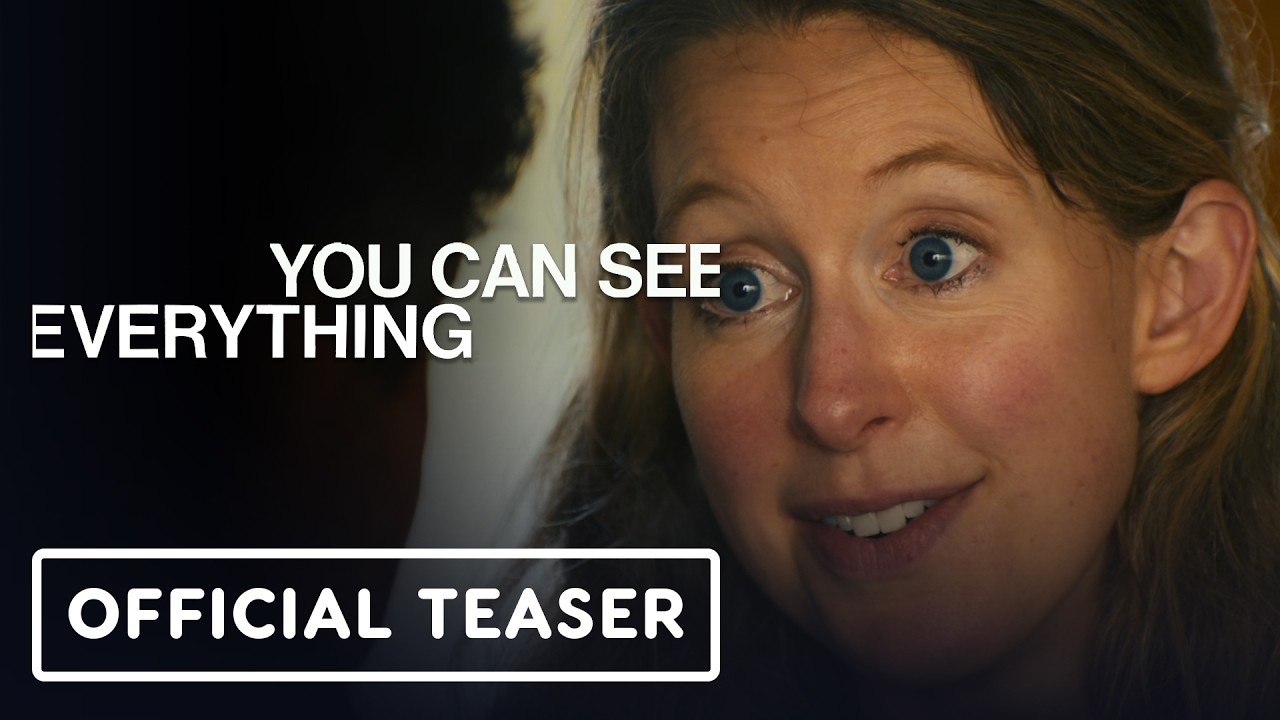
8. You Can See Everything (2026, A24)
What makes it stand out: The documentary that won last weekend is still in the top five and nearly at $80 million.
Key data: About $8.8 million in its fourth weekend for a domestic total of about $79.7 million, against a reported budget of around $7 million.
Why it matters: It keeps edging up the all-time documentary chart, and $100 million is back in the conversation.
A week ago, after its third-weekend drop, it looked as if Nathan Fielder and Lance Oppenheim’s Elizabeth Holmes film would fall short of $100 million. We said as much in our Halloween weekend box office takeaways. This weekend’s hold changes that. Losing only a small part of its audience after Halloween, with real competition arriving, is a very good result.
Showbiz411 described it as “revving up” towards $100 million, and the maths now works if it keeps falling gently. Only Michael Moore’s Fahrenheit 9/11, with about $119 million in 2004, has done that among documentaries that aren’t concert or nature films.
For UK readers, this is the one to watch on 20 November, when A24 releases it in UK and Irish cinemas. Its US run shows no sign of stopping before then.
9. Ramayana (2026, India)
What makes it stand out: India’s most expensive film ever made opened in the North American top five during Diwali week.
Key data: About $8.6 million over the weekend and $12.1 million since its Tuesday opening, plus about $43.6 million overseas for a worldwide total of about $55.7 million, released in Hindi and English versions.
Why it matters: Indian films have been getting bigger in North America for years, and this one is playing like a wide release, not a diaspora special.
Reports differ slightly, with some putting the weekend at $8.7 million, but either way it finished fifth, just behind You Can See Everything. That’s a big result for an Indian film, especially one that opened on a Tuesday and had already taken a chunk of its audience before Friday.
The English-language version is the interesting part. Most Indian releases in the US play in their original language for a mostly Indian-American audience. Opening in both Hindi and English gives this one a shot at a broader crowd, and its scale (it’s described as the biggest-budget film in India’s history) makes it closer to a global event film than a local one.
JoBlo noted that the Diwali grosses from the days after the weekend weren’t yet in, so its total will jump again before next Friday. With the second instalment already planned, how this first part does overseas will shape the whole project.

10. Clayface (2026, Warner Bros. / DC Studios)
What makes it stand out: DC’s cheap body-horror gamble has passed $100 million worldwide in its third weekend.
Key data: About $6.67 million this weekend, down around 39%, for a domestic total of about $56.6 million, against a reported budget of $40 million to $44 million.
Why it matters: A mid-budget, 18-rated DC film reaching nine figures supports DC Studios’ plan to spread its bets beyond the big tentpoles.
Clayface spent two weekends fighting for No. 1 and lost the second of them by about $200,000. Now it’s quietly into profit territory. Dread Central reported it has crossed $100 million worldwide, which, against a production cost reported at around $40 million, is a solid return before marketing.
A 39% drop in week three is also the best hold of its run. Horror-leaning comic-book films usually fall harder than that, so the film seems to be finding a second audience beyond the opening-weekend fans.
In the UK, it held fourth on the Halloween weekend with £1,230,586, taking it to £4,685,884. We gave it 3/5 in our Clayface review, praising Tom Rhys Harries and the practical gore but not the tone.

11. The Rest of the Top 10 (2026, Various Studios)
What makes it stand out: A LAIKA film keeps holding, a K-pop concert film lands in the top 10, and an Olivia Colman fantasy closes in on $20 million.
Key data: Wildwood $7 million ($39.8 million to date), Wild Horse Nine $6 million from about 1,000 screens, Stray Kids World Tour $3.7 million and Wicker $3.35 million ($19.8 million to date).
Why it matters: The lower half of the chart is unusually healthy, which is what lifted the whole weekend so far above last year’s.
Wildwood is the quiet success of the autumn. LAIKA’s stop-motion film, released by Fathom in North America, made $7 million in its third weekend and is now just short of $40 million. That’s a long way above where analysts expected it to land before release.
Wild Horse Nine opened in eighth with about $6 million from roughly 1,000 screens, and around $12.6 million worldwide. Showbiz411 said it started strongly on Friday before losing speed on Saturday and Sunday, which suggests a front-loaded crowd.
Stray Kids World Tour took $3.7 million in ninth. Concert and event films keep showing up in the top 10, and they make good money for cinemas on a small number of shows.
Black Bear’s Wicker rounded out the chart with $3.35 million, taking it to about $19.8 million domestically and $29 million worldwide. It’s done even better in the UK, where it opened at No. 1 last weekend.

12. The Market and the UK Chart (2026, All Studios)
What makes it stand out: After a dismal Halloween, the North American market almost doubled, while in Britain an Olivia Colman film edged A24’s Primetime by about £10,000.
Key data: About $114 million across all films in North America, reported as up 86% on the same weekend in 2025; in the UK, Wicker took £1,757,184 to Primetime’s £1,747,043 on 30 October to 1 November.
Why it matters: November is where the year’s box office is won or lost, and this was a strong start.
A week ago, North America had one of its quietest weekends of 2026, with roughly $62 million to $63 million in total. This weekend nearly doubled that. Two wide openings at the top, two strong new arrivals from Angel and India, and good holds below them did the job. An 86% year-on-year jump sounds dramatic, and it’s partly a quirk of the calendar, but it’s still the kind of number cinema owners want to see ahead of the Thanksgiving rush.
The UK picture is different. On the most recent confirmed chart, Black Bear’s Wicker opened at No. 1 with £1,757,184, just £10,141 ahead of A24’s Primetime on £1,747,043. Ghosts: The Possession of Button House fell only 38% in its second weekend to £1,524,676 for £6,335,031 in total, and it still sits ahead of Clayface in the race between those two October openers.
Verity crossed £11.6 million in its fifth weekend, and Shaun the Sheep: The Beast of Mossy Bottom is still in the top 10 after seven weeks. Godzilla Minus Zero’s first UK numbers will arrive on Tuesday, and with IMAX screens in its favour, it has a real chance of a top-three start.
What This Weekend Tells Us
A Japanese-language, R-rated monster film beat a Warner Bros. Dr. Seuss film by more than $11 million and broke a record that had stood since 2004. Godzilla Minus Zero proved that Minus One’s Oscar-winning reputation turned into real ticket sales, that IMAX audiences will happily read subtitles, and that Toho can launch a film across the world on the same weekend. The Cat in the Hat’s start is a worry for Warner Bros.’ Seuss plans, though the A CinemaScore gives it a route back over the holidays. Monday’s actuals will confirm the figures, and Tuesday’s Comscore numbers will tell us how Godzilla did in the UK.
Sources: Variety, The Hollywood Reporter, JoBlo, Dread Central, 25th Frame (Comscore UK data), SciFi Japan (Anime Limited UK release).
Frequently Asked Questions
How much did Godzilla Minus Zero make on its opening weekend?
Godzilla Minus Zero made an estimated $31.6 million in North America on 6 to 8 November 2026, from 3,254 cinemas, and about $63 million worldwide.
What record did Godzilla Minus Zero break?
Godzilla Minus Zero had the biggest North American opening ever for a live-action, non-English-language film, beating the $17.8 million that Jet Li’s Hero took in 2004.
How does Godzilla Minus Zero compare with Godzilla Minus One at the box office?
Godzilla Minus Zero’s $31.6 million opening is nearly three times the roughly $11.4 million that Godzilla Minus One opened to in North America in December 2023.
Who distributes Godzilla Minus Zero in the US?
GKIDS, the Toho-owned distributor, released Godzilla Minus Zero in North America, and it is the biggest opening in the company’s history.
When is Godzilla Minus Zero released in the UK?
Godzilla Minus Zero opened in UK and Irish cinemas on Friday 6 November 2026, released by Anime Limited in IMAX and standard screens.
Is Godzilla Minus Zero subtitled or dubbed in the UK?
Godzilla Minus Zero is showing in UK cinemas in Japanese with English subtitles, according to Anime Limited’s release announcement.
How much did The Cat in the Hat make on its opening weekend?
The Cat in the Hat made about $20.5 million in North America on 6 to 8 November 2026, plus about $10 million overseas, for a $30.5 million worldwide start.
When is The Cat in the Hat released in UK cinemas?
Warner Bros. UK lists The Cat in the Hat for release in UK and Irish cinemas on Friday 4 December 2026.
Who voices the Cat in the 2026 Cat in the Hat film?
Bill Hader voices the Cat in Warner Bros. Pictures Animation’s The Cat in the Hat, with Quinta Brunson, Xochitl Gomez and Bowen Yang also in the cast.
What was number one at the UK box office on 30 October to 1 November 2026?
Wicker was number one in the UK and Ireland on 30 October to 1 November 2026 with £1,757,184, just ahead of Primetime on £1,747,043, according to Comscore.
📸 Follow us on Instagram for daily film, TV & gaming news: @filmoriauk

Liz Bennett
Editor at Filmoria. Runs the review desk and keeps half an eye on British independent cinema while everyone else is watching the blockbusters. Particularly interested in how films get funded, released and actually found by an audience.