
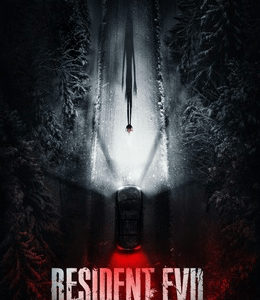
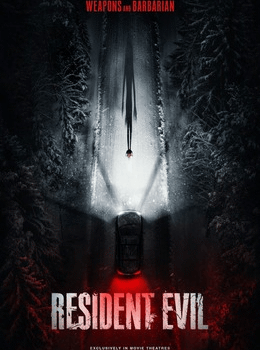
Resident Evil’s $60M Opening: 10 Box Office Takeaways From Zach Cregger’s Record Reboot
Box Office 23rd September 2026 Radek Sinclair
By the Filmoria News Desk

Quick Facts
- Film: Resident Evil (2026), directed by Zach Cregger, written by Cregger and Shay Hatten
- Distributor: Sony Pictures Releasing (Columbia Pictures)
- US opening weekend (18–20 September 2026): $60.15 million from 3,684 cinemas
- Worldwide opening: $108.3 million ($48.3 million international)
- UK and Ireland opening: £4.2 million, No.1
- Running totals (to Tuesday 22 September): $72.4 million domestic, $118.8 million worldwide
- Reported production budget: $75 million
- Previous franchise opening record: $26.7 million, Resident Evil: Afterlife (2010)
- Reception: 96% on Rotten Tomatoes (Certified Fresh), B+ CinemaScore
- Rating and runtime: R, 93 minutes
This is a list of the ten biggest box office takeaways from the opening of Zach Cregger’s Resident Evil, the Sony reboot that took $60.2 million in North America over the weekend of 18–20 September 2026.
The takeaways are ordered by how much each one changes the picture: first the headline number and the records it broke, then the global and budget maths, then the reviews, the daily pattern and the wider market. Figures come from The Numbers, Boxoffice Pro, Rotten Tomatoes and Screen Daily, and every total is dated so you can see how fresh it is.
| Film | Year | US opening | US total | Worldwide | Why it’s in this table |
|---|---|---|---|---|---|
| Resident Evil | 2026 | $60.2M | $72.4M (to 22 Sep) | $118.8M (to 22 Sep) | New franchise and Cregger record |
| Resident Evil: Afterlife | 2010 | $26.7M | $60.1M | $295.9M | Old franchise opening record |
| Resident Evil: The Final Chapter | 2016/17 | $13.6M | $26.8M | $314.1M | Franchise’s biggest worldwide gross |
| Resident Evil: Welcome to Raccoon City | 2021 | $5.3M | $17.0M | $41.9M | The last attempt at a reboot |
| Weapons | 2025 | $43.5M | $151.6M | $270M | Cregger’s previous best opening |
| Sonic the Hedgehog 3 | 2024 | $60.1M | $236.1M | $492.2M | Video game opening it narrowly passed |
| Mortal Kombat II | 2026 | $38.5M | $79.8M | $129.5M | This year’s other R-rated game adaptation |
1. The $60.2 Million Opening That Beat Every Forecast (2026, US, Sony)
What makes it stand out: Resident Evil didn’t just win the weekend, it cleared the top of its own tracking range by about $10 million.
Key data: $60,152,878 from 3,684 cinemas across 18–20 September 2026, an average of roughly $16,300 per location, against a pre-release forecast of $40–50 million from Boxoffice Pro.
Why it matters: When a film beats the high end of its forecast by 20%, it usually means word of mouth started working before the weekend was over.
Boxoffice Pro’s preview on the Wednesday before release pegged the film for $40 million to $50 million and noted it had already grabbed around 24% of the weekend’s showtimes. That’s a confident forecast for a reboot of a series that hadn’t opened above $27 million in its entire history. The actual number came in at $60.15 million.
That kind of gap doesn’t come from one source. The film had festival buzz from its Fantastic Fest premiere on 17 September, the day before wide release. It had a director whose last film was one of 2025’s genuine surprises. And it had a brand name that people recognise even if they’d stopped trusting it. Put those together and you get casual horror fans who might have waited for streaming deciding to go on the first weekend instead.
It also helps that the rest of the market was quiet. The only other new wide releases that weekend, Daniel and the Fiery Furnace and The Weight, opened to $3.3 million and $2.3 million respectively. Nothing else was fighting for the same audience.
2. A Franchise Record More Than Twice the Old One (Resident Evil, 2002–2026)
What makes it stand out: The reboot’s first three days out-earned every previous entry’s opening weekend by a margin of more than $33 million.
Key data: The previous record was Resident Evil: Afterlife with $26.7 million in September 2010, and Afterlife’s entire domestic run finished at $60.1 million. The new film matched that lifetime total in a single weekend.
Why it matters: A franchise that had been treated as an overseas earner, carried by international audiences, has shown it can open big in North America on its own.

Look at the Paul W.S. Anderson era in North American terms and it’s remarkably flat. The 2002 original opened to $17.7 million. Apocalypse did $23.0 million in 2004, Extinction $23.7 million in 2007, Afterlife $26.7 million in 2010 and Retribution $21.1 million in 2012. By the time The Final Chapter arrived, the domestic opening had slipped to $13.6 million.
Those films made their real money abroad. The Final Chapter finished with $26.8 million domestically but $314.1 million worldwide, the series’ biggest global total, powered by markets like China and Japan. So the domestic ceiling always looked low.
Then came Welcome to Raccoon City in November 2021, the first reboot attempt. It opened to $5.3 million and finished with $17.0 million at home and $41.9 million worldwide. After that, a second reboot five years later looked like a risk. It opened at eleven times that figure.
3. The Biggest Opening Yet for an R-Rated Video Game Adaptation (2026, US)
What makes it stand out: Every video game film that has opened bigger was rated PG or PG-13 and aimed at families.
Key data: Rotten Tomatoes’ weekend report calls it the biggest opening ever for an R-rated game adaptation; it also edges out Sonic the Hedgehog 3‘s $60.1 million and is well clear of this year’s R-rated Mortal Kombat II ($38.5 million in May).
Why it matters: It gives studios a tested model for adapting mature game properties at a mid-range budget, rather than softening them to reach a PG-13 rating.

The top of the video game chart is family territory. A Minecraft Movie opened to about $163 million in April 2025, beating The Super Mario Bros. Movie‘s $146.4 million three-day start. Five Nights at Freddy’s took $80 million, Sonic the Hedgehog 2 $72.1 million and Sonic 3 $60.1 million, according to Boxoffice Pro’s record list.
Resident Evil slots in just above Sonic 3 with an R rating for “strong bloody violence, gore and language throughout”. That’s a restriction that locks out under-17s without an adult, so a big chunk of the gaming audience couldn’t buy their own ticket.
The comparison with Mortal Kombat II is the telling one. Both are R-rated, both cost around $75–80 million to make, and both carry huge gaming brands. Mortal Kombat II opened to $38.5 million in May and finished with $79.8 million domestically and $129.5 million worldwide. After five days, Resident Evil was already within about $7 million of that entire domestic run. The biggest differences are the filmmaker behind each one and the reviews each got.
4. Zach Cregger’s Third Straight Hit and His Biggest Launch (2022–2026)
What makes it stand out: Cregger has now gone from a $10 million opening to a $43.5 million opening to a $60 million opening in four years.
Key data: Barbarian (2022) opened to $10.5 million on a roughly $4.5 million budget; Weapons (2025) opened to $43.5 million and finished with $151.6 million domestic and about $270 million worldwide on a $38 million budget.
Why it matters: Few horror directors are a draw in their own right, and Cregger now has three consecutive breakouts to his name.

It’s easy to forget that Cregger was best known as a sketch comedian with The Whitest Kids U’ Know before Barbarian. That film, released by 20th Century Studios in September 2022, became a word-of-mouth hit with a twist-driven structure people wanted to talk about without spoiling. Weapons for Warner Bros. in August 2025 did the same thing at a much bigger scale.
What’s interesting here is that Resident Evil is his first film built on someone else’s property, the Capcom games. The obvious worry was that a studio franchise would sand down what made his originals work. The reviews say it didn’t.
Box office analysts at Boxoffice Pro flagged that the film was pitched as “an entirely new vision” separate from the Milla Jovovich series. Cregger co-wrote it with Shay Hatten, set it in an alternate timeline running alongside the events of Resident Evil 2, and cast it with character actors rather than a single star. That’s his method. It worked again.
5. $108.3 Million Worldwide and £4.2 Million in the UK (Global Opening)
What makes it stand out: The global launch was split almost evenly, reversing the old pattern where the franchise lived or died overseas.
Key data: $60 million domestic plus $48.3 million international for a $108.3 million global opening; by Tuesday 22 September The Numbers had it at $118.8 million worldwide. In the UK and Ireland it opened at No.1 with £4.2 million.
Why it matters: A balanced start means the film isn’t reliant on one region, which usually makes for a steadier run.
For UK readers, the £4.2 million opening (about $5.6 million) put it clearly at the top of the UK and Ireland chart, as reported by Screen Daily. That’s also a franchise record in this territory.
The international rollout was staggered by a couple of days. France and Italy opened on 16 September, most markets followed on 17–18 September, and the UK and US both went wide on Friday 18 September. That means some of the $48.3 million international figure includes a couple of extra days in those early markets.
In the Anderson era, international audiences routinely delivered 80–90% of the gross. Afterlife took $60.1 million at home against $295.9 million worldwide. The reboot has flipped that: North America provided more than half of the opening. Whether international grosses catch up over the coming weeks will decide how close the reboot gets to the old films’ worldwide totals.
6. The $75 Million Budget and the Break-Even Maths (Sony Pictures)
What makes it stand out: The reboot is the most expensive film in the franchise, and it recouped its reported production budget at the global box office inside five days.
Key data: The Numbers and Rotten Tomatoes list the budget at $75 million (some reports say $80 million), compared with $65 million for Retribution, previously the franchise’s costliest entry. Worldwide gross stood at $118.8 million by 22 September.
Why it matters: Cinemas keep roughly half the ticket money and marketing isn’t counted in the budget, so recouping the production cost is a milestone rather than the finish line. Still, the film is on track to be comfortably profitable.

Studios don’t publish full profit-and-loss statements, so anything beyond the gross is an estimate. The usual rule of thumb is that a film needs to gross roughly 2 to 2.5 times its production budget worldwide to cover the budget, marketing and the cinemas’ share. For Resident Evil, that puts the finish line somewhere around $150–190 million worldwide. It’s already at $118.8 million after five days.
Compare that with Cregger’s last film. Weapons cost $38 million and ended near $270 million worldwide, roughly seven times its budget. Resident Evil cost about twice as much, so it needs a longer run to be as profitable, but it started from a bigger opening.
Filming took place in Prague from October 2025, with Dariusz Wolski as cinematographer. Shooting in Central Europe has long helped keep genre budgets under control, and it shows in a price tag that is high for this series but modest next to most tentpole films.
7. The Reviews Did Real Work: 96% on Rotten Tomatoes, B+ CinemaScore
What makes it stand out: This is the first Resident Evil film critics actually liked, and audiences agreed.
Key data: 96% Certified Fresh on Rotten Tomatoes with a 91% audience score, a B+ CinemaScore (a franchise best) and 4.5 stars on PostTrak; Rotten Tomatoes lists The Final Chapter‘s 37% as the previous franchise high.
Why it matters: Horror normally draws low CinemaScores, so a B+ is a solid grade that bodes well for the second weekend.

Think about how unusual that is. The Anderson films were commercially durable and critically disliked for fifteen years. Welcome to Raccoon City tried to win back game fans by adapting the games closely and didn’t land with critics or audiences. A 96% score for a Resident Evil film is a new situation.
CinemaScore needs a little context. Horror audiences are notoriously harsh graders because the films are designed to unsettle; many well-reviewed horror titles land in the C range. A B+ for an R-rated creature feature is a healthy grade, and the 4.5-star PostTrak score points the same way.
Our own critic was impressed too. You can read Filmoria’s full verdict on Zach Cregger’s reboot for the spoiler-light breakdown of what works.
8. The Daily Numbers: $8.8M Previews, $26.2M Friday, $5.3M Monday
What makes it stand out: The weekend had a typical horror shape, heavy on Friday, but Monday held up better than expected for the genre.
Key data: $8.8 million in Thursday previews (included in Friday’s figure), then $26.23 million Friday, $20.02 million Saturday, $13.91 million Sunday and $5.31 million Monday, per The Numbers.
Why it matters: The daily figures are the earliest real signal of how the film will hold beyond its opening.

Divide the weekend by Friday and you get a multiplier of about 2.3x. For horror, where fans rush out on opening night, that’s normal. Genre films with devoted fanbases often land nearer 2x, so 2.3x suggests people who weren’t hardcore fans were showing up on Saturday and Sunday.
The $8.8 million preview figure was the ninth-highest Thursday opener of 2026, according to Rotten Tomatoes. Previews made up about 15% of the weekend, a reasonable share rather than a sign of a front-loaded fan rush.
Monday’s $5.3 million equals about 38% of Sunday. That’s a respectable weekday start in late September, with schools back in session, and by the end of Tuesday the domestic total had reached $72.4 million. The first real test comes on the weekend of 25–27 September. A drop of 50–55% would be a good hold for horror; anything under 50% would be excellent.
9. 54% of the Whole Weekend: The Chart Around It (18–20 September 2026)
What makes it stand out: One film took more than half of all the money spent at North American cinemas that weekend.
Key data: The whole weekend came to $111.7 million across 60 reporting films; Resident Evil‘s $60.2 million was about 54% of it. Practical Magic 2 fell 59% to $12.2 million in second place (total $50.0 million).
Why it matters: Late September is usually a soft stretch. A single breakout like this lifts the whole market, and it’s a good weekend for Sony in particular.

Here’s the rest of the top five, from The Numbers. Practical Magic 2 took $12.16 million in its second weekend, down 59%. Spider-Man: Brand New Day added $6.42 million in its eighth frame for a domestic total of $944.4 million. The Odyssey took $4.95 million in week ten and has reached $609.8 million at home. Coyote vs. Acme rounded out the top five with $4.41 million, bringing it to $54.7 million.
That Practical Magic 2 drop is worth a note. It had knocked Spider-Man off the top spot the weekend before, which we covered in Practical Magic 2 Dethrones Spider-Man: Brand New Day. A 59% fall in the face of a new horror hit suggests some of its audience moved over to Resident Evil.
For Sony, having the No.1 film and the No.3 film at the same time is a good position. Spider-Man: Brand New Day has been setting records all autumn (see our breakdown of its record run), and now the studio has a second franchise working in a completely different genre.
10. September Belongs to Resident Evil, and to Horror (2004–2026)
What makes it stand out: Five of the franchise’s eight live-action films have opened in September, and this one’s the biggest by far.
Key data: Apocalypse (10 September 2004), Extinction (21 September 2007), Afterlife (10 September 2010), Retribution (12 September 2012) and now the reboot (18 September 2026); 2026’s domestic horror gross has already passed $1.1 billion.
Why it matters: September has become horror’s most dependable month, and the reboot shows a well-reviewed genre film can still break out in it.
The industry spent years treating September as a dead zone between summer blockbusters and awards season. Horror changed that. It opened to $123.4 million in September 2017, It Chapter Two took $91.1 million in September 2019, and The Conjuring: Last Rites opened to around $84 million in September 2025. Studios now plan for the slot on purpose.
Resident Evil doesn’t reach those heights, and it didn’t need to. At $60.2 million it sits comfortably in the upper tier of September horror launches, from a mid-sized budget and without the pre-sold goodwill that the Stephen King and Conjuring films carried into their openings.
It also feeds into a strong year for the genre overall. According to reporting cited by 3DVF, domestic horror grosses in 2026 had already cleared $1.1 billion by the time the reboot opened. Horror is one of the few categories that reliably overperforms, and this weekend fits the pattern.
What the Second Weekend Will Tell Us
The opening answered the big question: yes, a Resident Evil film can open big in North America when the filmmaking earns it. The next one is staying power. If the reboot holds well on 25–27 September, a $150 million-plus domestic run is realistic. That would be two and a half times Afterlife‘s total, and it’d put Cregger’s version in a different league from anything the series has done at home. Sony hasn’t announced a sequel, but numbers like these tend to start that conversation. The other number to watch is international: overseas legs will decide whether this reboot can pass The Final Chapter‘s $314.1 million worldwide.
Frequently Asked Questions
How much did Resident Evil (2026) make in its opening weekend?
Resident Evil took $60.15 million in the US and Canada over 18–20 September 2026, playing in 3,684 cinemas, according to The Numbers.
What was Resident Evil’s worldwide opening?
The worldwide opening was $108.3 million, made up of about $60 million from North America and $48.3 million from international markets.
Is Resident Evil (2026) the biggest opening in the franchise?
Yes. Its $60.2 million start is more than double the previous record, the $26.7 million opening of Resident Evil: Afterlife in 2010.
How much has Resident Evil (2026) made so far?
By Tuesday 22 September 2026 it had grossed $72.4 million domestically and $118.8 million worldwide, according to The Numbers.
What was the budget of Zach Cregger’s Resident Evil?
The Numbers and Rotten Tomatoes report a production budget of $75 million, while some sources put it at $80 million. Either way, it’s the most expensive film in the series.
How much did Resident Evil make at the UK box office?
It opened at No.1 in the UK and Ireland with £4.2 million over its first weekend, a franchise record for the territory.
What is the biggest R-rated video game movie opening?
Resident Evil (2026) now holds that record with $60.2 million, according to Rotten Tomatoes’ weekend analysis. Earlier this year, the R-rated Mortal Kombat II opened to $38.5 million.
Did Resident Evil beat Sonic the Hedgehog 3’s opening?
Narrowly, yes. Resident Evil’s $60.15 million opening edged past Sonic the Hedgehog 3’s $60.1 million debut from December 2024.
What is the biggest video game movie opening of all time?
A Minecraft Movie holds the record with about $163 million domestically in April 2025, ahead of The Super Mario Bros. Movie’s $146.4 million three-day start.
How does Resident Evil compare to Weapons at the box office?
Resident Evil opened to $60.2 million, beating the $43.5 million opening of Zach Cregger’s Weapons in August 2025. Weapons went on to earn $151.6 million domestically and about $270 million worldwide.
What was Barbarian’s opening weekend?
Barbarian, Zach Cregger’s first horror film, opened to about $10.5 million in September 2022 on a budget of roughly $4.5 million.
What is Resident Evil (2026) rated on Rotten Tomatoes?
The film holds a 96% Certified Fresh critics’ score and a 91% audience score, easily the best reviews the series has had.
What CinemaScore did Resident Evil get?
Audiences gave it a B+ CinemaScore, the best grade in franchise history, and 4.5 stars on PostTrak.
How much did Resident Evil make in Thursday previews?
It earned $8.8 million from Thursday previews, the ninth-best preview figure of 2026 according to Rotten Tomatoes.
Who directed the new Resident Evil movie?
Zach Cregger directed Resident Evil (2026) and co-wrote it with Shay Hatten. Cregger previously made Barbarian and Weapons.
Who is in the cast of Resident Evil (2026)?
Austin Abrams stars as medical courier Bryan, with Zach Cherry, Kali Reis and Paul Walter Hauser as Umbrella scientists and Johnno Wilson as an Umbrella enforcer.
How long is Resident Evil (2026) and what is it rated?
It runs 93 minutes and is rated R for strong bloody violence, gore and language throughout.
What was the previous Resident Evil reboot’s box office?
Resident Evil: Welcome to Raccoon City (2021) opened to $5.3 million and finished with $17.0 million domestically and $41.9 million worldwide.
Which Resident Evil film made the most money worldwide?
Resident Evil: The Final Chapter is still the franchise’s top worldwide earner with $314.1 million, although it took only $26.8 million in North America.
What was number two at the box office behind Resident Evil?
Practical Magic 2 finished second with $12.2 million in its second weekend, down 59%, taking its domestic total to $50.0 million.
📸 Follow us on Instagram for daily film, TV & gaming news: @filmoriauk

Radek Sinclair
Writes on European and world cinema for Filmoria, with a particular interest in festival titles making their way onto UK screens and streaming services.