
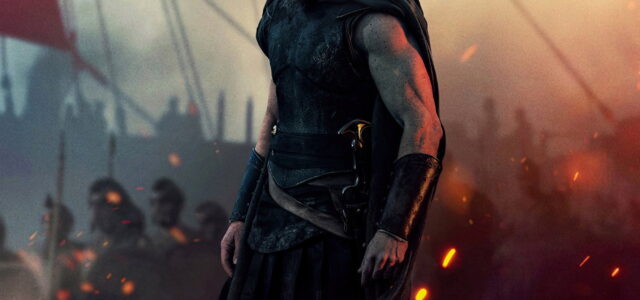
Musk’s AI Odyssey: 12 Things to Know About Grok’s Answer to Christopher Nolan
AI & Future of Film 8th November 2026 Leo Wilson
By the Filmoria News Desk
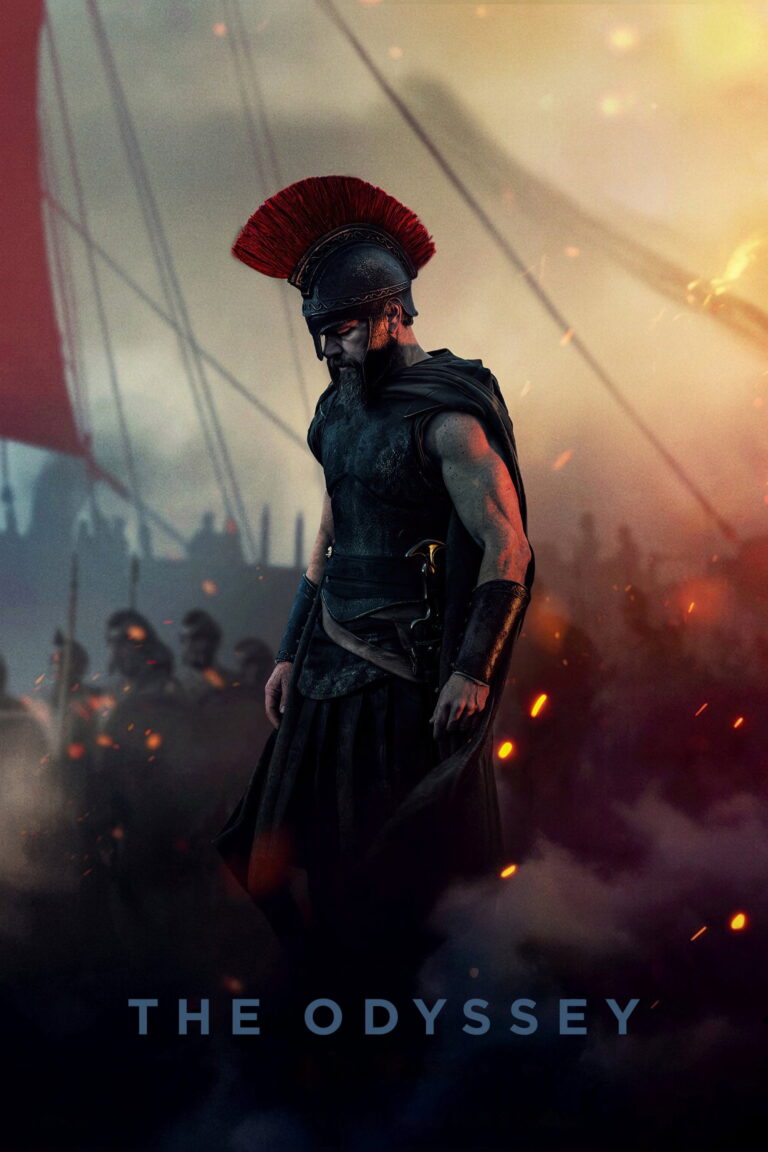
Christopher Nolan’s The Odyssey, the film Musk’s AI version was pitched against. Poster © Universal Pictures.
On 23 October 2026, xAI’s video tool Grok Imagine posted the first episode of an AI-generated version of Homer’s The Odyssey on X: a roughly seven-minute short made by London start-up Wonder Studios and US director Dev Walker, after Elon Musk promised in July that Grok would make a full-length, “historically accurate” Odyssey before the end of 2026. It drew more than 7.9 million views within days, but critics savaged it, with The Guardian giving it one star and The Telegraph none. In the UK it can only be watched on X; there’s no cinema or streaming release, and no date for episode two.
Quick Facts
- What: Episode 1 of an AI-generated Odyssey series, made with Grok Imagine
- Released: 23 October 2026, on Grok Imagine’s X account
- Length: About seven minutes
- Made by: Wonder Studios (London) and director Dev Walker
- Crew and cost: Three people, under two weeks, “tens of thousands of dollars” (per Wonder Studios)
- Views: More than 7.9 million on X by 28 October
- Reviews: One star (The Guardian), zero stars (The Telegraph)
- Musk’s target: A full-length AI Odyssey film “before this year ends”
In the UK
- Where to watch: Posted publicly on Grok Imagine’s X account; there’s no UK cinema, TV or streaming release.
- BBFC rating: None. It was posted straight to social media and hasn’t been classified.
- Episode 2: Not yet confirmed for the UK or anywhere else; no date has been announced.
- Nolan’s The Odyssey: Rated 15 by the BBFC and released in UK cinemas on 17 July 2026. A 17 November digital and 4K release has been reported for the US; the UK home release date is not yet confirmed for the UK.
This is a list of the 12 things you need to know about Elon Musk’s AI-generated Odyssey, the seven-minute Grok Imagine episode released on 23 October 2026 as a rival to Christopher Nolan’s film. The items run from the episode itself, through who made it and how it was received, to what it means for filmmakers, actors and audiences, roughly in the order the story unfolded.
| # | Item | Date | Key figure | Who’s involved |
|---|---|---|---|---|
| 1 | Episode 1 released | 23 Oct 2026 | About 7 minutes | Grok Imagine, Wonder Studios, Dev Walker |
| 2 | Musk’s feature-film pledge | 22 Jul 2026 | Full-length film by end of 2026 | Elon Musk |
| 3 | The Nolan feud | Mar to Jul 2026 | Not applicable | Musk, Christopher Nolan, Scott Derrickson |
| 4 | Wonder Studios | Founded 2025 | More than $15m raised (company website) | Xavier Collins, Justin Hackney |
| 5 | Crew and cost | Under two weeks | 3 people, tens of thousands of dollars | Wonder Studios |
| 6 | Critics’ verdict | 24 to 28 Oct 2026 | 1 star (Guardian), 0 stars (Telegraph) | Peter Bradshaw, Louis Chilton, Anthony Ha |
| 7 | Accuracy row | From 23 Oct 2026 | Not disclosed | X users, Euronews |
| 8 | Audience reach | By 28 Oct 2026 | 7.9m+ X views | Grok Imagine |
| 9 | Nolan comparison | 17 Jul 2026 | $250m budget, about $1.8bn gross | Universal, Syncopy |
| 10 | Musk’s Skydance stake | 22 Oct 2026 (reported) | About $1bn | Musk, David Ellison |
| 11 | Other AI productions | Aug to Dec 2026 | Varies | Ay Yapım, Prime Video, Fable |
| 12 | What comes next | By 31 Dec 2026 | Not disclosed | Wonder Studios, Grok Imagine |
1. The Episode Itself (2026, X, Grok Imagine)
What makes it stand out: It’s the first finished piece of a project the world’s richest man publicly pitched as an AI rival to a $250 million Christopher Nolan film. Key data: Posted on 23 October 2026 on Grok Imagine’s X account, it runs about seven minutes and is billed as “Episode 1 of our Odyssey series.” Why it matters: It’s the clearest test yet of what a big AI lab’s video model can do with a story everyone knows.
The post itself was short and bullish: “Watch Episode 1 of our Odyssey series made with Grok Imagine,” along with an offer to share a full breakdown of how it was made. It credits a “creative collaboration” with Wonder Studios and director Dev Walker. Musk shared it a day later with a simple “Odyssey with Grok Imagine.”
So what’s actually in it? TechCrunch’s Anthony Ha describes a long voiceover backstory, delivered by a narrator with a British accent, followed by a series of bearded men trading stilted lines and some sailing scenes. Nobody speaks ancient Greek. Euronews pointed out that it shows the Greeks landing at Troy, which happens before Homer’s poem even begins. That’s a fair creative choice for a series opener, but it means this first instalment is closer to a prologue than to anything Homer wrote down.
Ha admitted it was less ugly than he’d expected, and some shots genuinely look like real actors at sea. That’s not nothing. A couple of years ago, footage like this would’ve taken a VFX house and a lot of money. The problem, as nearly every reviewer said in one way or another, is that looking real and feeling alive aren’t the same thing.
2. Musk’s Promise (22 July 2026, X)
What makes it stand out: The episode exists because of a single post, and that post set a bar the project hasn’t cleared. Key data: On 22 July 2026, Musk wrote: “Before this year ends, Grok Imagine will make a full-length movie of The Odyssey that is historically accurate,” adding that it would be “true to the art of Homer.” Why it matters: Seven minutes in late October is a long way from a feature by 31 December.
The timing of that July post is the whole story. Nolan’s The Odyssey had opened five days earlier, on 17 July, and was already on its way to becoming the director’s biggest hit. Musk’s post came with an AI-generated three-minute short made by an X user, offered as a taste of what Grok could do.
What Grok has delivered so far is described, by its own account, as an episodic series rather than a film. That might be a sensible change of plan. Seven-minute chunks are easier to produce, easier to fix, and far better suited to an X feed than a 170-minute feature. But it isn’t what was promised, and critics noticed. There are now less than two months left before Musk’s self-imposed deadline, and nobody involved has said whether a full-length cut is still coming this year.
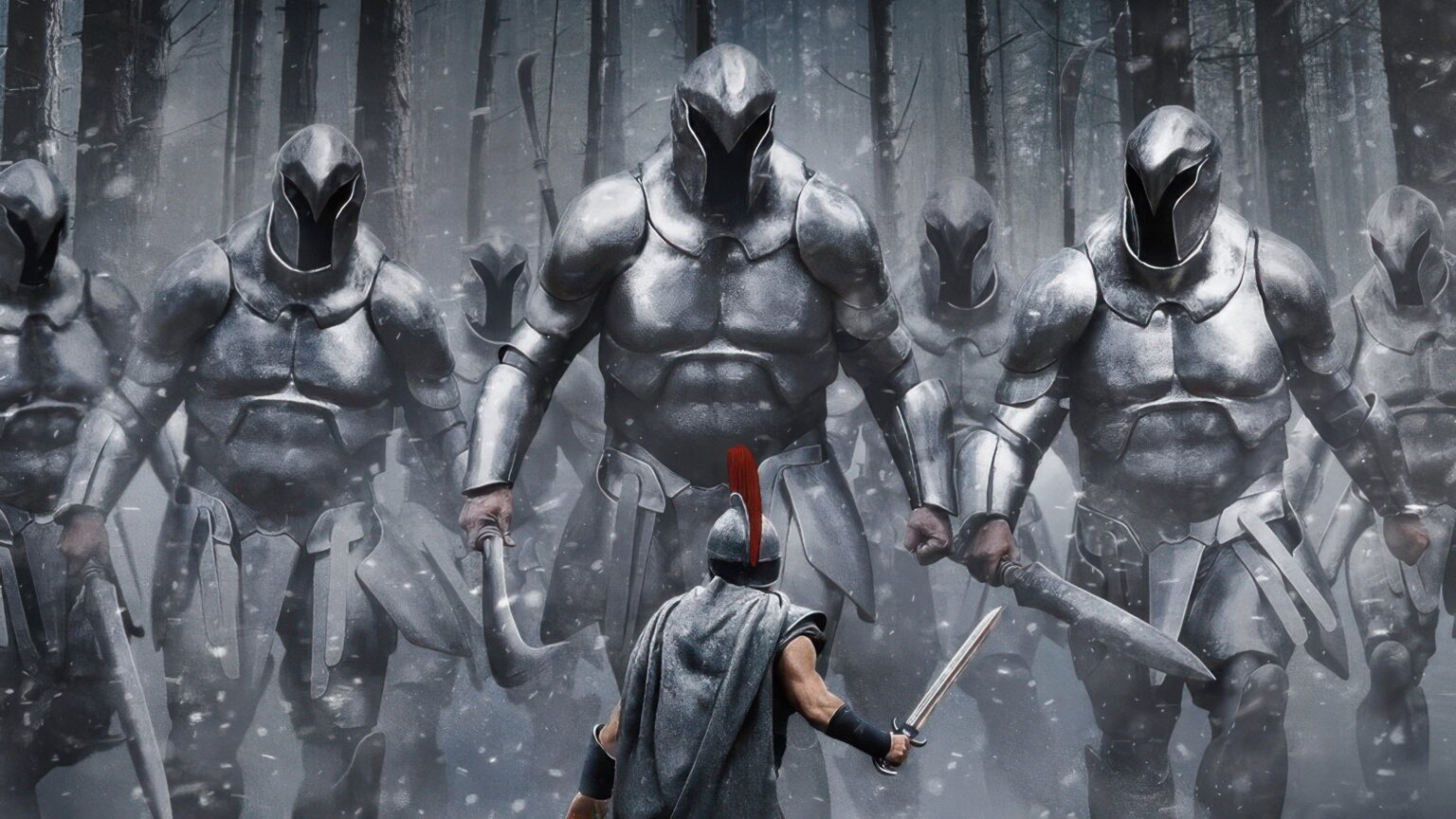
Nolan’s version leaned on practical battle scenes shot on location. Production still © Universal Pictures.
3. The Nolan Feud Behind It (March to July 2026)
What makes it stand out: This isn’t a neutral tech demo; it grew directly out of Musk’s months-long attacks on Nolan’s casting. Key data: In March 2026, Musk wrote on X that “Chris Nolan is an anti-White racist,” and he criticised the casting of Lupita Nyong’o as Helen of Troy and Elliot Page as Sinon. Why it matters: The politics around the project shaped how almost everyone judged it.
According to Variety, Musk claimed Nolan had cast Nyong’o and Page to meet the Academy’s representation and inclusion standards, saying of Nolan that “He wants the awards.” Euronews described his posts over the following months as “racist and transphobic outbursts” and “go woke, go broke” rants. Classical scholars, for what it’s worth, have pointed out that Homer never pins Helen to a specific physical type.
The reaction from filmmakers was blunt. When Musk made his July pledge, director Scott Derrickson replied on X that Musk clearly knew nothing about cinema and that his “opinions on art are worthless.” Derrickson’s phrasing was a lot saltier than that.
All of this means the AI Odyssey arrived carrying baggage a normal AI short wouldn’t. Plenty of viewers went in hoping to hate it. Others went in wanting it to win a culture war. Very few came at it simply as a piece of filmmaking, which, to be fair to Wonder Studios, is how the team says it approached the job.
4. Who Actually Made It: Wonder Studios (2025, London)
What makes it stand out: The episode was outsourced to a small, specialist AI film studio, not made in-house by xAI. Key data: Wonder Studios is a London-based start-up founded in 2025 by Xavier Collins and filmmaker Justin Hackney, and its website says it has raised more than $15 million. Why it matters: A British company now sits in the middle of one of the year’s loudest AI-and-film rows.
Collins has done most of the talking. He told The Guardian his team “were not given any direction to make it anti-woke or anything like that,” and called himself a “huge fan” of Nolan’s film. Asked about the job, he said: “We were given the opportunity by one of the world’s best frontier labs to work on one of the best stories ever told.”
The brief, as Collins described it to NME, was practical rather than ideological: “help us understand the technology, where it’s strong, where it could use improvement.” That’s a useful detail. It suggests the Odyssey episode is partly a stress test for Grok Imagine, with Wonder acting as the expert user that finds the cracks.
Director Dev Walker is American and, like Wonder, specialises in AI filmmaking. Neither has a track record in conventional features, which is part of the point. These are AI-native creators, and that’s a growing category. Whatever you think of this episode, studios like Wonder are where a lot of AI film work is now being done.
5. The Crew and the Cost (Under Two Weeks, Three People)
What makes it stand out: It was made by a tiny team, very quickly, for very little money by film standards. Key data: Collins told The Guardian a team of three, including Walker, made it in under two weeks for “tens of thousands of dollars”; Grok Imagine says it’s building the episodes “in public with a small crew of 3-5 creatives.” Why it matters: These numbers, not the reviews, are what will worry crews.
Put those figures next to a conventional production and the gap is huge. Donald Clarke in The Irish Times compared the battle footage to Zack Snyder’s 300, whose post-production took a year and ten special-effects houses. Three people. Two weeks. That’s the comparison that sticks.
Clarke’s own conclusion was that a small team achieving this would once have needed dozens of people over many months. He doesn’t think the result is good. He does think it’s a sign of where things are going.
For actors, the arithmetic is uncomfortable. There’s no cast here at all, not even voice actors credited in the reporting so far. For below-the-line crews, the model is worse: no locations, no costumes, no grips. For now, the quality gap protects those jobs on anything people actually pay to see. Whether that gap holds is the question every union contract negotiated this year has tried to answer.
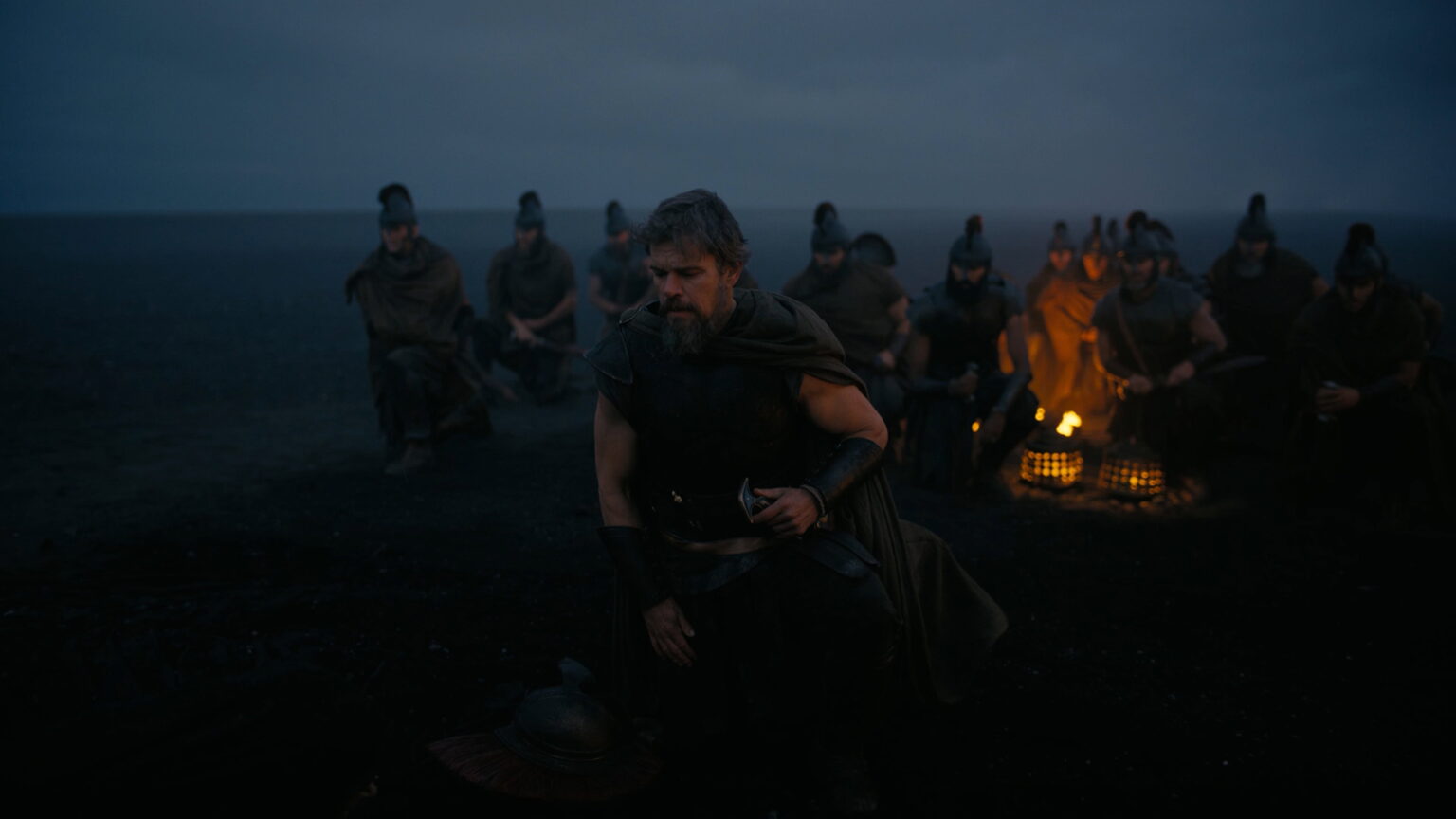
A night scene from Nolan’s film, made with a large cast and crew across six countries. Production still © Universal Pictures.
6. The Reviews (24 to 28 October 2026, UK and US Press)
What makes it stand out: British critics treated a seven-minute X post like a cinema release, and they were brutal. Key data: The Guardian’s Peter Bradshaw gave it one star, The Telegraph gave it zero, and The Independent’s Louis Chilton said backing it was damaging Musk’s reputation. Why it matters: Mainstream film critics are now reviewing AI work on the same terms as everything else, and it isn’t passing.
Bradshaw wrote that “every single dramatic moment… is all as motiveless and meaningless as the movement of shapes on a laptop screensaver.” The Telegraph’s review went for the gut: “This seven-minute AI horror show is so unsettling you can feel your eyeballs twitch at its sloppy gruesomeness.”
The American tech press wasn’t much kinder. TechCrunch’s Ha said the footage “looks okay, as long as you’re not seeking artistry, inspiration, or human interest,” called it airless, and admitted he was checking the time. His closing line was the most damning of the lot: “It’s hard to imagine being interested in another seven minutes of this, much less a full movie’s worth.”
Clarke, in The Irish Times, wrote that the characters resemble waxworks and the dialogue pauses unnaturally, like a video game cutscene. He also noted, drily, that “none of the characters has more than five digits on any of their hands.” Not long ago, extra fingers were the giveaway of AI video. That they aren’t any more is quietly one of the bigger technical points in the whole saga.
7. The “Historically Accurate” Problem (From 23 October 2026)
What makes it stand out: The project was sold on accuracy, and accuracy is where viewers attacked it hardest. Key data: The episode’s dialogue is in modern English, the narrator has a British accent, and the opening depicts events from before Homer’s poem starts. Why it matters: It undercut the main argument Musk had used against Nolan.
Many X users pointed out that the ancient Greeks in the episode all look Anglo-Saxon and speak with English accents, which sits awkwardly next to a promise of historical accuracy. One user quoted by Euronews summed up the irony: Musk “criticized Nolan, one of the best directors of our generation, for not being historically accurate,” then put out a clip with “dozens of historical inaccuracies.”
Other complaints were more technical. Viewers flagged jarring cuts, plastic-looking characters and dialogue that felt too modern. Another Euronews-quoted viewer called it “basically a 7 minute C level trailer” with “dreadful pacing and dialogue.”
Collins has said the next episode will deal with criticism of the historical accuracy of the boats and the fast pacing. That’s a revealing pair of fixes. The boats are a research problem, and AI tools can handle research problems. Pacing is a storytelling problem, and that’s much harder to prompt your way out of.
8. The Case For It: 7.9 Million Views (By 28 October 2026)
What makes it stand out: Whatever critics thought, a lot of people watched it. Key data: TheNextWeb reported more than 7.9 million views on X by Wednesday 28 October. Why it matters: Attention is the currency AI studios are chasing, and this got plenty.
Not every reaction was hostile. Some commenters praised the relative photorealism of the footage, and others argued that the technology will keep improving. One X user put it neatly: “There’s a lot of room for growth, but the good news is there will be growth.”
The most thoughtful version of this argument came from someone who didn’t like the episode at all. Clarke’s Irish Times column carried the headline “Be afraid. Be very afraid,” and he wrote that there was “a sense here of frightening work in progress.” His key line: the “ghost in the machine is not yet discernible. That may not always be the case.”
That’s the right way to read the views figure. Millions of people didn’t watch because it was good; they watched because of Musk, because of Nolan and because they wanted to see what an AI epic looks like in 2026. Curiosity clicks aren’t a business model. But they are a proof that AI-made drama can get an audience in the room, and the studios watching this will take note of both the numbers and the reviews.
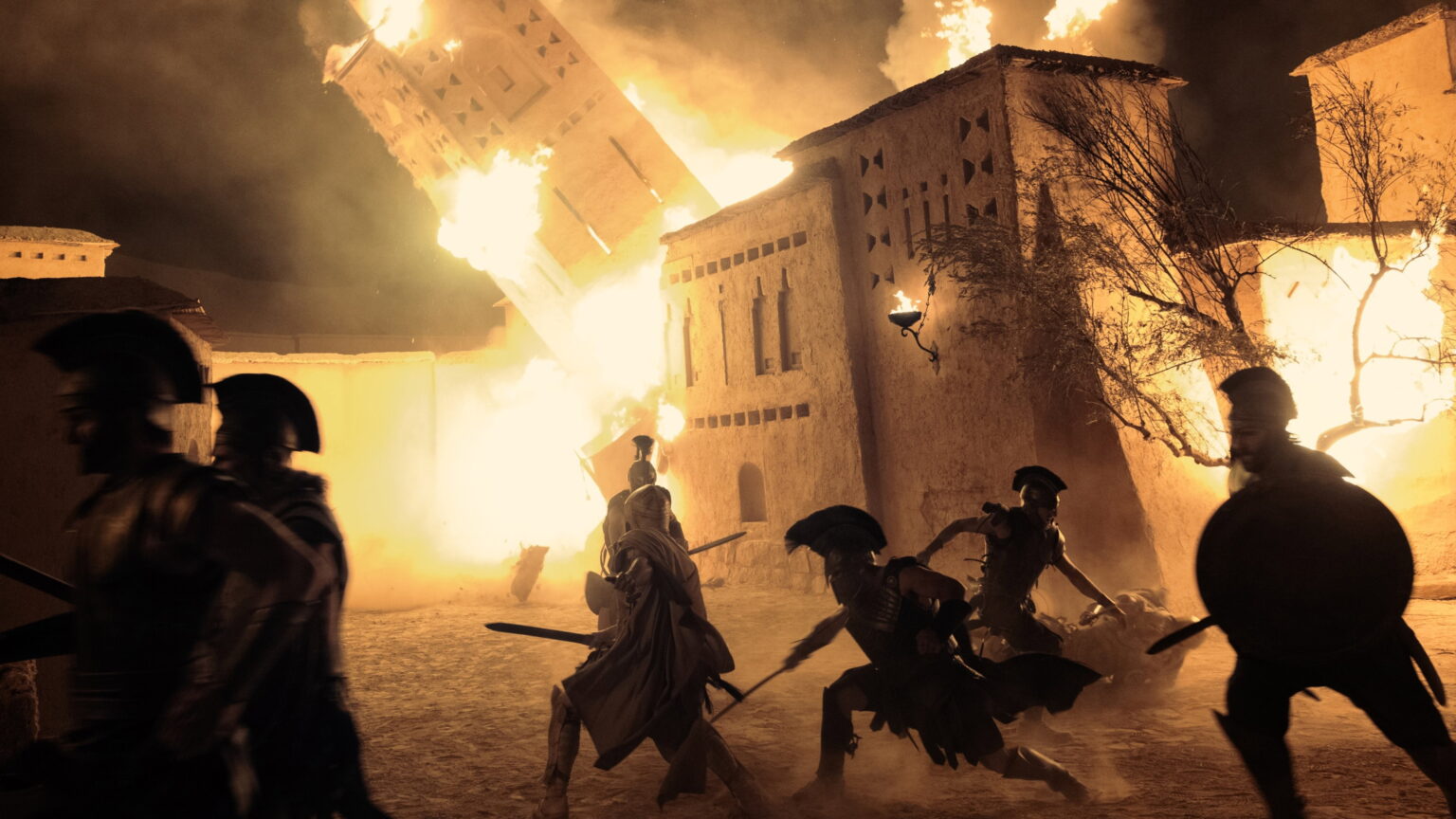
The siege of Troy in Nolan’s version. Production still © Universal Pictures.
9. The Nolan Comparison (17 July 2026, Universal)
What makes it stand out: The film Musk set out to beat is the biggest of Nolan’s career and an Oscar front-runner. Key data: Nolan’s The Odyssey cost about $250 million, took 91 shooting days across six countries, and has grossed about $1.8 billion since its 17 July 2026 release. Why it matters: It’s the starkest possible contrast between human-made spectacle and AI output.
Nolan’s film was shot entirely on IMAX film with a cast and crew of thousands. The Irish Times says it’s the bookmakers’ favourite for Best Picture. TechCrunch’s Ha, for the record, said he sat through nearly three hours of Nolan’s version with ease, then struggled with seven minutes of Grok’s.
Nolan himself has been open about where he stands. He calls himself a “techno-skeptic,” and TechCrunch reports him saying he had never seen a technology “so completely rejected by the public” as AI. Clarke put the difference in one phrase: Nolan’s work has “the thumbprints of human labour on every frame.”
It’s a lopsided fight, and maybe an unfair one. A three-person team with a fortnight and a modest budget was never going to match a $250 million epic. But Musk picked the fight, and the comparison is now baked into how people talk about AI film. For audiences, the lesson so far seems to be simple: people still turn up for craft. Nolan’s box office says so, and the Grok reviews say the same thing from the other side.
10. Musk’s Hollywood Money: The Skydance Stake (Reported 22 October 2026)
What makes it stand out: The day before the episode dropped, Musk was reported to have bought into one of Hollywood’s biggest studios. Key data: Semafor reported on 22 October 2026 that Musk had invested about $1 billion in David Ellison’s Skydance, the company formed after Paramount’s takeover of Warner Bros. Discovery closed on 6 October. Why it matters: Musk’s views on film are no longer just posts; he has money inside a major studio.
The figure came from people familiar with the matter, and Reuters, citing CNBC, also reported a figure of about $1 billion. Musk hasn’t commented publicly. The Ellison connection runs both ways: Larry Ellison, David’s father, put $1 billion into Musk’s 2022 Twitter takeover.
There’s no reported link between the Skydance stake and the Odyssey project, and it would be wrong to suggest one. But the timing matters for context. Skydance now controls Paramount and Warner Bros., including DC Studios, and Filmoria has already covered the Warner Bros. film shake-up that followed the takeover. A major investor in that company is also the loudest champion of replacing traditional production with AI. That combination will make creative unions, and plenty of filmmakers, nervous.
TheNextWeb also noted that SpaceX, which now runs Grok, launched a partner network for Grok the week before the episode came out. The business push around Grok Imagine is clearly bigger than one seven-minute short.
11. The Bigger AI Wave: Castle Walls, Sanxingdui and Gods Don’t Give Gifts (August to December 2026)
What makes it stand out: Grok’s Odyssey is one of several AI-made productions testing audiences this year, and none has had an easy ride. Key data: Ay Yapım’s Castle Walls reached Prime Video on 12 August 2026, China’s all-AI feature Sanxingdui: Future Past earned about $180,000 in its first four days, and Gods Don’t Give Gifts opens in limited UK and US cinemas on 4 December. Why it matters: The Odyssey isn’t a one-off stunt; it’s part of a pattern.
Castle Walls is the closest comparison. It’s billed as the first end-to-end AI-created series on a major streaming platform, set around the 11th-century fortress of Alamut. Turkish studio Ay Yapım made it through its AI arm using a video model trained on its own licensed catalogue, with human-written scripts by Kerem Deren and Çisil Hazal Tenim and human voice actors for the dubbing. The Guardian’s Luke Buckmaster was harsh, describing the “people” as looking “like Vaseline-smeared Madame Tussauds creations.” Ay Yapım’s defence was that “this is not a production that bypassed human skill; it is one that used AI to amplify it.”
That line is the key difference from the Grok project. Ay Yapım leaned on human writers and actors and trained on content it owned. Grok’s Odyssey, so far, has told us very little about either.
Closer to home, Gods Don’t Give Gifts is heading for UK cinemas and an Oscar submission, as we explained in our guide to the AI film chasing an Oscar. And in China, as we covered in our report on the AI micro-drama boom, AI production is already changing how short-form drama is made at enormous scale.
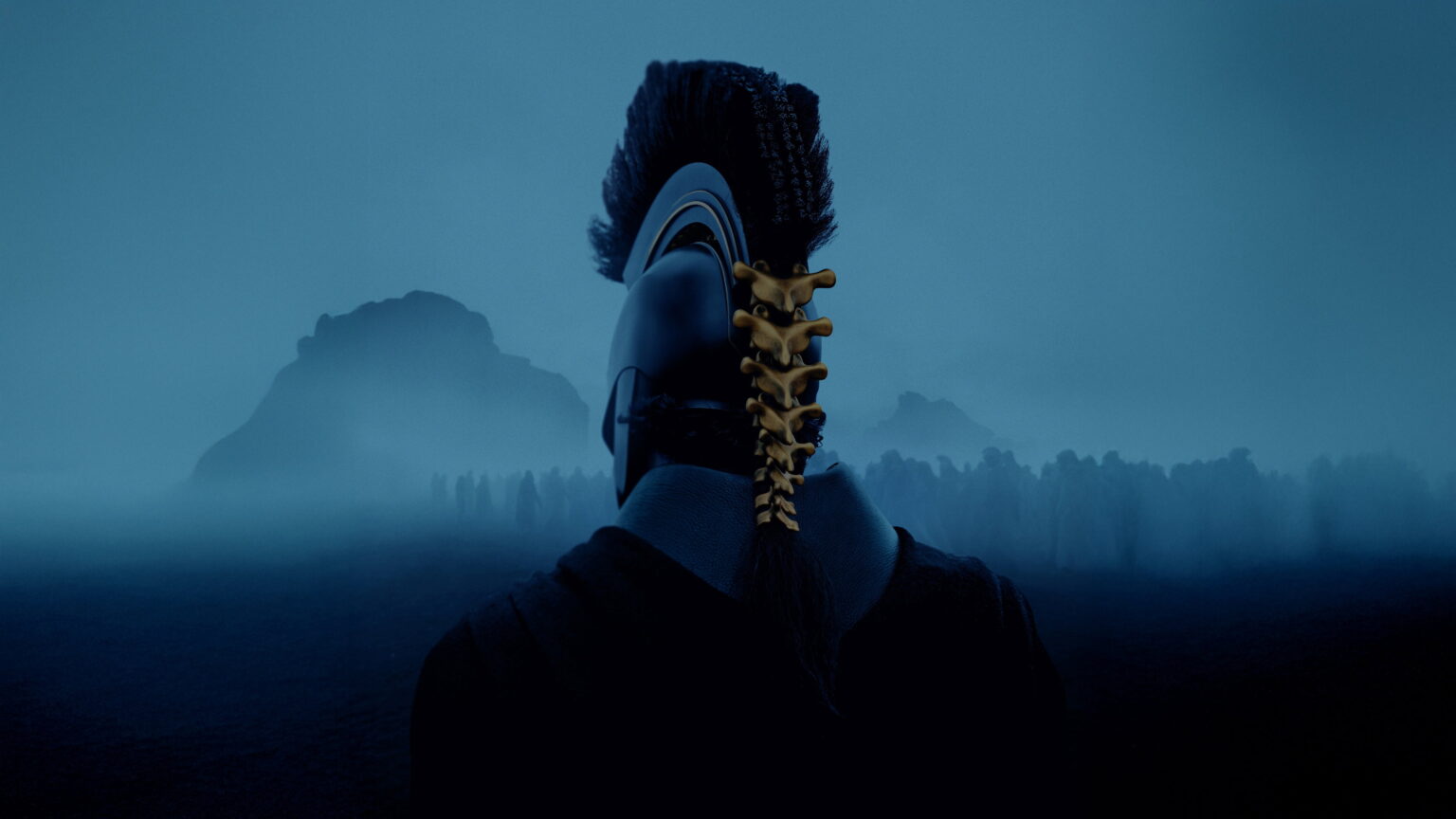
Real locations versus generated ones: a landscape from Nolan’s film. Production still © Universal Pictures.
12. What Comes Next: Episode Two and the Year-End Deadline (Before 31 December 2026)
What makes it stand out: The project has a public deadline and a promise to improve, and both will be easy to measure. Key data: No date has been announced for episode two, and Musk’s target for a full-length film is the end of 2026. Why it matters: How fast the next episodes improve will say more about AI filmmaking than the first one did.
Collins has set the bar himself: “The goal is that the last episode we make is radically better than the first.” The next instalment is meant to fix the boats and the pacing. If the team can show real progress on story and performance, not just set dressing, that’ll be a more serious signal than any number of views.
For filmmakers, the takeaway is mixed. The tools can now produce footage that passes for live action in individual shots, made by three people in a fortnight. What they can’t yet do, on this evidence, is make you care. That’s where human directors, writers and actors still hold the line, and it’s why the AI performer rules in this year’s US actors’ contracts focus on consent and compensation rather than outright bans.
For UK audiences, little changes right away. You can watch the episode on X if you’re curious, and Nolan’s film is heading to home release. But the questions this raises, about who owns a story, who gets paid and what counts as a film, are going to keep coming up, in Hollywood and at Pinewood alike.
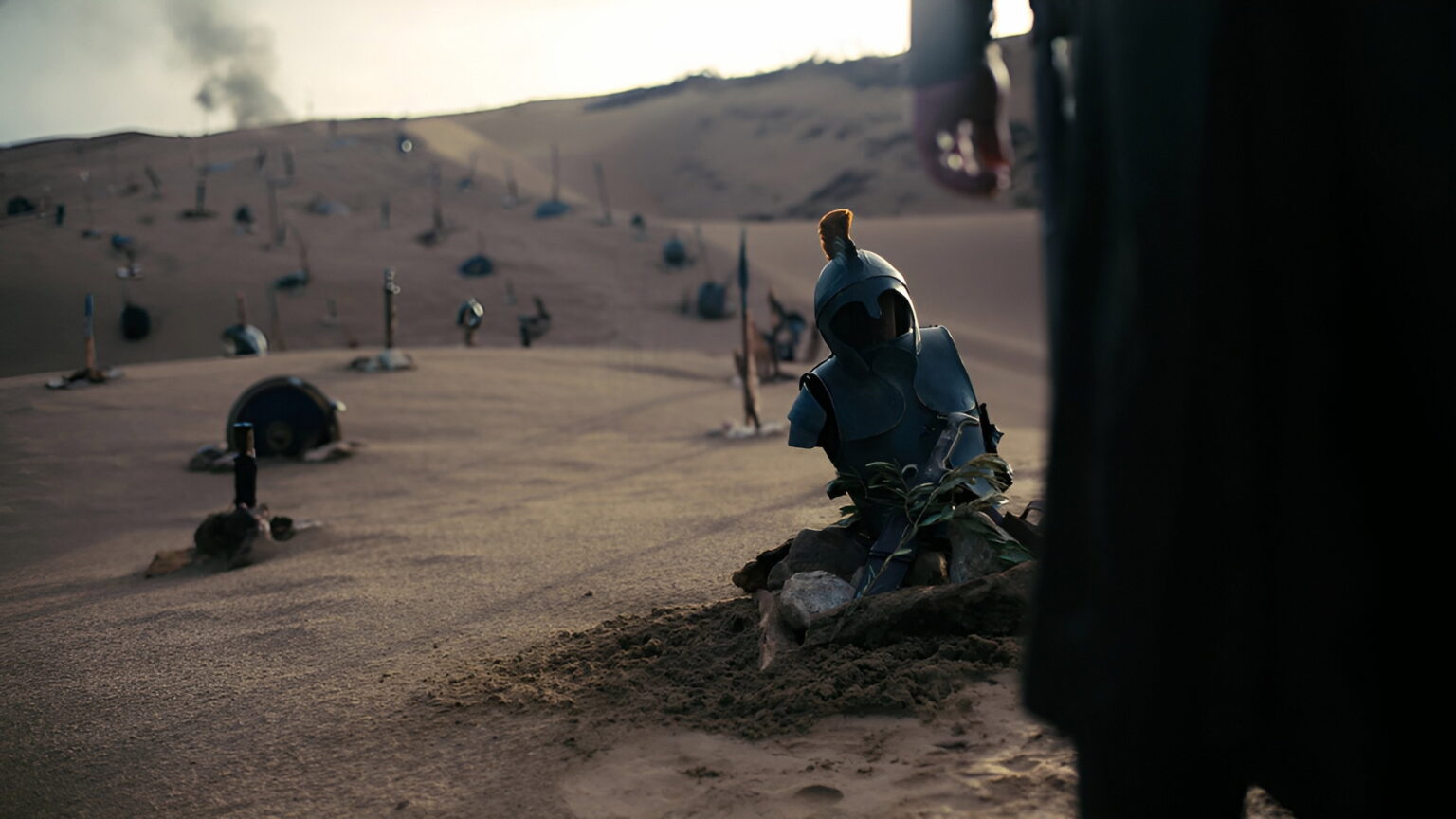
Nolan’s film was shot in six countries over 91 days. Production still © Universal Pictures.
The Verdict So Far
Musk promised a historically accurate AI epic that would show Nolan how it’s done. What arrived on 23 October was seven minutes of handsome, hollow footage that critics tore apart and millions watched anyway. The interesting part isn’t the feud. It’s that three people made it in under two weeks, and they say the next one will be better. If you want to understand where AI filmmaking really is at the end of 2026, watch the episode, then watch Nolan’s film, and note the gap. Then check back in six months.
Sources: TechCrunch, Euronews, TheNextWeb, Variety, NME, The Irish Times, Semafor.
Frequently Asked Questions
When was Elon Musk’s AI Odyssey released?
The first episode was released on 23 October 2026, when Grok Imagine posted it on X. Musk shared it the following day.
How long is the Grok AI Odyssey episode?
The first episode runs about seven minutes. It is billed as Episode 1 of an Odyssey series rather than a full film.
Who made the AI Odyssey for Grok?
It was made by Wonder Studios, a London-based AI film start-up founded in 2025, with US director Dev Walker. Wonder co-founder Xavier Collins says a team of three made it.
How much did the AI Odyssey episode cost to make?
According to Wonder Studios, it cost tens of thousands of dollars and took under two weeks. No exact figure has been published.
Where can I watch the Grok Odyssey in the UK?
You can only watch it on X, where it was posted on Grok Imagine’s account. It has no UK cinema, TV or streaming release and no BBFC rating.
What did critics think of Musk’s AI Odyssey?
Most critics hated it. The Guardian’s Peter Bradshaw gave it one star, The Telegraph gave it zero stars, and TechCrunch called it airless.
Why did Elon Musk make an AI version of The Odyssey?
Musk pledged on 22 July 2026 to make a historically accurate Odyssey with Grok Imagine after months of criticising Christopher Nolan’s casting, including Lupita Nyong’o as Helen of Troy and Elliot Page as Sinon.
Will there be a full-length Grok Odyssey movie?
Musk promised a full-length film before the end of 2026, but so far only a seven-minute first episode exists. No date has been given for episode two or a feature-length version.
How many people watched the AI Odyssey episode?
It passed 7.9 million views on X by 28 October 2026, according to TheNextWeb.
How much did Christopher Nolan’s The Odyssey cost compared with the AI version?
Nolan’s film cost about 250 million dollars and took 91 shooting days, while the AI episode reportedly cost tens of thousands of dollars and under two weeks. Nolan’s film has grossed about 1.8 billion dollars.
📸 Follow us on Instagram for daily film, TV & gaming news: @filmoriauk

Leo Wilson
The byline used for guest contributions to Filmoria. Individual pieces credit their own writer wherever one has been supplied.