


Japan’s AI Voice Rules: 12 Things to Know as Goku Actor Masako Nozawa Calls Clones Theft
AI & Future of Film 18th October 2026 Liz Bennett
By the Filmoria News Desk

On 15 October 2026 the Japan Actors Union, which represents about 2,600 actors and voice actors, published its first guidelines on using performers’ voices with generative AI. They demand separate written consent for training, model-building and use, cap consent at one year, ban buyout contracts and in principle forbid recreating the voices of dead performers. The same day Masako Nozawa, the 89-year-old Japanese voice of Goku in Dragon Ball, told NHK that AI clips copying her voice without permission amount to theft.
Quick Facts
- What: The Japan Actors Union’s guidelines on using generative AI with performers’ voices
- Published: 15 October 2026, at a press conference in Tokyo
- Who it covers: About 2,600 union members, plus the production companies, game studios and AI developers that hire them
- Core rule: Prior written consent at each stage (training, building a voice model, using the output), with separate pay
- Legal status: A voluntary industry standard with no legal force. The union says it will lobby for a ‘voice right’ in Japanese law
- Key voice: Masako Nozawa, union vice-chair and the Japanese voice of Goku since 1986
In the UK
- The guidelines are Japanese and have no legal effect in the UK, but they apply to any company that wants to train on or clone the voices of the union’s members, wherever that company is based.
- UK anime and games fans who watch or play in Japanese with subtitles are hearing the performers these rules are meant to protect.
- The UK has no standalone legal right over your own voice. Performers currently have to rely on contract or general tort law, a gap the Save Our Voices Now campaign, launched on 28 August 2026, is asking the government to close.
- Equity, the UK performers’ union, has published a toolkit on performance cloning and consent for its members.
- No UK government response to the Japanese guidelines has been announced.
This is a list of the 12 most important things to know about Japan’s new AI voice guidelines and the arguments around them, from the rules themselves to the court case, the backlash and how it all compares with Hollywood and the UK.
We ordered the list by what matters most to working performers and producers: the rules in the document come first, then the people and the case behind them, then the wider international picture.
| # | Item | Date | Body or party | Key figure | Legally binding? |
|---|---|---|---|---|---|
| 1 | Voice guidelines published | 15 Oct 2026 | Japan Actors Union | About 2,600 members | No |
| 2 | Three-stage written consent | 15 Oct 2026 | Japan Actors Union | 3 separate consents | No |
| 3 | One-year cap, no buyouts | 15 Oct 2026 | Japan Actors Union | 1 year maximum (as a rule) | No |
| 4 | Separate AI fees and AI dubbing | 15 Oct 2026 | Japan Actors Union | Fee on top of normal pay | No |
| 5 | Late performers’ voices | 15 Oct 2026 | Japan Actors Union | Banned in principle | No |
| 6 | Penalties for misuse | 15 Oct 2026 | Japan Actors Union | Sales-equivalent damages | No |
| 7 | Masako Nozawa speaks out | 15 Oct 2026 | NHK interview | Aged 89, Goku since 1986 | Not applicable |
| 8 | Kenjiro Tsuda ruling | 30 Sep 2026 | Tokyo District Court | Voice protected by publicity rights | Yes (court ruling) |
| 9 | NOMORE campaign anniversary | 15 Oct 2024 | 26 voice actors | Exactly 2 years earlier | Not applicable |
| 10 | The enforcement gap | Ongoing | Union, platforms, lawmakers | No voice-right law yet | Not applicable |
| 11 | SAG-AFTRA comparison | Ratified 4 Jun 2026 | SAG-AFTRA and AMPTP | 91.42% yes vote | Yes (contract) |
| 12 | UK comparison | 28 Aug 2026 | Save Our Voices Now, Equity | 80-plus performers | No |
1. The Japan Actors Union’s AI Voice Guidelines (2026, Japan, Nippairen)
What makes it stand out: It’s the first time a Japanese performers’ body has written down, in detail, exactly what a company has to do before it can use an actor’s voice with generative AI.
Key data: Published on 15 October 2026 by the Japan Actors Union (Nippon Haiyu Rengo, usually shortened to Nippairen), which has about 2,600 members.
Why it matters: Japan’s anime, games and dubbing industries rely on a small pool of very famous voices, and those voices have become some of the most cloned on the internet.
The document is officially called the Guidelines on the Use of Generative AI Relating to Voice. The union says it has two goals. One is protecting performers’ rights. The other, which gets less attention, is giving production companies and AI developers a clear set of rules so they can do business without walking into a dispute.
That second goal is important. This isn’t a blanket ban on AI voices. The union isn’t telling studios they can’t use synthetic speech. It’s telling them that if they want a specific performer’s voice, they have to ask, pay and put it in writing. Several Japanese outlets, including ITmedia and Real Sound, described it as a set of voluntary rules covering learning, generation and use, with prior permission required throughout.
Why now? Partly because the problem has got much worse. Cheap voice-cloning tools can now make a passable copy of a well-known voice from a few minutes of audio, and Japanese anime voices are ideal training material: decades of clean, professionally recorded dialogue, much of it easy to find online. Fan-made AI ‘covers’ of voice actors singing songs they never recorded have become a genre of their own. Bengoshi.com News led its coverage of the launch with a performer’s complaint about songs they had never sung turning up online in their voice.
The guidelines run to a series of numbered articles. Japanese law firm Ito Kai has already published a clause-by-clause reading, which tells you how seriously the legal world is taking it, even though it carries no force of law.
2. Three Separate Written Consents (Training, Model, Use)
What makes it stand out: Consent isn’t a single tick-box: the guidelines split AI use into stages and require a separate written agreement for each one.
Key data: Three stages need prior written consent: training an AI on the voice, building a model that reproduces it, and using the generated audio in a work.
Why it matters: It closes off the most common loophole, where permission for one thing quietly turns into permission for everything.
Here’s the scenario the union is trying to stop. A performer signs a contract to voice a game character. Buried in the paperwork is a line letting the publisher use the recordings ‘for development purposes’. Years later, those recordings have trained a model, the model is generating new lines, and the performer never agreed to any of it in a way they understood.
Under the new guidelines, each step needs its own consent. Agreeing to let a company train on your recordings doesn’t mean you’ve agreed to a reusable model of your voice. Agreeing to a model doesn’t mean you’ve agreed to its output appearing in a particular anime, game or advert. The Korea Daily’s summary describes the stages as training and interpretation, generation and reproduction, and distribution and sales, with the purpose spelled out in advance.
For producers, this is more admin. For performers, it’s the difference between knowing where their voice is going and finding out afterwards. And for AI developers building voice libraries, it’s a warning: a dataset built from recordings with vague or missing consent may be one the union considers tainted from the start.
3. A One-Year Consent Cap and No Buyout Contracts
What makes it stand out: The guidelines put a time limit on consent and rule out the ‘sign once, use forever’ buyout deals that performers fear most.
Key data: Consent and contracts last a maximum of one year as a rule, with longer terms allowed for good reason, such as games or anime with long production schedules.
Why it matters: A performer’s voice can’t be signed away for every future project in one go.
Buyouts are the big fear across the industry, not just in Japan. A company pays once, takes a broad licence, and can then reuse a performer’s voice in sequels, spin-offs and new series without asking or paying again. The union’s guidelines say contracts that grant blanket permission for future works or new series aren’t acceptable.
The one-year default forces a conversation. If a studio wants to keep using an AI version of a voice after a year, it has to go back to the performer and renegotiate. That gives actors a regular chance to say no, raise their rate or set new limits, depending on how the technology and their career have changed.
There’s a practical exception, and it’s a sensible one. Anime series and big games can take several years to make, so the guidelines allow longer agreements where there’s a reasonable justification. What they don’t allow is a contract with no end date at all.
ITmedia’s headline on the launch quoted the view that things had simply been ‘too easy until now’. That sums up the union’s position: the guidelines don’t invent a new right so much as make companies do the paperwork they should have been doing anyway.
4. A Separate AI Fee, Including for AI Dubbing
What makes it stand out: AI use is treated as extra work that has to be paid for, not a free bonus bundled into the original session fee.
Key data: The guidelines ask for payment for AI use on top of the normal appearance fee, and say AI dubbing into other languages needs fresh permission and extra pay.
Why it matters: If a cloned voice can do new work, the performer behind it should be paid for that work.
The money question is where AI voice deals usually fall apart. Studios like synthetic voices partly because they’re cheap: once the model exists, new lines cost almost nothing. The union’s answer is that AI-generated performance should be paid for in a way that reflects new use, separate from the fee the actor got for turning up to the original recording.
The AI dubbing clause is the one international audiences should watch. Tools that take a Japanese performance and render it in English, Spanish or French while keeping the original actor’s voice are already being tested across the industry. For a Japanese performer, that’s potentially a whole new market for their voice, and also a threat to the local dub actors in every other country.
By requiring new permission and extra payment, the union is making sure Japanese actors share in any money made from AI dubs of their work. It doesn’t directly protect English-language dub actors, who have their own unions and contracts, but it does mean an AI ‘Japanese voice in English’ can’t simply be produced by default.
5. The Voices of Late Performers Are Off-Limits in Principle
What makes it stand out: The guidelines take a firm line against bringing back the voices of dead actors for new works.
Key data: Recreating a deceased performer’s voice with AI is banned in principle, with narrow exceptions such as projects the performer agreed to while alive or permission from heirs or rights holders.
Why it matters: Long-running anime franchises outlive their original casts, and the temptation to use AI to keep a beloved voice going is obvious.
Kyodo News, carried by SBS, reported that the guidelines in principle forbid using the voices of the dead in new works. Some coverage puts the exception more broadly as cases where surviving family or rights managers give explicit permission. Either way, the default is no.
This is one of the most emotionally loaded parts of the AI debate everywhere. Fans of a franchise often say they’d love to hear a late actor’s voice again. Families and colleagues are frequently far less comfortable, and there’s a real argument that a performer can’t consent to lines they never read, in a scene they never saw.
In Japan, where anime series like Dragon Ball have run for decades, recasting after an actor’s death is a familiar and painful process. The guidelines effectively say recasting with a living performer remains the proper route, and that AI shouldn’t become a way to avoid hiring someone new.

6. Takedowns, Destroyed Models and Sales-Equivalent Damages
What makes it stand out: The guidelines spell out what a company should face if it uses a voice without consent, and the list is tough.
Key data: Unauthorised users can be asked to stop distribution immediately, destroy the AI model, and pay special damages equal to their sales, calculated back to the day the misuse began (Article 20).
Why it matters: Sales-equivalent damages are designed to wipe out the profit from cloning a voice, not just impose a small fine.
This is the section that has got Japanese lawyers talking. Most voice disputes end with a takedown and, if the performer is lucky, an apology. The union wants more. Under Article 20 of the guidelines, as summarised by the Ito Kai law firm and other Japanese coverage, a company that uses a voice without permission should stop at once, destroy the model built from it, and pay an amount equal to its sales from the misuse, back-dated to the start.
The model-destruction demand is the clever bit. Deleting a few videos does nothing if the trained model still exists and can churn out more. Asking for the model itself to be scrapped goes after the source.
The obvious catch is that these are guidelines, not law. A company can’t be forced to pay sales-equivalent damages just because a union document says so. What the clause can do is shape contracts: if studios and AI firms start writing these remedies into their agreements with performers, they become enforceable as contract terms. That’s almost certainly the union’s plan.
7. Masako Nozawa Calls Unauthorised Clones Theft (2026, NHK)
What makes it stand out: The most famous voice in anime put a face on the issue on the day the guidelines came out.
Key data: Nozawa, 89, has voiced Goku in Japanese since Dragon Ball began airing in 1986 and is vice-chair of the Japan Actors Union; she spoke to NHK on 15 October 2026.
Why it matters: When the actor behind one of the world’s best-known cartoon characters calls AI clones theft, the story reaches far beyond the industry press.
According to translations of her NHK interview reported by Dexerto, Cybernews and others, Nozawa watched an AI clip imitating her voice and said using it without permission was theft and unforgivable. She said the synthetic voice had no heart, and that her anger grew the more she thought about it.
What’s interesting is what she didn’t say. Nozawa isn’t calling for AI to be banned. In the same coverage she described the technology’s progress as exciting, and said the answer is for people to follow the rules so that everyone can enjoy it together. It’s a more nuanced position than the headlines suggest, and it matches the union’s line exactly: consent and payment, not prohibition.
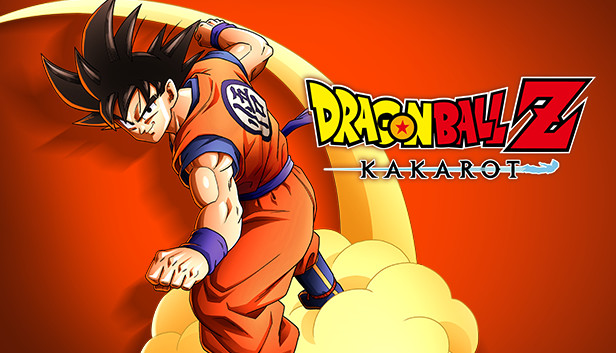
Her voice is also a near-perfect example of why this matters. Nozawa doesn’t just voice Goku. In the Japanese version she also voices his sons Gohan and Goten and several other members of the family. That’s nearly four decades of instantly recognisable performance, and it’s exactly the kind of material cloning tools are trained on. Some outlets have urged caution over the precise wording of the translated quotes, so it’s worth treating individual phrases as approximate. The meaning, though, wasn’t in doubt.
8. The Kenjiro Tsuda Ruling (2026, Tokyo District Court)
What makes it stand out: Two weeks before the guidelines arrived, a Japanese court said for the first time that a person’s voice can be protected by publicity rights.
Key data: The Tokyo District Court ruled on 30 September 2026 in voice actor Kenjiro Tsuda’s case against TikTok’s operator, with Judge Aya Takahashi presiding.
Why it matters: The guidelines now have at least some legal ground under them, even if Japan still has no law dealing specifically with voice.
Tsuda, known to anime fans as Kento Nanami in Jujutsu Kaisen, sued over videos on TikTok that he said used an AI copy of his voice. The result was a split decision, and both sides have claimed a win.
On the principle, Tsuda won. Judge Takahashi reasoned that a voice works like a person’s likeness, as a symbol of their personality, and so can be protected by publicity rights. Music Business Worldwide called it a first for Japan. On the actual claim, he lost: it was dismissed because the anonymous account behind the videos had already removed them, and the court didn’t rule on whether his voice had actually been copied.
Inven Global’s headline put it neatly: claim dismissed, voice rights recognised. For performers, that’s a meaningful step. Publicity rights in Japan have mostly been about faces and names, and the ruling suggests a court will now take a cloned voice just as seriously. For platforms, it’s a signal that ‘we took it down’ might not always be the end of the story.
Put the ruling and the guidelines side by side and you can see the strategy. The court has accepted that a voice can be protected. The union has now set out what proper permission looks like. The missing piece is a law.
9. Two Years to the Day After the NOMORE Campaign (2024, Japan)
What makes it stand out: The guidelines landed exactly two years after a group of top voice actors went public against unauthorised AI.
Key data: The ‘NOMORE Unauthorised Generative AI’ campaign launched on 15 October 2024 with 26 performers, including Koichi Yamadera, Romi Park, Ryusei Nakao and Yuki Kaji.
Why it matters: It shows the guidelines aren’t a sudden reaction but the result of a two-year push from inside the profession.
The NOMORE campaign started with short videos on X, YouTube and TikTok. Ryusei Nakao, the Japanese voice of Frieza, opened the series in a 20-second clip saying his voice was being sold without his permission. Later videos featured names like Yuki Kaji (Eren Yeager in Attack on Titan) and Jun Fukuyama.
The campaign had backing from the Japan Actors Union and the Japan Audio Producers Association. Its message then was the same as now: the performers accepted that AI has real benefits, but wanted an ethical discussion and clear rules before the technology ran ahead of them.
Two years on, they’ve got the rules, at least on paper. The timing, 15 October in both years, looks deliberate. It also says something about how slow this process is. In two years the cloning tools have improved enormously, while the profession has managed one voluntary standard and one partly successful court case. That’s not a criticism of the union so much as a reminder of how far behind the technology the rules usually are.
10. No Legal Force, and a Push for a ‘Voice Right’ Law
What makes it stand out: The union admits the guidelines can’t be enforced by law on their own, and says the next step is getting a voice right written into legislation.
Key data: The guidelines are a voluntary industry standard; Japan has no law that protects a person’s voice on its own, according to Jiji Press and the union itself.
Why it matters: Without a law or wide adoption in contracts, the people most likely to clone voices, anonymous uploaders, are the least likely to follow a union rulebook.
This is the honest weak spot, and Japanese coverage didn’t hide it. Kyodo’s report noted that the union wants platforms to act, but that whether the guidelines will work in practice is an open question. A company that hires union members has every reason to follow the rules. An anonymous account posting AI Goku clips for views does not.
So the union is working on three fronts at once. First, it wants the guidelines to become the normal standard in contracts across anime, games and dubbing. Second, it’s leaning on platforms such as TikTok and YouTube to take reports of cloned voices seriously. Third, it plans to lobby lawmakers for a specific legal right over one’s own voice.
The Tsuda ruling helps with the third. If courts are already willing to treat voice as part of publicity rights, a law that writes that down and sets clear penalties doesn’t look like a leap. Whether Japan’s government moves quickly is another matter. Up to now its approach to AI has generally been permissive, with an emphasis on encouraging development.
11. How It Compares With SAG-AFTRA’s 2026 Contract (2026, US)
What makes it stand out: Hollywood’s actors got their AI protections through a binding contract with the studios, while Japan’s union has gone the voluntary-guideline route.
Key data: SAG-AFTRA members ratified the 2026 TV/Theatrical Agreement on 4 June 2026 by 91.42% to 8.58%, on 19.25% turnout; it runs from 1 July 2026 to 30 June 2030.
Why it matters: The two approaches show the trade-off between enforceable rules for a defined group and broader, softer rules for a whole industry.
SAG-AFTRA’s deal builds on the digital replica rules won after the 2023 strike. The new contract adds limits on fully synthetic performers: producers can only use one if it adds ‘significant additional value’ over a live actor or a digital capture of that actor. Union leaders said the provisions would keep synthetic performer use to a minimum.
The big difference is enforceability. SAG-AFTRA’s terms are part of a collective bargaining agreement with the studios, so breaking them is a contract breach that can go to arbitration. Japan’s guidelines have no such backing yet. On the other hand, the Japanese document is in some ways more specific about voice. The one-year consent cap, the ban on buyouts and the sales-equivalent damages go further on paper than most Western contracts.
Both share the same core idea, though: informed consent, fair pay and a performer’s ability to say no. That consistency matters. AI voice tools are global products, and a studio in Los Angeles, Tokyo or London increasingly faces the same basic expectations from performers wherever it records.

12. What It Means for the UK and Save Our Voices Now (2026, UK)
What makes it stand out: British performers are asking for the same thing Japan’s union has just written down, but through the law rather than a guideline.
Key data: Save Our Voices Now launched on 28 August 2026 with more than 80 actors and creative figures, including Nicola Coughlan, Hugh Bonneville and Matt Lucas, calling for legal ownership of one’s voice.
Why it matters: The UK has no standalone voice right either, so Japan’s guidelines are a useful model for what British protections could look like.
As ITV News reported, the campaign wants the government to introduce legislation giving people legal ownership of their voices and control over how AI can copy them. Right now, a UK performer who finds their voice cloned has to prove harm under existing tort law or fall back on their contract. Supporters point to Denmark, where reforms give individuals rights over their likeness, including face, body and voice.
Equity has taken a practical line too, publishing a toolkit to help members deal with performance cloning and consent. Its developer said the UK’s legal framework is not well designed to protect performers from unauthorised imitations of their work using AI.
So the Japanese guidelines are directly relevant here. If British lawmakers or unions want a ready-made list of what consent should cover, they now have one: staged written permission, a time limit, no buyouts, a ban on reviving the dead without permission and real penalties. And for UK audiences who watch anime in Japanese, play Japanese games or follow dubbed series, the rules affect the performances they’re actually hearing.
The Bottom Line
Japan’s AI voice guidelines won’t stop a teenager uploading an AI Goku clip tonight. They weren’t meant to. What they do is give studios, game developers and AI companies a clear, written standard for dealing with performers, backed by a court that has just said voices deserve protection and by the most beloved voice in anime saying publicly that cloning without permission is theft. Whether that turns into law in Japan, or inspires something similar in the UK, is the next fight. For now, the message to anyone building a voice model is simple: ask first, pay properly, and put it in writing.
Sources: Japan Actors Union guidelines announcement, Anime News Network, ITmedia AI+, Technology.org on the Tsuda ruling, LA Mag on the SAG-AFTRA vote, ITV News on Save Our Voices Now.
Frequently Asked Questions
When did the Japan Actors Union publish its AI voice guidelines?
The Japan Actors Union published its guidelines on using generative AI with performers’ voices on 15 October 2026, at a press conference in Tokyo.
Are Japan’s new AI voice guidelines legally binding?
No, the guidelines are a voluntary industry standard with no legal force, and the union says it will lobby for a law that protects a person’s voice.
What consent do the guidelines require before cloning a voice?
They require separate prior written consent for three stages: training an AI on the voice, building a model that reproduces it, and using the generated audio in a work.
How long does consent last under the Japan Actors Union guidelines?
Consent lasts a maximum of one year as a rule, with longer terms allowed only for good reason, such as anime or games with long production schedules.
Can AI be used to recreate the voice of a voice actor who has died in Japan?
Under the guidelines it is banned in principle, with narrow exceptions such as projects the performer agreed to while alive or permission from heirs or rights holders.
What did Masako Nozawa say about AI copies of her voice?
Masako Nozawa told NHK on 15 October 2026 that AI clips copying her voice without permission are theft and unforgivable, though she said she is not against the technology if people follow the rules.
How old is Masako Nozawa and how long has she voiced Goku?
Masako Nozawa is 89 and has voiced Goku in the Japanese version of Dragon Ball since the anime began in 1986.
What did the Tokyo court decide in Kenjiro Tsuda’s AI voice case?
On 30 September 2026 the Tokyo District Court ruled that a person’s voice can be protected by publicity rights, but dismissed Tsuda’s claim against TikTok’s operator because the videos had already been removed.
What happens to a company that clones a voice without permission under the guidelines?
The guidelines say it should stop distribution, destroy the AI model and pay damages equal to its sales from the misuse, calculated back to the day the misuse began.
Does the UK have a law protecting actors’ voices from AI cloning?
No, the UK has no standalone legal right over your own voice, which is why the Save Our Voices Now campaign launched in August 2026 is asking the government for one.
📸 Follow us on Instagram for daily film, TV & gaming news: @filmoriauk

Liz Bennett
Editor at Filmoria. Runs the review desk and keeps half an eye on British independent cinema while everyone else is watching the blockbusters. Particularly interested in how films get funded, released and actually found by an audience.