
Inside the World’s Largest AI Film Festival: 10 Things to Know About Astana 2026
AI & Future of Film 17th September 2026 Jon Dingle
By the Filmoria News Desk
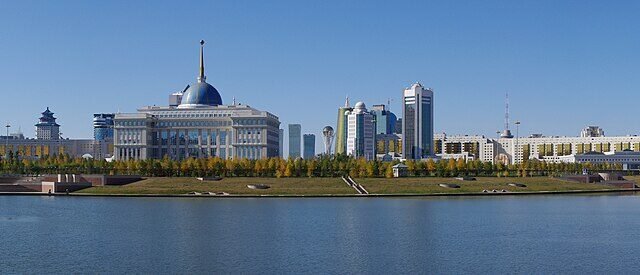
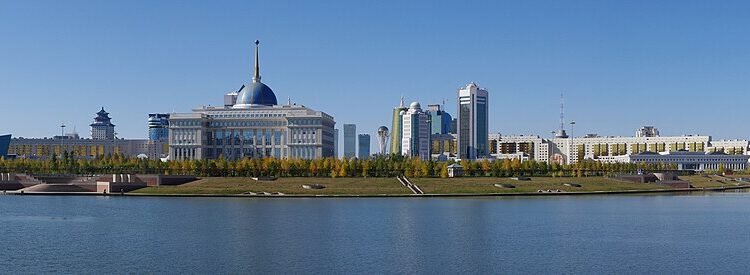
Astana, host city of the 2026 Astana AI Film Festival. Photo: Ken and Nyetta, via Wikimedia Commons (CC BY 2.0).
The Astana AI Film Festival is a competition for short films made primarily with generative AI tools, and with 8,067 entries from 125 countries it is now the largest event of its kind anywhere in the world.
That sentence would have sounded absurd two years ago. AI film competitions were a novelty slot, a few hundred clips judged by the people who made the software. This one has a $2 million fund behind it, a national technology cluster running it, ByteDance’s enterprise arm as a technology partner, and more submitted footage than most countries produce in a year. It takes place in Astana from 1 to 3 October 2026, and the awards are handed out on the final night.
Whether any of the films are any good is a separate question, and one nobody can answer until the finalists screen. What is already measurable is the scale, the money and who turned up — including 324 entries from the United Kingdom, which is more than Japan, Brazil or France managed.
| Quick facts | |
|---|---|
| Event | Astana AI Film Festival (AAIFF) 2026 |
| Dates | 1–3 October 2026, Astana, Kazakhstan |
| Entries | 8,067 films from 125 countries |
| Total fund | $2,000,000 ($1m prizes + $1m production fund) |
| Top prize | $450,000 (thematic grand prize) |
| Theme | “The Future Worth Living In” |
| UK entries | 324 — sixth in the world |
| Finalists | 25 (10 thematic, 15 open) |
| Entry fee | Free |
How this list is ordered: scale first, then the money, then the people and rules behind it, then what it means for British filmmakers, and finally how it stacks up against every other AI film prize. Figures come from the festival’s own published statistics and from Kazakh and international press reporting; where the two disagree, both numbers are given.
1. 8,067 Films From 125 Countries (Astana, 2026)
What makes it stand out: no AI film event has ever reported a submission pile anywhere near this size.
Key data: 8,067 entries; 125 countries; 4,929 films in the open competition and 3,138 in the thematic strand; submissions open 25 May to 7 September 2026; entry free.
Why it matters: it settles the argument about whether generative filmmaking has an audience of makers. It plainly does.
For context, the Sundance Film Festival receives somewhere north of 4,000 feature submissions in a typical year, and that is from an industry with a century of infrastructure behind it. Astana got double that in shorts, in its first edition, from people who mostly did not exist as filmmakers eighteen months ago. The festival describes more than 8,000 filmmakers involved; The Astana Times reports 4,756 unique creators, which suggests a lot of teams and a lot of repeat entrants. Either way, the number that matters is 8,067 finished pieces of work, not 8,067 people saying they intend to make something.
Board chairman and co-founder Almaz Zhali framed the shift like this: “These are no longer isolated AI experiments — we are seeing full-fledged films, complex stories, characters and entire universes.” He would say that, running the festival. But the volume does back him up.

Photo: Matti Blume, via Wikimedia Commons (CC BY-SA 4.0).
2. $2 Million, and Only Half of It Is Prize Money
What makes it stand out: the fund is split between cash prizes and an investment pot meant to keep winning projects alive after the festival ends.
Key data: $2,000,000 total; $1,000,000 in competition prizes; $1,000,000 production and investment fund, provided by Balaji Srinivasan and selected through his Network School.
Why it matters: most festival prizes are a cheque and a photograph. This one is trying to function as a development slate.
The distinction gets lost in a lot of the coverage, which reports the fund as either $1 million or $2 million depending on which half the writer found first. Both are correct. The competition prizes total $1 million. Alongside them sits a separate $1 million of production capital, and the selections for that are made personally by Srinivasan and the Network School rather than by the festival jury.
Co-founder Aizatulla Khussain explained the reasoning: “We want strong projects to continue after the festival. That is why, in addition to the prize fund, there is a separate investment capital.” Finalists are also offered a route into Astana Hub itself, which is the part that looks least like a film festival and most like a startup accelerator with a screening room attached.
3. “The Future Worth Living In” Takes the Biggest Cheque
What makes it stand out: the thematic strand carries three quarters of the prize money and a single brief.
Key data: $750,000 total; grand prize $450,000; second $200,000; third $100,000; 3,138 entries.
Why it matters: $450,000 for a short film of up to ten minutes is, as far as we can tell, the largest single prize ever offered for a short in any format, AI or otherwise.
The theme is doing real work here. “The Future Worth Living In” is an optimism brief, which is an interesting instruction to hand a technology whose cultural reputation is currently somewhere between anxious and hostile. It rules out the easy dystopia that generative video defaults to — the ash-grey cities, the drone swarms, the collapsing coastlines — and asks for something harder to render convincingly: ordinary life, working well.
Whether the entries deliver that or just produce 3,138 variations on gleaming solarpunk skylines is one of the few genuinely interesting critical questions the festival raises. We will know when the ten thematic finalists screen.

Photo: Projjal Moitra, via Wikimedia Commons (CC BY-SA 4.0).
4. The Open Competition Pays Five Different Kinds of Good
What makes it stand out: instead of one best-film award, the open section splits its money across five craft categories worth $50,000 each.
Key data: $250,000 total; Best Character, Best Direction, Best Visual, Best Story and Best Concept; 4,929 entries across 19 genres; 15 finalists.
Why it matters: the category list is an argument about what generative filmmaking is currently bad at.
Look at what is being rewarded. Best Character, in a medium notorious for faces that change between shots. Best Story, in a medium that produces spectacular eight-second fragments and struggles to sustain a second act. Best Direction, in a medium where “direction” often means prompt iteration rather than working with people. The festival has effectively priced the field’s weak points at $50,000 apiece and invited entrants to prove them wrong.
Best Visual is the one that should be easiest. It is also, probably, the one where the standard will be highest, because that is where the tools are strongest and the competition thickest.
Nineteen genres is the other detail worth noting. Generative video has a house style — slow push-ins, shallow focus, a slightly damp cinematic grade — and genre is the thing most likely to break it. Comedy needs timing the tools cannot yet hold. Horror needs restraint, and these models are incapable of restraint unless told firmly. Documentary is close to impossible when nothing on screen happened. If the open competition produces one genuinely funny five-minute film, that will be a more significant result than anything in the thematic strand.
5. America Entered the Most Films. Britain Came Sixth.
What makes it stand out: the country table is not the one you would predict from where the AI industry sits.
Key data: United States around 1,395 entries; Kazakhstan 829; India roughly 700; China between 479 and 550 depending on source; South Korea about 350; United Kingdom 324; then Indonesia, Japan, Brazil and France.
Why it matters: host-nation entries at second place, and India at third, tell you generative filmmaking is spreading fastest where conventional film finance is hardest to get.
Kazakhstan sending 829 films to its own festival is partly a home-crowd effect and partly the point of the exercise: Astana Hub has spent years trying to build a technology sector, and a film festival is an unusually visible way to advertise it. India at around 700 is the more telling figure. So is Indonesia in the top ten.
The UK’s 324 is a decent showing for a country of its size, and worth holding onto the next time someone claims British film has ignored this entirely. It has not. It has just been doing it outside the institutions — there is no BFI strand for this, no Film4 development slate, no obvious route from a generative short to a commissioned project. Three hundred and twenty-four people entered anyway.
Two notes of caution on the country table. The figures published by the festival and those reported by The Astana Times differ by a few dozen films in several rows, which is normal for numbers compiled mid-process. And a submission count is not a quality count.

Photo: Ana Las Heras, via Wikimedia Commons (CC BY-SA 4.0).
6. 80+ Models, 19 Genres and One Four-Hour Film
What makes it stand out: the technical footprint of the submissions is the most useful public snapshot yet of what generative filmmakers actually use.
Key data: more than 80 generative models used across entries; 19 genres in the open competition; estimated $4 million-plus spent by entrants on tools; combined running time above 80,000 minutes by the festival’s count and above 100,000 by The Astana Times’ count; longest single submission 4 hours 3 minutes.
Why it matters: nobody has had a dataset like this before.
The four-hour entry is a rules curiosity as much as anything — the competition cap was ten minutes, so a four-hour piece sits outside the judged categories and reads more like a statement. One project reportedly spans five separate fictional universes. This is what happens when you remove the cost of a shooting day: people make things that would be insane to attempt with a crew.
The $4 million figure is the one worth sitting with. That is entrants’ own money, spent on subscriptions and credits, chasing a $1 million prize pool. As an industry economic model that is closer to a lottery than a film fund, and it is a fair criticism of the whole format. The counter-argument is that the tools were bought to make films with, not solely to enter a competition, and most of them stay useful afterwards.
7. Who Is Actually Paying For This
What makes it stand out: the backers are a technology cluster, a brokerage, a ByteDance division and a crypto-adjacent investor — not a single film body among them.
Key data: organised by Astana Hub as part of Kazakhstan’s AI Month; general partner Freedom Holding Corp; technology partner BytePlus (ByteDance); $1m production fund from Balaji Srinivasan via Network School; co-founders Almaz Zhali (board chairman) and Aizatulla Khussain (creative director).
Why it matters: it tells you what the festival is for, and it is not primarily cinema.
Kazakhstan has been pushing hard to position Astana as a technology hub between Europe and China, and AI Month is the umbrella for that campaign. A film festival is a good way to get 8,000 people in 125 countries to spend three months making content with your city’s name attached. That is not a criticism — Cannes exists partly to sell the Riviera, and Sundance transformed a ski town — but it does explain the budget.
BytePlus as technology partner is the detail that raises the most eyebrows in industry circles, given ByteDance’s parallel interests in short-form video and generative tooling. Freedom Holding as general partner puts a listed financial services group behind the money. And Srinivasan’s Network School running the production fund selections separately from the jury means there are effectively two competitions happening at once: one for the prizes, one for the investment.

Photo: Houssem Abida, via Wikimedia Commons (CC BY-SA 4.0).
8. Every Entry Gets a Plagiarism Check
What makes it stand out: mandatory screening of all 8,067 films, in a field where provenance is the central unresolved problem.
Key data: plagiarism checks compulsory for every submission; around 150 entries advance to senior review; 25 finalists; entries capped at ten minutes; generative AI required as the primary production tool.
Why it matters: it is the first large AI festival to make originality checking a formal stage rather than an afterthought.
It is also, inevitably, an incomplete answer. A plagiarism check catches a film that copies another film. It does not address the deeper objection: that the models themselves were trained on work whose creators were neither asked nor paid. No festival rule can fix that, and pretending otherwise would be dishonest. What the check does do is stop the most obvious abuse, and establish a norm that the next event will find hard to drop.
The ten-minute cap matters more than it sounds. It is set roughly at the limit of what current tools can hold together coherently, which is why almost every serious AI film competition lands in the same range. Push past it and the seams show: a face drifts, a coat changes colour, a room rearranges itself between cuts. Ten minutes is where craft still beats compute.
The funnel is brutal, too. Roughly 150 films out of 8,067 reach senior review — under two per cent — and 25 make the final. For most entrants the festival was a deadline and a reason to finish something, which is the honest function of nearly every open-submission competition ever run.
9. Why a Festival in Kazakhstan Matters to British Film
What makes it stand out: it lands in the middle of an unresolved UK argument about AI, copyright and performers’ rights.
Key data: 324 UK entries; UK government dropped its preferred copyright opt-out exception in March 2026; Academy ruled AI-generated performances and screenplays Oscar-ineligible in May 2026.
Why it matters: British filmmakers are entering a global AI competition while their own industry is still deciding what the rules are.
The UK position shifted sharply this year. Ministers had favoured an exception letting AI developers train on copyrighted material unless rights holders opted out; in March 2026 that was abandoned. Bectu head Philippa Childs called the opt-out “unworkable, unfair” and said it disproportionately harmed freelancers. Equity general secretary Paul W Fleming described the reversal as heading off “an act of national self-sabotage”. The government has signalled protections for digital replicas — unauthorised use of a performer’s voice or likeness — but has not landed on a copyright framework.
Meanwhile the Academy drew its own line in May, ruling that AI-generated performances and screenplays cannot be nominated: performances must be credited in a film’s legal billing and demonstrably performed by consenting humans, screenplays must be human-authored, and the Academy can demand documentation of a production’s AI use. Generative tools elsewhere in the pipeline remain permitted. We unpicked how that plays out for performers in AI Actors: What’s Actually Happening.
So a British entrant at Astana is working in a space where the domestic industry has no funding route, the biggest awards body has ruled part of the craft ineligible, and the legal basis of the tools is openly contested. That is an uncomfortable position, and it is worth naming rather than cheerleading past.

Photo: Gnangarra, via Wikimedia Commons (CC BY-SA 4.0).
10. How It Compares With Every Other AI Film Prize
What makes it stand out: on money and volume, nothing else is close.
Key data: Astana $2m fund and 8,067 entries; UAE Government Media Office AI Film Award $1m, 3,500 submissions, won by Zoubeir Jlassi’s Lily in January 2026; Runway’s AIFF purse quoted at $135,000-plus across six tracks in 2026.
Why it matters: the centre of gravity in AI filmmaking prizes has moved decisively away from the companies that make the tools.
Runway’s AI Film Festival has the industry credibility — Roger Avary and Jane Rosenthal have sat on its jury, and its 2026 edition expanded beyond film into new media, gaming, design, advertising and fashion, with events in New York, Los Angeles and Tokyo. But it is a tool-maker’s festival, and its prizes are partly paid in credits for its own platform.
The UAE award, run with Google Gemini and handed out at Dubai’s 1 Billion Followers Summit in January, held the record for the largest single AI film prize at $1 million, from 3,500 submissions assessed by a jury of 40 across more than 400 hours of viewing. Astana has taken both records at once.
| Event | Year | Base | Prize/fund | Entries reported | Countries |
|---|---|---|---|---|---|
| Astana AI Film Festival | 2026 | Kazakhstan | $2,000,000 | 8,067 | 125 |
| UAE Government Media Office AI Film Award | 2026 | UAE | $1,000,000 | 3,500 | 116 (interest) |
| Runway AI Film Festival (AIFF) | 2026 | US / Japan | $135,000+ | Not disclosed | Not disclosed |

Photo: Ken and Nyetta, via Wikimedia Commons (CC BY 2.0).
What Happens on 3 October
Twenty-five finalists, ten of them competing for a $450,000 cheque, screen in Astana across three days, and the awards go out on the final night. The jury list is still to be confirmed publicly at the time of writing; the production fund selections are made separately.
The real test is not the ceremony. It is whether any of the 8,067 films turns out to be worth watching twice — and whether the $1 million production fund produces anything that reaches an audience outside the AI community that made it. On that, the festival deserves to be judged the same way any other is: by what screens afterwards.
We will cover the winners and the finalists in AI & Future of Film as they are announced.
Sources
- Astana AI Film Festival: official site, submission statistics and prize structure
- The Astana Times: Festival attracts more than 8,000 entries from 125 countries
- The Astana Times: Festival opens submissions, offers $1 million prize fund
- DKNews: Filmmakers compete for $2 million at the Astana AI Film Festival
- Runway AI Film Festival 2026: prizes and categories
- Variety: Oscar rule changes on AI, acting nominations and international film
- C21Media: Bectu and Equity welcome UK government U-turn on AI copyright plans
Frequently Asked Questions
What is the Astana AI Film Festival?
It is a competition and festival for short films made primarily with generative AI tools, staged in Astana, Kazakhstan, from 1 to 3 October 2026. It is organised by the Astana Hub technology cluster as part of the country’s AI Month programme, and it carries a $2 million fund split between prize money and production investment.
Why is it called the world’s largest AI film festival?
Because of the entry count and the money. The festival received 8,067 films from 125 countries, which is comfortably the biggest submission pile any AI-specific film event has reported, and its $2 million fund is larger than the purse at any rival AI festival. Co-founder Aizatulla Khussain put it plainly: the festival is the largest “both in its $2 million funding and submission numbers”.
How many films were submitted to the Astana AI Film Festival?
8,067 films. The festival’s own figures split that into 4,929 entries in the open competition and 3,138 in the thematic competition. Submissions opened on 25 May 2026 and closed on 7 September.
How many countries entered?
125. The United States sent the most films at roughly 1,395, followed by Kazakhstan on 829, India on around 700, then China, South Korea, the United Kingdom, Indonesia, Japan, Brazil and France.
How many films did the UK submit?
324, which put the United Kingdom sixth in the world by volume — ahead of Indonesia, Japan, Brazil and France, and behind the US, Kazakhstan, India, China and South Korea.
How much is the prize money?
$1 million in competition prizes, plus a separate $1 million production and investment fund, for a headline total of $2 million. The prize half is divided $750,000 to the thematic competition and $250,000 to the open competition.
What is the biggest single prize?
$450,000, the grand prize in the thematic competition. Second place takes $200,000 and third $100,000.
What are the open competition categories?
Five, each worth $50,000: Best Character, Best Direction, Best Visual, Best Story and Best Concept. They are judged across 19 genres.
What is the festival’s theme?
“The Future Worth Living In”. That is the brief for the thematic competition, which carries the three largest cash prizes. The open competition has no set theme.
When and where is the Astana AI Film Festival 2026?
1 to 3 October 2026 in Astana, Kazakhstan, with screenings on full-size cinema screens and the awards ceremony on 3 October.
Who is funding it?
The festival is run by the Astana Hub cluster fund. Freedom Holding Corp is the general partner and BytePlus, ByteDance’s enterprise platform, is a technology partner. The $1 million production fund is being put up by Balaji Srinivasan, the former Coinbase chief technology officer, through his Network School.
Who is on the jury?
The festival listed its jury as still to be announced in the run-up to the event. Kazakh outlet DKNews has reported a line-up including former UNESCO director-general Audrey Azoulay, Ma Ping of the China Film Group AI Institute, Wang Hao of the Beijing Film Academy and Balaji Srinivasan. Treat that as reported rather than confirmed until the festival publishes the list.
How many films make the final?
25. Around 150 entries were passed up for senior review, and from those 25 finalists are selected — 10 in the thematic competition and 15 in the open section.
Was it free to enter?
Yes. Entry cost nothing, and was open to individuals and teams of any age or level of experience.
What were the rules on AI use?
Films had to use generative AI as the primary production tool, and run to no more than ten minutes. Every entry was put through a mandatory plagiarism check before it could progress.
How much AI compute went into the entries?
The festival says more than 80 generative models were used across the submissions, and estimates entrants spent over $4 million of their own money on tools. Combined running time of everything submitted runs to at least 80,000 minutes on the festival’s own count, and more than 100,000 minutes according to The Astana Times.
How does it compare with Runway’s AI Film Festival?
Runway’s AIFF is the better-known event in the West and the one with industry names on its jury, but it is far smaller financially: its 2026 purse is quoted at $135,000 or more across six tracks, against Astana’s $2 million. The largest single AI film prize before Astana was the UAE Government Media Office’s $1 million award, won in January 2026 by Tunisian filmmaker Zoubeir Jlassi for Lily.
Can AI-generated films win an Oscar?
Not on the strength of the AI. In May 2026 the Academy ruled that AI-generated performances and screenplays are ineligible, requiring performances to be credited in a film’s legal billing and demonstrably performed by consenting humans, and screenplays to be human-authored. The Academy can also ask productions to document their AI use. Generative tools elsewhere in a production are not banned outright.
What is the UK position on AI and copyright?
In March 2026 the government dropped its preferred opt-out exception, which would have let AI firms train on copyrighted work unless rights holders objected. Bectu’s Philippa Childs called the opt-out “unworkable, unfair” and damaging to freelancers; Equity’s Paul W Fleming said the reversal avoided “an act of national self-sabotage”. Ministers have signalled new protections for digital replicas but have not settled on a copyright framework.
Where can I follow AI film news on Filmoria?
In AI & Future of Film, which covers AI-generated films, AI actors, virtual production, deepfakes, restoration and the copyright fights around them, alongside Movie News, Movie Reviews and OTT.
📸 Follow us on Instagram for daily film, TV & gaming news: @filmoriauk

Jon Dingle Editor
A film journalist, writer and a filmmaker in business for over 20 years. I am passionate about movies, television series, music and online games. When I'm not reviewing the latest releases, you'll usually find me deep in a retro gaming session or catching up on the newest prestige drama. I believe great storytelling deserves an honest take, whatever the screen it's on.