


Clayface Review: 12 Things That Decide DC’s Gory, Uneven Body-Horror Gamble
Movie Reviews 27th October 2026 Chris Whitmore
Filmoria Review

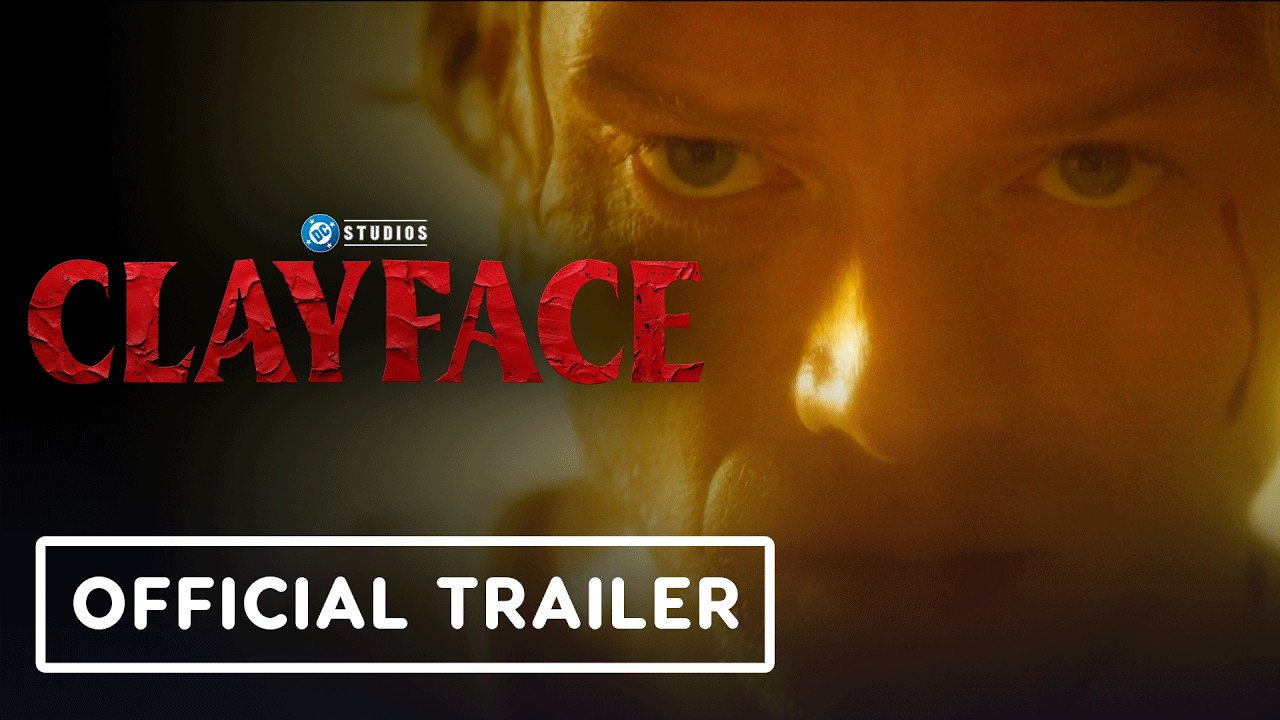
Clayface, DC Studios’ 18-rated body-horror film starring Tom Rhys Harries as disfigured actor Matt Hagen, opened in UK cinemas on Friday 23 October 2026 and is showing only in cinemas for now. Filmoria gives it 3 out of 5: Harries is terrific and the practical gore is genuinely nasty, but James Watkins’ film can’t settle on whether it’s a horror movie or a superhero origin story, and the script goes soft just when it should get mean.
Filmoria’s verdict
3 / 5 ★★★☆☆
A gruesome, well-acted monster movie wrapped around a mushy middle. Come for Harries and the effects, not the plot.
Quick Facts
- Director: James Watkins (Eden Lake, The Woman in Black, Speak No Evil)
- Writers: Mike Flanagan (story and screenplay) and Hossein Amini (screenplay)
- Cast: Tom Rhys Harries, Naomi Ackie, Max Minghella, David Dencik, Eddie Marsan
- Runtime: 108 minutes
- Release date: 23 October 2026 (UK and US cinemas)
- Rating: 18 (BBFC), R (US)
- Filmoria rating: 3/5
In the UK
- UK cinema release: Friday 23 October 2026, distributed by Warner Bros. Pictures
- Where to watch: UK cinemas only for now; it isn’t on any UK streaming service yet
- BBFC rating: 18 for strong bloody violence and injury detail, the first 18 for a film in DC’s main screen universe
- Streaming and home release: digital, Blu-ray and streaming dates are not yet confirmed for the UK
This is a ranked list of the 12 things that decide whether Clayface is worth your ticket, covering its story, performances, craft, comparisons, audience and final verdict.
We ordered the items the way you’d weigh a film like this: what it’s about, who carries it, how it’s made, how it stacks up against its obvious influences and the rest of the DC Universe, and finally who should go. Figures come from the BBFC, Warner Bros., CinemaScore, Rotten Tomatoes, Metacritic and named trade reporting; where a number is an estimate, we say so.
| # | Aspect | Rating | Verdict |
|---|---|---|---|
| 1 | Story setup | 3.5/5 | A great hook with a pulpy, tragic pull |
| 2 | Tom Rhys Harries | 4.5/5 | A star-making lead turn |
| 3 | Supporting cast | 3/5 | Ackie shines; the rest are underused |
| 4 | Practical effects and gore | 4.5/5 | The best reason to buy a ticket |
| 5 | Direction | 3.5/5 | Watkins nails the dread, fumbles the pace |
| 6 | Script and tone | 2/5 | Caught between two genres |
| 7 | Third act | 2.5/5 | Fun in places, tonally all over the shop |
| 8 | Versus The Fly, Darkman and The Substance | 2.5/5 | Borrows the look, not the bite |
| 9 | Place in the DC Universe | 3.5/5 | No homework required, which helps |
| 10 | Critical consensus | Not applicable | Fresh but divided |
| 11 | Who it’s for | Not applicable | Horror fans first, DC fans second |
| 12 | Final verdict | 3/5 | Messy, gory and worth seeing once |
1. The Setup: A Face for Hire (Story, 2026)
What makes it stand out: Clayface is a superhero-universe film whose hero isn’t a hero at all, but a vain young actor who loses the one thing his career depends on.
Key data: Story by Mike Flanagan; screenplay by Flanagan and Hossein Amini; Matt Hagen is a Gotham street kid turned leading man; runtime 108 minutes.
Why it matters: The premise is the strongest thing about the film, and it’s why you’ll forgive a lot of what comes later.
Here’s the hook. Matt Hagen grew up rough in Gotham and clawed his way into film stardom on looks and charm. Then he sleeps with the wrong man’s girlfriend. A local crime boss, played by David Dencik, has his face cut to ribbons, and with it goes the career, the money and the self-image. Desperate, Matt signs up for an experimental treatment run by Dr Caitlin Bates (Naomi Ackie), a biotech founder who sees him as both a patient and a way to make her company’s name. The treatment gives him his face back. It also gives him a body that won’t stay put.
That’s a cracking set-up for a tragedy, and for the first 40 minutes Clayface plays it like one. Matt isn’t likeable, exactly. He’s preening and careless and slightly cruel. But the film makes you feel how much an actor’s face is an actor’s whole identity, and the early hospital scenes, with Matt waking up to what’s been done to him, are properly upsetting.
The problem is that the story then has to turn into a revenge film, and revenge plots run on rails. Once Matt works out what his new body can do, you can tick off the beats: the crime boss’s henchmen, a cop sniffing around, a scientist with a conscience, a showdown. It’s a pulpy, enjoyable shape. It just isn’t a surprising one, and Flanagan’s best work has always found a way to surprise.
2. Tom Rhys Harries as Matt Hagen (Lead Performance)
What makes it stand out: A Welsh actor known mostly for TV carries a studio film almost single-handed, and nearly every critic agrees he’s the best thing in it.
Key data: James Gunn announced the casting after what he called a long and exhaustive search; trade reports said Harries won the role over George MacKay, Tom Blyth, Jack O’Connell and Leo Woodall.
Why it matters: It’s a breakout, and it’ll probably outlive the film’s reputation.
Harries has a tricky job. He has to play a matinee idol people would believe is famous, then play that same man under heavy prosthetics, then play him as something that can be anybody. He’s good at all three, and best at the first. There’s a boyish arrogance to the early Matt that makes the fall hurt more. He’s the kind of actor who knows exactly which side of his face the light should hit, and when that side is gone, the panic in his voice is real.

He’s also doing something smart with the shape-shifting scenes. When Matt takes on other people’s faces, Harries doesn’t vanish. You can still feel him underneath, wobbly and hungry, which keeps the horror personal rather than gimmicky. That’s harder than it sounds. Plenty of shape-shifter films lose their lead the moment the powers kick in.
Critics have been close to unanimous here. ComicBookMovie’s Josh Wilding didn’t like the film much, but his review’s headline still said Harries “shines”. The Independent’s Clarisse Loughrey called him a star to watch even while calling the film a terrible DC Comics movie. We’d go further. On this evidence he could carry a much better film, and someone should give him one.
3. Naomi Ackie and the Supporting Cast (Ensemble)
What makes it stand out: Ackie gives the film its only real emotional counterweight; everyone else is a sketch.
Key data: Naomi Ackie plays Dr Caitlin Bates; Max Minghella plays police detective John Borelli; David Dencik plays the crime boss behind Matt’s attack; Eddie Marsan also stars.
Why it matters: A revenge story is only as good as the people around the avenger, and here most of them are thin.
Ackie is excellent. Caitlin could easily have been a lab-coat exposition machine, and the script gives her some of that. But Ackie plays her as someone who’s genuinely torn between ambition and decency. You believe she wants to help Matt, and you believe she wants the glory of being the one who fixed him. The film’s best scenes are the quiet ones between the two of them, where it briefly becomes a twisted love story. That’s very Flanagan.
Minghella fares less well. His honest cop, who happens to be engaged to Caitlin, exists mostly to ask questions and get in the way. Dencik is a fine, slimy presence as the gangster, though the role is pure genre stock. And Eddie Marsan, one of the most reliable character actors in Britain, is barely used. It’s a strong cast list, and a weak use of it.
One Australian review, syndicated across several regional papers, said it was hard to care about anyone. We wouldn’t go that far, because Ackie and Harries make you care about each other. But we take the point about everyone else.
4. The Practical Effects and Gore (Craft)
What makes it stand out: This is the goriest film DC has ever released, and most of it is done practically, in camera.
Key data: BBFC 18 for strong bloody violence and injury detail; MPA rating R; first reactions after the 13 October social embargo singled out one scene involving sewing scissors that reportedly had even crew members looking away.
Why it matters: The effects are the film’s best argument for existing, and they’re the reason horror fans should go.
When Clayface works, it really works. The transformations are wet, stretchy, horribly tactile things. Skin slides. Faces sag like warm wax. Early viewers came out talking about one sequence involving sewing scissors in particular, and it earns its reputation. We won’t spoil it.

The BBFC’s phrase “injury detail” is the honest summary. Watkins lingers. He wants you to look at what’s been done to a body, not just see the act of violence, and that’s exactly why this got an 18 when Joker and The Batman got 15s. If you’ve seen our piece on why Clayface got an 18, you’ll know that’s a first for DC’s main screen universe.
What’s impressive is how much of it is physical. Bad CGI is what sank so many recent comic book villain films, and you can feel the difference when there’s real latex in front of the lens. The reported budget sits in the mid-$40 million range, and it’s all up on screen in the creature work. Variety’s review called it good, gross fun, and on this front at least, that’s exactly right.
5. James Watkins’ Direction (Director)
What makes it stand out: DC handed a Batman villain to a British director who’s spent nearly two decades making nasty, efficient mid-budget horror.
Key data: Watkins directed Eden Lake (2008), The Woman in Black (2012) and Speak No Evil (2024); Clayface was shot in the UK from September 2025, with Liverpool standing in for Gotham.
Why it matters: He’s the reason the film feels like horror first, and also partly why the pacing sags.
Watkins knows how to build dread. The first act takes its time, letting the dread pile up before anything truly nasty happens. He also makes Gotham feel grubby and specific. Liverpool’s streets give the film a lived-in, slightly damp texture that’s closer to The Batman than to the gleaming Metropolis of Superman, which makes sense when you remember Matt Reeves’ 6th and Idaho is one of the producers.
Where he struggles is the middle. Speak No Evil was a slow-burn with a clear destination: the tension cranked and cranked until it snapped. Clayface has two destinations, a horror climax and a superhero showdown, and Watkins can’t drive to both at once. The second act wanders. FandomWire, one of the film’s most positive reviews at 8 out of 10, still said the narrative drags a little there, and we felt every minute of it.
Still, there are stretches where you can see the film Watkins wanted to make: a lean, cruel monster movie in the tradition of the old Universal horrors, where the creature is also the victim. When he trusts that, Clayface is genuinely unsettling. More of that, please.
6. The Script: Flanagan’s Heart, Amini’s Rewrite (Writing and Tone)
What makes it stand out: DC made Clayface because Mike Flanagan wrote a script it liked, then brought in Hossein Amini to rewrite it.
Key data: Story by Flanagan; screenplay by Flanagan and Amini; Metacritic score of about 59 from critics; NPR’s Glen Weldon called the result mushy.
Why it matters: The writing is where the film’s split personality comes from, and it’s the main reason this is a three-star film and not a four.
You can feel two writers in this film, and they don’t always agree. Flanagan’s fingerprints are all over the first half. It’s about grief, vanity and the way a body betrays you, and there’s a doomed romance at its centre. That’s the writer of The Haunting of Hill House and Doctor Sleep, and when the film leans into it, it’s moving.

Then the revenge machinery starts, and the script turns into something leaner and more generic. Matt’s targets are cartoon villains. His powers expand to whatever the plot needs that scene. The police subplot feels bolted on to give the last act someone to do the chasing. Glen Weldon’s NPR review put it neatly: the film plants one foot of clay in horror and the other in superheroics, and gets stuck.
We agree with him, mostly. Where we part ways is on how much it matters. Weldon found the whole thing underbaked. We think the first hour is strong enough to carry you through the wobbly second one. But there’s no getting around the tone problem, and it’s a script problem before it’s a direction problem.
7. The Third Act (Climax, No Major Spoilers)
What makes it stand out: The final half-hour swings from grisly revenge to oddball comedy to superhero spectacle, sometimes inside the same scene.
Key data: Dread Central singled out a third-act dance number as the clearest example of the film’s tonal lurches; Nerdist said the film goes from average at best to an absolute blast once Matt starts using his powers.
Why it matters: This is where opinion on Clayface splits, and where your own enjoyment will be decided.
We won’t spoil the details. The broad shape is that Matt goes after the people who wronged him, Caitlin tries to stop him, and the film throws everything it has left at the screen. Some of it is terrific. The kills are inventive, nasty and occasionally very funny, and Watkins clearly has a blast staging them.
Then there’s the dance number. Yes, really. Dread Central called it the most egregious tonal lurch in the film, and we’d agree it’s the moment the movie briefly forgets what it is. It’s not a bad scene in isolation. In a film that spent its first hour asking you to feel a man’s grief over his own face, it’s jarring.
Nerdist’s take is the more generous one, and it’s fair: once Matt is out there using his powers, the film is a lot more fun than the slower first half suggests it will be. If you came for gory spectacle, the last act delivers. If you came for the tragedy promised by the trailers, it lets you down. We sat somewhere in between, enjoying ourselves while wishing it had held its nerve.
8. How It Compares: The Fly, Darkman and The Substance (Comparisons)
What makes it stand out: Almost every review reaches for the same three touchstones, and Clayface invites the comparison.
Key data: The Fly (1986, David Cronenberg), Darkman (1990, Sam Raimi), The Substance (2024, Coralie Fargeat); Time Out’s review called Clayface the best DC film in years, if your stomach can stand it.
Why it matters: Measured against its own influences, Clayface comes up short, and that’s the clearest way to set your expectations.
Darkman is the closest relative, and it’s not close. Raimi’s film is also about a man whose face is destroyed by gangsters and who uses synthetic skin to become other people. But Darkman is wildly, gleefully committed to its own weirdness. Clayface keeps glancing over its shoulder at the DC logo.
The Fly is the film it most wants to be. Cronenberg’s remake works because Jeff Goldblum’s transformation is also a love story falling apart in real time, and Geena Davis watches it happen. Clayface has that structure, with Ackie in the Davis role, and when it commits to it, it’s the best version of itself. It just doesn’t commit for long enough.
The Substance comparison is mostly about the gore and the vanity theme. Fargeat’s film was a furious satire about how the industry treats women’s bodies. Clayface touches on the same idea for a male actor, then drops it. That’s a missed opportunity, frankly. A film about a Hollywood star literally reshaping himself to stay employable is sitting right there.
Time Out’s enthusiasm is worth weighing, though. Against other DC films rather than other horror films, Clayface does look bold. It’s the first time in years the brand has made something that feels personal and strange. We just don’t think “better than other DC films” and “great body horror” are the same claim.
9. Its Place in the DC Universe (Franchise)
What makes it stand out: It’s the third film in James Gunn and Peter Safran’s DC Universe, and the first that needs no franchise homework at all.
Key data: Follows Superman (2025) and Supergirl (2026); reported budget about $44 million, against a reported $225 million for Superman; A- CinemaScore, matching The Batman and Superman.
Why it matters: If cheap, adult, standalone genre films can work under the DC banner, the studio has a second lane that Marvel never really found.
Variety’s headline said you need no franchise homework, and that’s right. It’s set in Gotham, but you don’t need to know anything about Superman, Supergirl or the comics going in. It plays like a standalone horror film that happens to be set in the same city as Batman.
That’s a smart move. Sony’s run of Spider-Man villain films, from Morbius to Kraven the Hunter, showed how badly a villain spin-off can go when it’s trying to sell a universe. ComicBookMovie’s review did call Clayface “DC’s uninspired Morbius moment”, and we see why, as there’s a similar origin shape. But it’s a much better film than Morbius, mainly because it’s willing to be ugly and to let its lead be a bad person.
Commercially, the early signs are decent. Clayface took an estimated $3.5 million from Thursday previews in North America, and Variety reported $10.4 million on its first Friday from 3,458 cinemas, putting it at No. 1 for the day. Weekend estimates on Saturday pointed to around $23 million to $25 million. At this budget, that’s a respectable start, and the A- CinemaScore suggests word of mouth should help. After Street Fighter and a disappointing Supergirl, DC needed a win, and this looks like a modest one.
10. What the Critics Say, and Where We Land (Critical Consensus)
What makes it stand out: Clayface is Certified Fresh, but the reviews behind that score are unusually split.
Key data: About 75% on Rotten Tomatoes from around 90 reviews; a Metacritic score of about 59; audience score around 94%; Empire gave it 3 stars, the Guardian’s Benjamin Lee 2 out of 5 and the South China Morning Post 3.5 out of 5.
Why it matters: A fresh score hides a real argument, and knowing which side you’re on tells you whether to go.
The split is mostly about what you think the film should be. Critics who came for horror were kinder. Time Out raved, and FandomWire gave it an 8. Critics who judged it as a DC film, or as a story, were harder on it. Clarisse Loughrey’s line in The Independent, “a great body-horror movie but a terrible DC Comics film”, sums up the divide better than anything we could write.

We’re closer to Empire’s three stars than to either end. The Guardian’s two-star review is too harsh on the effects and on Harries, both of which deserve more credit. But Time Out’s verdict feels like relief that DC tried something different, and trying isn’t the same as succeeding. The Telegraph’s Robbie Collin welcomed how little the film feels like franchise product, and we’d agree that’s its biggest virtue.
Audiences, for what it’s worth, are much happier than critics. An A- CinemaScore is a strong grade for a horror film, a genre that usually scores lower because it’s meant to make you uncomfortable. That gap between critics and paying viewers tells you something. People who go in wanting a gross, bloody time tend to get one.
11. Who It’s For (Watch It If, Skip It If)
What makes it stand out: It’s the rare DC film where the right audience is horror fans first and comic book fans second.
Key data: 18 certificate in the UK, so no under-18s; 108-minute runtime; in UK cinemas from 23 October 2026, ahead of Halloween.
Why it matters: Going in with the right expectations is the difference between a fun night and a frustrating one.
Watch it if: you love practical body horror and want to see a studio spend real money on latex and fake blood. You liked Darkman, The Fly or The Substance and fancy a messier cousin. You want to catch a rising actor before he’s everywhere. Or you’re after a grim, gory film for Halloween week with a crowd that’ll gasp in the right places.
Skip it if: you’re squeamish, full stop, because the injury detail is no joke. You want a proper superhero film, because this is a horror movie first and a comic book movie second. You need a tight, surprising story, because the plot is the weakest part. Or you’re hoping for the thoughtful, slow-burn Mike Flanagan drama the early marketing hinted at. There’s some of that here, but not enough.
A practical note for UK readers: the 18 rating means late-evening showings will probably have the best atmosphere. This plays better with a rowdy adult crowd than at a half-empty matinee.
12. Final Verdict: 3 Out of 5 (Filmoria Rating)
What makes it stand out: Clayface is the most interesting failure DC has made in years, and more fun than plenty of its successes.
Key data: Filmoria rating 3/5; about 75% on Rotten Tomatoes; Metacritic about 59; A- CinemaScore.
Why it matters: It proves DC can make small, nasty, adult films, even if this one doesn’t fully land.
Filmoria’s verdict: Clayface is a gory, well-acted body-horror film that’s let down by a script that can’t decide whether it’s a tragedy or a superhero romp.
Clayface leaves you torn, which is probably the right reaction. There’s a really good film buried in here, about vanity, grief and a man who’d rather be a monster than a nobody. You can see it in Harries’ performance, in Ackie’s scenes with him and in the best of the creature work. Then there’s a much more ordinary revenge thriller layered on top, and the two never quite fuse.
Still, three stars isn’t a shrug. It’s a recommendation with conditions. If the trailers made you curious and you’ve got the stomach for it, go. You’ll see something DC has never done before, and you’ll probably want to talk about it on the way home, even if half of that conversation is about the dance number.
The Bottom Line
Clayface is in UK cinemas now, rated 18, and it’s worth a look if you love body horror and can forgive a muddled script. Tom Rhys Harries is a find, the practical effects are excellent, and James Watkins knows how to make an audience squirm. It just isn’t as brave in its storytelling as it is in its gore. Three stars, and a strong hope that DC keeps making films this strange, only better.
Sources: Variety review, NPR review by Glen Weldon, Dread Central review, Gulf News critics round-up, ComicBookMovie on the Rotten Tomatoes score, ComicBookMovie on the CinemaScore and opening.
Frequently Asked Questions
Is Clayface worth watching?
Clayface is worth watching if you enjoy gory body horror, and Filmoria rates it 3 out of 5 for Tom Rhys Harries’ performance and its practical effects despite a muddled script.
What is the Clayface Rotten Tomatoes score?
Clayface is Certified Fresh on Rotten Tomatoes at about 75 percent from around 90 critic reviews, with an audience score of around 94 percent.
What did Clayface get on CinemaScore?
Clayface earned an A- CinemaScore from opening-night audiences, the same grade as The Batman and Superman.
Is Clayface too gory?
Clayface is very gory, with the BBFC citing strong bloody violence and injury detail, so squeamish viewers should skip it.
Do you need to see Superman or Supergirl before Clayface?
No, Clayface is a standalone story set in Gotham and needs no knowledge of Superman, Supergirl or the wider DC Universe.
Who produced Clayface?
Clayface is presented by DC Studios and produced in association with Domain Entertainment and Matt Reeves’ company 6th and Idaho, with Warner Bros. Pictures distributing.
Who plays Caitlin in Clayface?
Naomi Ackie plays Dr Caitlin Bates, the biotech scientist whose experimental treatment transforms Matt Hagen.
How much money has Clayface made at the box office?
Clayface took an estimated 3.5 million dollars from Thursday previews and 10.4 million dollars on its first Friday in North America, with weekend estimates of about 23 to 25 million dollars.
When will Clayface be on streaming in the UK?
A UK streaming or digital release date for Clayface has not been confirmed yet, so for now it is only showing in cinemas.
Is Clayface based on a comic?
Yes, Clayface is based on the DC Comics Batman villain, combining the name of Matt Hagen with the acting career of the original Clayface, Basil Karlo.
📸 Follow us on Instagram for daily film, TV & gaming news: @filmoriauk

Chris Whitmore
Sub-Editor of Filmoria. Dwayne Johnson's No.1 fan. Arthouse celebrator. Romancer of all things Michael Haneke & Woody Allen. Irrevocably in love with Felicity Jones. She'll be my wife one day; you'll see...