
Upcoming Movies: Every Major Release Worth Knowing About Right Now
Upcoming Movies 15th September 2026 Jon Dingle
From a Denis Villeneuve epic that closes out one of the decade’s defining sci-fi trilogies to the Marvel crossover that’s been building since Endgame, the next twelve months of cinema are stacked. Here’s what’s actually worth clearing your calendar for – and what to watch with cautious optimism.
Every autumn brings the same flood of trailers, festival buzz and studio press releases, and it takes a bit of sorting to separate the films genuinely worth your time from the ones riding on name recognition alone. We’ve gone through the release schedule between now and the end of 2027 and pulled out the titles that matter, with a bit of honest context on each: who’s behind them, why they exist, and what the actual chances are that they’ll be any good.
This isn’t a comprehensive list of every film hitting cinemas over the next year – that would run to hundreds of entries once you count every horror sequel and awards-season prestige drama fighting for a limited release slot. Instead, we’ve prioritised the films with real cultural weight behind them: franchise instalments that could reshape where their series goes next, adaptations of source material with passionate existing fanbases, and the handful of original ideas studios are still willing to bet real money on in an industry that increasingly leans on the familiar. We’ll keep updating this page as dates shift and new trailers land, so bookmark it if you want one place to check rather than chasing a dozen separate studio announcements.
Quick List: The Films to Put in Your Diary
If you only remember a handful of dates, make them these. We’ve grouped everything below by season, but if you’re after a scannable version first: Street Fighter (16 October 2026) tries to do for fighting games what recent adaptations finally managed for other genres; Clayface (23 October 2026) is DC’s strangest and most promising swing yet under James Gunn’s new regime; The Hunger Games: Sunrise on the Reaping (20 November 2026) sends the franchise back to a young Haymitch Abernathy; Avengers: Doomsday and Dune: Part Three share the same release date of 18 December 2026, which is either a scheduling accident or the boldest game of chicken two studios have played in years; and Werwulf, Robert Eggers’ period werewolf film, opens Christmas Day as the arthouse counterprogramming nobody asked for but everybody who’s seen The Northman will want.
Further out, 2027 is shaping up to be dominated by three things: Nintendo finally handing its biggest IP to Hollywood, Marvel closing out its Multiverse Saga, and a run of legacy sequels – Shrek, Ice Age, Sonic – that suggests the major studios are leaning harder than ever on titles that were already hits twenty years ago.
Street Fighter (16 October 2026)
Video game adaptations spent the better part of three decades being a punchline, and it’s only in the last few years – Sonic, the Mario movie, HBO’s The Last of Us – that the genre has started to shake that reputation off. Paramount’s Street Fighter arrives with a fair amount riding on it: Capcom’s fighting series has one of gaming’s most recognisable rosters, and a live-action outing that actually understands why Ryu, Chun-Li and Guile work as characters, rather than just as a list of special moves, could do for beat-’em-ups what recent films have done for horror games and post-apocalyptic RPGs. The tricky part has always been structure – a tournament format doesn’t naturally produce a three-act story – so how the screenplay handles pacing is worth watching closely once reviews land.
Clayface (23 October 2026)
Of everything DC has announced under its rebooted film universe, Clayface is the one that’s generated the most genuine curiosity rather than obligation. Rather than another origin story for a marquee hero, this is a horror-inflected character piece built around one of Batman’s stranger, more tragic villains – a washed-up actor whose relationship with a shapeshifting substance turns him into something closer to a body-horror monster than a costumed crook. It’s a genuinely odd choice to build a film around this early in a new shared universe, and that oddness is precisely why it’s worth attention. If it works, it’ll be because DC let a genre film be a genre film instead of forcing a wink to the wider universe into every scene.
The Cat in the Hat (6 November 2026)
Warner Bros. is taking another run at Dr. Seuss’s most famous creation, nearly a quarter-century after the Mike Myers version became a byword for how not to adapt a children’s classic. The bar here is not high, which is arguably a good thing – there’s real room for a version that trusts the source material’s anarchic, rhyming simplicity rather than papering over a thin picture book with celebrity mugging and needless subplots. Family animation and family live-action both had strong runs recently, so the appetite for a Cat in the Hat that actually works is there.
The Hunger Games: Sunrise on the Reaping (20 November 2026)
Lionsgate’s Hunger Games prequel engine shows no sign of slowing, and this instalment has the strongest hook yet: a young Haymitch Abernathy, decades before he became the drunk, cynical mentor Woody Harrelson played so memorably in the original trilogy, competing in his own Games. Suzanne Collins’ novel of the same name was well received on release, in part because it uses the familiar arena structure to say something sharper about propaganda and survivor’s guilt than the earlier prequel managed. Casting a young Haymitch who can plausibly grow into Harrelson’s performance is a tall order, but on paper this is the most interesting angle the franchise has found since the original film.
Hexed (25 November 2026)
Disney’s Thanksgiving slot – historically reserved for the studio’s big awards-adjacent animated bet – goes this year to Hexed, an original adventure film rather than another sequel or live-action remake. Original animated features have had a genuinely rough few years commercially, so there’s a degree of risk-taking here worth acknowledging even before a single review is in. Whether it pays off will say a fair amount about where family audiences currently stand on new ideas versus familiar ones.
Violent Night 2 (4 December 2026)
The first Violent Night was a minor surprise hit built on a single, gleefully stupid premise – Santa Claus as an unkillable action hero defending a family from mercenaries – executed with far more craft and genuine heart than it had any right to have. A sequel arriving in early December, right in the middle of peak Christmas-film season, suggests Universal is confident it can be an annual tradition rather than a one-off. The bar for these is simple: keep the practical, brutal action sensibility intact, don’t lose the earnestness under the ultraviolence, and it’ll do exactly what it needs to.
Avengers: Doomsday (18 December 2026)
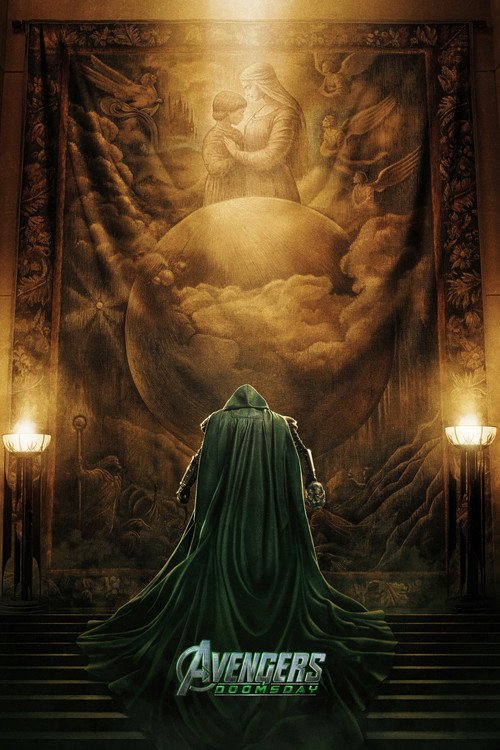
Official poster © Marvel Studios, via TMDB.
This is the single biggest bet Marvel Studios has made since Endgame, and arguably a bigger one, given how much of the Multiverse Saga has struggled to recapture the momentum of the Infinity Saga. Robert Downey Jr. returns to the MCU not as Tony Stark but as Victor von Doom, a casting swerve that’s divided fans since it was announced and will only be settled once audiences actually see the performance. The ensemble is enormous, pulling together threads from across Phase 4, 5 and 6, and the film essentially has one job: prove that Marvel can still deliver a crossover event with the stakes and coherence of the Infinity War/Endgame pairing, rather than the more scattered, lower-impact team-ups of recent years. Sharing a release date with Dune: Part Three means this is also, unavoidably, a box office showdown between two of the biggest films of the year.
Dune: Part Three (18 December 2026)
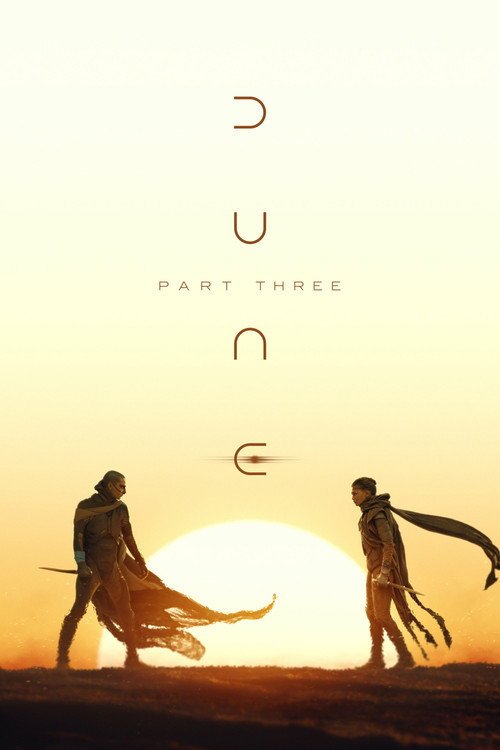
Official poster © Warner Bros. Pictures / Legendary, via TMDB.
Denis Villeneuve closes out his adaptation of Frank Herbert’s Dune Messiah with what early marketing suggests is a considerably darker film than either of its predecessors – Paul Atreides several years into his reign as Emperor, and, per the trailers, someone who has “gone mad with power” rather than the reluctant messiah figure the first two films tracked so carefully. That’s a genuinely difficult tonal pivot: the first two Dune films earned enormous goodwill by taking their time and trusting audiences with a slow-burn political epic, and Part Three needs to deliver a satisfying conclusion to that arc without undercutting the character work that got us here. If Villeneuve sticks the landing, this could be remembered as one of the great modern film trilogies. If it stumbles, it’ll be because Messiah is, by design, a far less crowd-pleasing book than Dune itself.
Werwulf (25 December 2026)
Robert Eggers has built a career on meticulously researched, formally rigorous period horror – The Witch, The Lighthouse, his Nosferatu remake – and his next subject is werewolves, set in the 13th century with Aaron Taylor-Johnson and Willem Dafoe leading the cast. A Christmas Day release for a film like this is a curious scheduling choice, presumably banking on awards-season adjacent counterprogramming against the likes of Jumanji, but Eggers has earned enough trust that this is one of the most anticipated horror releases of the entire year regardless of when it lands.
Jumanji: Open World (25 December 2026)
The third instalment of Sony’s Jumanji revival flips the established formula: rather than characters getting pulled into the game, the premise this time has the Jumanji world spilling out into the real one. It’s a reasonable way to keep a now-decade-old concept from repeating itself, and the Dwayne Johnson/Kevin Hart/Jack Black/Karen Gillan chemistry that carried the first two films remains the franchise’s biggest asset. Expect broad, crowd-pleasing family entertainment rather than anything more ambitious – which, to be fair, is exactly what the first two delivered.
Star Wars: Episode IV – A New Hope (19 February 2027)
Not a new film, technically, but worth flagging anyway: 20th Century Studios is bringing the original 1977 Star Wars back to cinemas in a fresh theatrical re-release, timed roughly around the franchise’s 50th anniversary celebrations. Re-releases of this kind have had a genuinely strong run recently – audiences have shown real appetite for seeing beloved classics on the big screen again, particularly remastered ones – and there’s something fitting about A New Hope getting this treatment the same spring that a wave of other legacy franchises are pushing new instalments into cinemas. Worth a watch even if you own it on every format already; a packed cinema audience for the original trench run is not an experience streaming replicates.
Early 2027: Sequels, Adaptations and a Few Wildcards
Before the summer blockbuster rush, January and February 2027 quietly deliver a handful of titles worth knowing about. The Beekeeper 2 (15 January) brings Jason Statham back for another round of vigilante-thriller mayhem, a franchise that’s found a comfortable niche doing exactly what it says on the tin. Children of Blood and Bone, also 15 January, adapts Tomi Adeyemi’s bestselling West African-inspired fantasy novel – a young-adult adaptation with more genuine cultural specificity than most of its genre peers, and one that’s been in development long enough that expectations have had time to build. February brings Ice Age: Boiling Point continuing a franchise that long ago outlived its critical reputation but never really lost its audience, and a remastered theatrical push around several other legacy titles as studios continue to lean on nostalgia to fill release calendars between the big tentpoles.
What This Means for UK Filmgoers
One thing worth flagging for anyone reading this on this side of the Atlantic: UK release dates for major studio films increasingly track US dates closely, sometimes landing the same day and occasionally even a day or two earlier thanks to time-zone quirks around midnight openings. That said, it’s not universal – smaller awards-adjacent titles and some horror releases still see a gap of a few weeks between US and UK cinemas, generally to allow for distributor marketing pushes or festival premiere windows. For the tentpoles on this list – Doomsday, Dune, the Hunger Games prequel – expect day-and-date UK releases at major chains including Odeon, Cineworld and Vue. For the smaller films, particularly anything routed through NEON, Searchlight or Focus Features, it’s worth double-checking local listings closer to the date, since UK distribution deals for those titles aren’t always locked in this far out. We’ll flag any notable UK-specific delays as we get closer to each release.
Looking Further Ahead: The Films Defining 2027
The back half of 2026 is busy, but 2027 is where some of the decade’s biggest bets actually land. A handful are worth flagging now, months ahead of release, because the anticipation is already building.
The Legend of Zelda (7 May 2027) is the one with the most riding on it in pure cultural terms. Wes Ball directs Nintendo’s first major live-action adaptation of its flagship fantasy franchise, with Benjamin Evan Ainsworth as Link and Bo Bragason as Princess Zelda. Nintendo has been famously protective of its IP, and the studio’s direct involvement in production suggests this is being treated as a tentpole rather than a licensing experiment. Given how well the Mario movie performed by simply respecting its source material’s tone, expectations for a faithful, earnest take on Hyrule are high.
Spider-Man: Beyond the Spider-Verse (18 June 2027) finally closes the trilogy that Into the Spider-Verse and Across the Spider-Verse began, picking up immediately after the second film’s cliffhanger. Few animated franchises this decade have earned the level of trust Sony’s Spider-Verse team has, both critically and commercially, so this is as close to a guaranteed event as animation gets right now.
Godzilla x Kong: Supernova (26 March 2027) continues Legendary’s MonsterVerse, following the crossover success of Godzilla x Kong: The New Empire. And Sonic the Hedgehog 4 (19 March 2027) keeps one of the more surprising video-game-adaptation success stories going, alongside a legacy-sequel wave that also includes Ice Age: Boiling Point and Shrek 5 (30 June 2027) – a reminder that, for all the talk of franchise fatigue, audiences keep showing up for the ones that get the tone right.
Marvel closes its current saga with Avengers: Secret Wars on 17 December 2027, the direct sequel to Doomsday and, on paper, the biggest crossover the studio has ever attempted. And sharing that exact date is The Lord of the Rings: The Hunt for Gollum, with Peter Jackson returning to Middle-earth as director for the first time since The Hobbit trilogy – a prequel exploring events in the years after Bilbo’s birthday party, well before the War of the Ring. Two franchise-defining films on the same day, for the second year running, is either a coincidence or a sign that studios have stopped being afraid of head-to-head competition when they’re confident in what they’ve made.
What We’re Actually Most Looking Forward To
If we had to narrow the whole list down to three, it would be Dune: Part Three for the sheer ambition of what Villeneuve is attempting with Messiah’s much thornier material, Werwulf because Eggers hasn’t made a film yet that wasn’t worth talking about, and The Legend of Zelda simply because of how rarely a franchise this beloved gets handed to a director with Wes Ball’s track record for handling difficult IP with care. Avengers: Doomsday is the one with the most on the line commercially, and the one most likely to dominate conversation regardless of quality – but dominating conversation and being good have not always been the same thing for the MCU’s more recent output, and that gap is exactly what we’ll be watching for.
Worth naming too: the film most likely to be genuinely underrated on this list is Clayface. It’s not being marketed with anywhere near the noise of the Marvel or Dune releases, it doesn’t have a built-in fanbase the way a Zelda or Spider-Verse film does, and it’s a strange, small-scale choice for a studio trying to relaunch its cinematic universe. That combination – low expectation, genuine creative ambition – is usually where the pleasant surprises of any given year actually come from, and it’s the one we’d put money on outperforming its own hype.
Frequently Asked Questions
What’s the biggest movie coming out for the rest of 2026?
By box office expectation, that’s almost certainly Avengers: Doomsday, releasing 18 December 2026 – though it shares that date with Dune: Part Three, so the two are effectively competing for the same weekend.
Are Avengers: Doomsday and Dune: Part Three really releasing on the same day?
Yes, both are currently scheduled for 18 December 2026. It’s an unusually direct head-to-head clash between two of the year’s biggest films, and release dates can still shift as the date approaches, so it’s worth keeping an eye on official studio announcements closer to the time.
Is there a new Hunger Games film coming?
Yes – The Hunger Games: Sunrise on the Reaping is due 20 November 2026, based on Suzanne Collins’ prequel novel following a young Haymitch Abernathy.
When is the Zelda movie coming out?
The Legend of Zelda, directed by Wes Ball, is currently scheduled for 7 May 2027.
Is there another Spider-Verse film after Across the Spider-Verse?
Yes. Spider-Man: Beyond the Spider-Verse concludes the animated trilogy and is expected 18 June 2027.
Release dates can change – how up to date is this list?
We’ve based every date here on the most recent studio scheduling available at the time of writing. Big theatrical releases do sometimes shift, particularly in response to a crowded calendar or a competing release, so treat dates more than a few months out as strong indications rather than guarantees, and check back for updates as we get closer to each release.
We’ll be keeping this page updated as more of the 2027 slate firms up, and reviewing each of these as they land – so check back closer to release for our full take on whether they lived up to the hype.

Jon Dingle Editor
A film journalist, writer and a filmmaker in business for over 20 years. I am passionate about movies, television series, music and online games. When I'm not reviewing the latest releases, you'll usually find me deep in a retro gaming session or catching up on the newest prestige drama. I believe great storytelling deserves an honest take, whatever the screen it's on.