
Onimusha: Way of the Sword Review: Capcom Sharpens an Old Blade
Reviews 13th September 2026 Jon Dingle 0
Filmoria Review

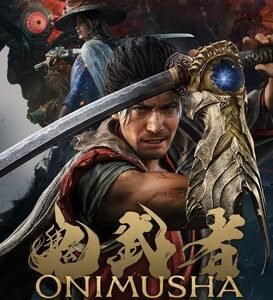
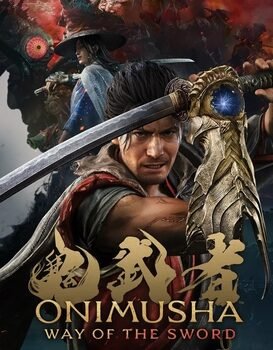
Official cover art © Capcom, via Wikipedia.
TL;DR: Capcom rebuilds a 20-year-dormant franchise into one of the year’s best sword-fighting games, then almost talks itself out of it with padding it didn’t need.
Filmoria Rating: ★★★★☆ (4.5/5)
Quick Facts
- Developer / Publisher: Capcom
- Platforms: PS5, Xbox Series X|S, Nintendo Switch 2, PC
- Genre: Character action, samurai combat
- Release date: September 4, 2026
- Engine: RE Engine
- Length: Roughly 20–35 hours depending on how thoroughly you explore
Twenty Years Is a Long Time to Sharpen a Sword
Onimusha has been dead long enough that most of its old audience had stopped waiting for it to come back. Capcom’s decision to revive the series as a full reboot rather than a straight sequel was always a gamble, and after spending a weekend fully immersed in feudal Kyoto, I can say it mostly pays off. Way of the Sword doesn’t just dust off the old formula, it rebuilds it from the ground up around a combat system that’s genuinely one of the best things Capcom has put out this year, full stop.
You play Miyamoto Musashi, reimagined here not as the historical wandering swordsman but as an arrogant duelist ambushed mid-fight by demonic Genma alongside his rival Ganryu. Both men survive, resurrected and bound to Oni Gauntlets that let them drain souls from the creatures they kill, and the story splits the two down very different paths: Musashi trying to atone and protect what’s left of Japan, Ganryu sliding into outright slaughter in pursuit of raw power. It’s not a subtle story, but it doesn’t need to be. It’s a scaffold for spectacle, and on that front it delivers constantly.
Combat That Actually Rewards Patience
The heart of the game is a deceptively simple toolkit: a light attack, a heavy attack, a deflect, and a dodge. That’s it on paper. In practice, the interplay between those four options, especially the deflect, creates something that plays like a leaner, more cinematic cousin of Sekiro’s parry-driven combat. Landing a deflect builds a meter that lets you unleash devastating counters, and the timing windows are generous enough to stay approachable without ever feeling like the game is doing the work for you. When everything clicks, and it clicks often, chaining a deflect into a stagger into the series’ signature Issen one-hit kill feels as good as anything in a Capcom game since the glory days of the studio’s action output in the early 2000s.
Boss fights are where the game is proudest of itself, and it’s earned that pride. Several encounters rank among the best cinematic boss fights Capcom has built in years, full of environmental destruction, dramatic camera work, and just enough physicality in the animation that every clash of steel actually feels like it’s landing with weight behind it. The RE Engine is doing serious heavy lifting here, particularly in the facial capture. Musashi’s likeness clearly draws on Toshiro Mifune’s screen presence, all barely contained arrogance and simmering fury, and it’s one of the most expressive character models Capcom has ever shipped.
Simpler Than Nioh, and Better for It
It’s tempting to lump this in with the wave of Soulslike samurai games that’s flooded the market since Sekiro proved there was an audience for the subgenre, but Way of the Sword plays its own game rather than chasing that crowd directly. Where something like Nioh demands you juggle multiple stances and a dense web of build-crafting decisions before you even get to the fighting, Capcom keeps the toolkit here deliberately narrow. There’s no elaborate skill tree to parse, no build theorycrafting required before a single sword swing. The depth comes entirely from mastering the rhythm of that small moveset against increasingly aggressive enemy patterns, and it’s a design philosophy that trusts spectacle and feel over systemic complexity.
That won’t be for everyone. Players who love min-maxing builds and want dozens of viable playstyles to experiment with will find comparatively little to chew on here. But for a series that built its reputation on tight, arcade-like action rather than sprawling RPG systems, it’s the right call, and it gives the game a swagger that a lot of its more mechanically dense peers lack. This is a game confident that a great sword fight doesn’t need a menu screen’s worth of preparation behind it.
A Kyoto Worth Exploring, Mostly
Between story missions, you’re free to roam a hub version of feudal Kyoto that hides side content, lore collectibles, and optional Oni Abilities that expand your combat and traversal options, including a wall-running move that opens up previously inaccessible corners of the map. There’s a real sense of discovery in tracking down these secrets early on, and the worldbuilding leans hard on authentic Japanese folklore in a way that feels researched rather than decorative.
Where it starts to wear thin is in the density of busywork Capcom stuffed into that hub. A steady stream of side “Encounter” missions exist mainly to farm upgrade materials, and too many of those materials go toward stat increases so small, often in the low single digits, that grinding for them starts to feel like an obligation rather than a reward. It’s the one part of the design that feels like it’s from an older, more padding-obsessed era of action games, sitting awkwardly next to a combat system that otherwise feels thoroughly modern.
Where the Sword Gets a Little Dull
Pacing is the other real issue, and it’s connected to that same padding problem. A campaign that could comfortably tell its story in twenty-five hours instead stretches toward the thirty-five hour mark for players chasing full completion, and the back third in particular leans on reused sub-bosses that show up again with slightly altered movesets rather than genuinely new challenges. It doesn’t sink the experience, but it does dull the impact of an ending that should land harder than it does after that much repetition.
The hub itself, gorgeous as individual set pieces within it can be, also settles into a fairly monotone visual palette after a few hours, all overcast skies and muddy streets that start blurring together on repeat visits. It’s a strange note to land on for a game that otherwise shows off some of the best character animation Capcom has produced, and it’s the one area where the presentation doesn’t quite match the ambition on display everywhere else.
How It Runs
On PC, performance is largely excellent. Testing on a mid-to-high-end rig with FSR4 enabled at quality settings, the game held a steady 120 frames per second through the vast majority of combat encounters, with only occasional hitching during loading transitions and pre-rendered cutscene handoffs. It’s also confirmed playable on Steam Deck, which is a pleasant surprise for a game this visually dense, and console players on PS5 and Xbox Series X should expect a comparably smooth experience given the consistency of the RE Engine’s recent output across platforms.

The Verdict
Way of the Sword is the Onimusha comeback the series needed and, honestly, a better one than a lot of people expected out of a twenty-year gap. The core combat loop, built around patient deflects and brutal, cinematic finishers, is as good as anything Capcom has released this year, and the presentation around Musashi as a character sells the whole revival on its own. It stumbles when it tries to pad itself into a longer game than its story can support, with grindy side content and a hub that overstays its welcome visually. None of that is enough to undercut what’s genuinely one of the best action games of the year. If you’ve been missing a Capcom game that trusts you to master its systems rather than hand-holding you through them, this is it.
Frequently Asked Questions
1. Do I need to have played the original Onimusha games to understand Way of the Sword?
No. This is a full reboot with a new story centred on Miyamoto Musashi, and it doesn’t assume any familiarity with the earlier PlayStation 2-era entries in the series.
2. How long does it take to finish Onimusha: Way of the Sword?
A focused playthrough sticking mostly to the main story runs around 20 to 25 hours, while players chasing full completion of side content and upgrades can expect closer to 35 hours.
3. Is the combat difficult, and does it compare to Sekiro?
The combat rewards precise timing on deflects in a way that will feel familiar to Sekiro players, though it’s generally more forgiving, with wider timing windows and a less punishing difficulty curve overall.
4. Which platforms is Onimusha: Way of the Sword available on?
It’s available on PS5, Xbox Series X|S, Nintendo Switch 2, and PC, with the PC version also confirmed to run on Steam Deck.
5. What’s the biggest weakness of the game?
Pacing and side-content bloat. A number of side missions exist mainly to farm minor upgrade materials, and the campaign runs longer than its story comfortably supports, particularly in the back third.

Jon Dingle Editor
A film journalist, writer and a filmmaker in business for over 20 years. I am passionate about movies, television series, music and online games.
No comments so far.
Be first to leave comment below.