


The Hunger Games: Sunrise on the Reaping Review: 12 Things That Decide Haymitch’s Prequel
Movie Reviews 23rd November 2026 Scott Prescott
Filmoria Review
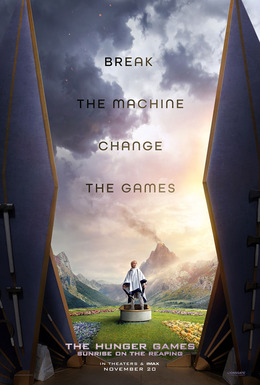
Official poster © Lionsgate, via the studio’s publicity materials.
The Hunger Games: Sunrise on the Reaping is Francis Lawrence’s adaptation of Suzanne Collins’ 2025 prequel novel, following a 16-year-old Haymitch Abernathy (Joseph Zada) through the 50th Hunger Games. It opened in UK and Irish cinemas, including IMAX, on Friday 20 November 2026 through Lionsgate. Filmoria’s verdict is 3.5 out of 5: a superb lead performance and the best supporting cast the series has had, weighed down by a 158-minute runtime and a script that explains too much.
TL;DR: It’s the most emotionally honest Hunger Games film since Catching Fire, and Zada is the real thing. It’s also too long, too eager to spell out what the book left you to work out, and only fitfully frightening once the arena opens. Fans will be moved. Everyone else may check their watch around the two-hour mark.
Filmoria’s verdict: A genuinely affecting prequel with a star-making lead, held back from greatness by its own bloat.
Filmoria Verdict
3.5 / 5
Zada soars, the Capitol cast bites, the runtime sags. Worth the ticket for fans; a long sit for everyone else.
Quick Facts
- Director: Francis Lawrence
- Writers: Billy Ray and Michael Lesslie, from the novel by Suzanne Collins
- Cast: Joseph Zada, Whitney Peak, Mckenna Grace, Jesse Plemons, Ralph Fiennes, Elle Fanning, Kieran Culkin, Glenn Close, Maya Hawke, Kelvin Harrison Jr., Lili Taylor, Ben Wang, Billy Porter
- Runtime: 158 minutes
- Release date: 20 November 2026 (UK, Ireland and US)
- Studio: Lionsgate, with Color Force
- Filmoria rating: 3.5/5
In the UK
- UK cinema release: Friday 20 November 2026, in standard, premium and IMAX screens, released by Lionsgate.
- BBFC rating: 12A, reported from the BBFC listing, for moderate violence, injury detail, threat and upsetting scenes.
- UK opening: $17.4 million, per Deadline, the best UK start for the franchise and for Lionsgate.
- Streaming and home release: not yet confirmed for the UK. Lionsgate hasn’t announced a digital, disc or subscription date.
This is a ranked list of the 12 things that decide whether The Hunger Games: Sunrise on the Reaping is worth your evening, from story and performances to craft, runtime and how it stacks up against the rest of the series.
We ordered the items the way the film plays: setup first, then the people on screen, then the filmmaking, then the comparisons and the verdict. Each rating is Filmoria’s own call, tested against the published reviews of named critics and the film’s Rotten Tomatoes, Metacritic and CinemaScore results.
| # | Aspect | Rating | Verdict |
|---|---|---|---|
| 1 | Story and setup | 3.5/5 | A strong engine: the result is known, the cost isn’t |
| 2 | Joseph Zada as Haymitch | 4.5/5 | The film’s best reason to exist |
| 3 | The District 12 tributes | 3.5/5 | Grace is excellent; too many others vanish |
| 4 | The Capitol cast | 4/5 | Plemons and Fiennes are the standouts |
| 5 | The mentors | 3/5 | Hawke and Taylor land; Harrison Jr. divides critics |
| 6 | The arena | 3.5/5 | Gorgeous and strange, but rarely scary |
| 7 | Direction and craft | 4/5 | Lawrence’s most confident Panem since 2013 |
| 8 | Runtime and pacing | 2.5/5 | 158 minutes is too much |
| 9 | Violence, the 12A and the politics | 3.5/5 | Bleaker than the originals, still within 12A |
| 10 | Against the book | 4/5 | Faithful, sometimes to a fault |
| 11 | Against the franchise | 3.5/5 | Above Ballad and Mockingjay, below Catching Fire |
| 12 | Final verdict | 3.5/5 | Recommended, with a stretch break |
1. The Story and Setup (2026, Lionsgate)
What makes it stand out: It’s a Hunger Games film where everyone who has read Catching Fire already knows who wins.
Key data: Set at the 50th Hunger Games, the Second Quarter Quell, 24 years before the 2012 film, with 48 tributes in the arena instead of the usual 24.
Why it matters: With the winner fixed, all the tension has to come from what victory costs, and that’s a harder trick than a straight survival story.
Haymitch Abernathy is 16, quick-mouthed and in love with Lenore Dove Baird (Whitney Peak) when the reaping comes round. This year the Capitol has doubled the quota. Two boys and two girls from every district, sold on television as twice the glory. District 12 knows exactly what it means.
That’s a terrific premise, and it’s the main reason the film works at all. The Ballad of Songbirds and Snakes asked how a villain gets made, and never quite convinced you it cared. Sunrise on the Reaping asks how a survivor gets broken, and you feel the question from the first scene. Every small kindness Haymitch shows is a kindness you know the Capitol is going to punish.
The setup is also where the film’s first problem shows. Collins wrote the novel in Haymitch’s voice, so a lot of what he understands about the Games reaches the reader through inference. The film has no narrator to lean on, so characters say it out loud instead. Nina Starner at /Film flagged the same thing, calling out the film’s heavy over-explanation of plot, and she’s right. The opening hour has a habit of telling you what you’re about to see, and then showing you anyway.
Still, the bones are strong. Once Haymitch is on the train out of District 12, the film has a forward pull that Ballad never found.
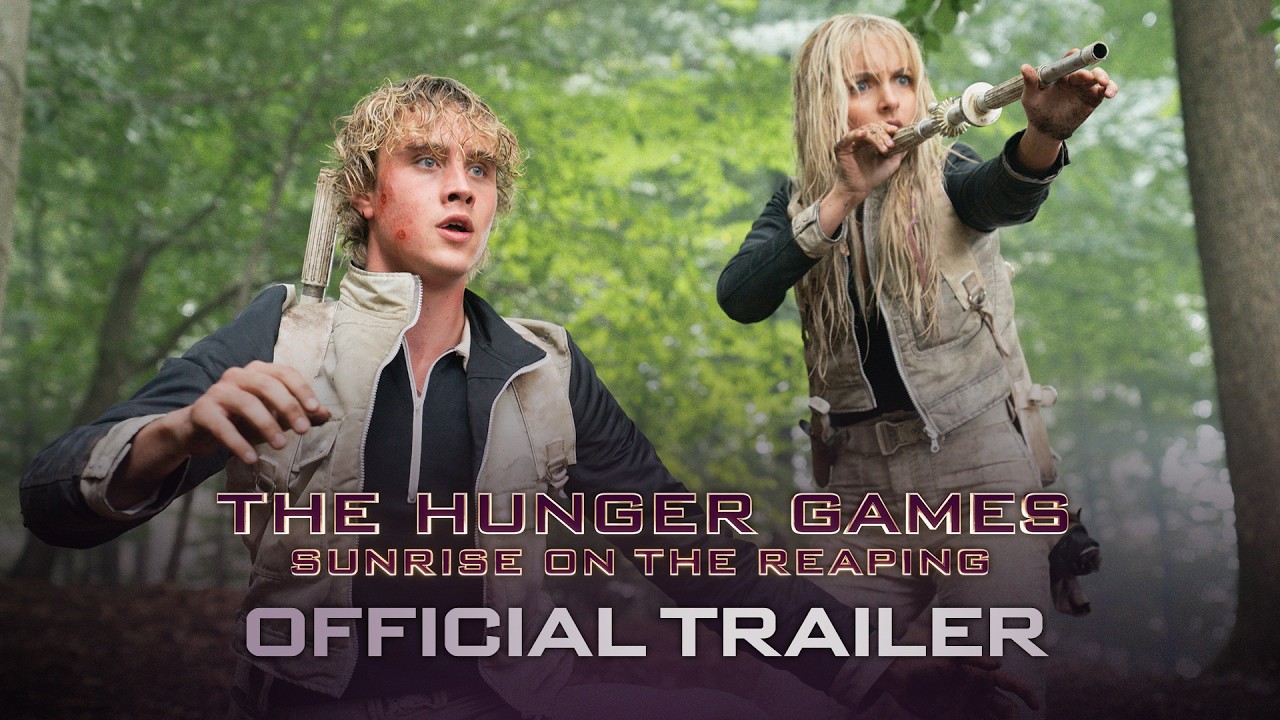
Joseph Zada and Mckenna Grace in the arena. © Lionsgate, from the official trailer.
2. Joseph Zada as Haymitch Abernathy (Lead, Cast April 2025)
What makes it stand out: A young Australian with a handful of credits carries a 158-minute franchise film and makes it look easy.
Key data: Zada was announced on 23 April 2025 after a search that began in December 2024, and he’s the performance every review, positive or negative, singles out.
Why it matters: If you don’t believe this kid becomes Woody Harrelson’s wrecked mentor, the whole film collapses.
He doesn’t look like Harrelson. It doesn’t matter. What Zada nails is the attitude: the smirk that’s half defence mechanism, the joke he can’t help making at the worst possible moment, the way his face drops the instant he thinks nobody’s filming. William Bibbiani at TheWrap put it neatly when he wrote that Zada evokes Harrelson “without resorting to imitation.” That’s the whole job, and he does it.
David Rooney in The Hollywood Reporter credited him with “tenacity, kindness and heartrending vulnerability,” and the last of those is the one that sticks. Haymitch spends much of the film being clever. The moments that land are the ones where cleverness stops working and he’s just a scared teenager a long way from home.
Not everyone’s sold. ClutchPoints felt Zada was often outshone by his more famous co-stars, and in a few Capitol scenes that’s fair; it’s hard to hold the frame opposite Ralph Fiennes. But in the arena, where the film is his, there’s no contest. The trailer’s slow clap at President Snow could have been a cheap meme moment. Zada plays it as pure, reckless contempt, and it’s the best beat in the film.
We’d be surprised if this is the last big franchise that calls him.
3. Mckenna Grace, Whitney Peak and the District 12 Tributes
What makes it stand out: Grace gives Maysilee Donner, a minor name for film-only viewers, real weight.
Key data: Grace plays both Maysilee and her twin Merrilee; Ben Wang plays Wyatt Callow and Molly McCann plays Louella McCoy, completing District 12’s four tributes.
Why it matters: Maysilee is the first owner of the mockingjay pin Katniss wears in 2012, so her story is the prequel’s most direct thread to the originals.
Grace starts Maysilee off prickly and superior, the kind of girl who’d rather die than admit she needs anyone. Starner described “a steeliness” that gives way to a frightened young girl, which matches our read. Her alliance with Haymitch is built on mutual irritation, and the film is smart enough to let that thaw slowly rather than in one big scene.
Whitney Peak has the harder brief. Lenore Dove is the emotional centre of the novel, the person Haymitch is fighting to get home to, but she’s mostly off screen once the Games start. Peak makes her vivid in the time she’s given. It isn’t much time, and the film suffers for it. You’re told she’s everything to him more than you get to see it.
The bigger casualty is the rest of District 12. Ben Wang broke out in Karate Kid: Legends and he’s barely in this. Starner noted his character “isn’t in the film much,” and with 48 tributes to get through, plenty of faces arrive and disappear before you’ve learned their names. That’s partly the point, the Capitol wants them to be disposable, but it also means the arena loses some sting.

Mckenna Grace plays Maysilee Donner. Photo: Kevin Paul, via Wikimedia Commons.
4. The Capitol Cast: Plemons, Fiennes, Fanning, Culkin and Close
What makes it stand out: It’s the starriest supporting line-up the franchise has ever fielded, and almost all of them earn it.
Key data: Jesse Plemons plays Plutarch Heavensbee, Ralph Fiennes plays President Snow, Elle Fanning plays Effie Trinket, Kieran Culkin plays Caesar Flickerman and Glenn Close plays Drusilla Sickle.
Why it matters: These are the adults who make the machine run, and the film is at its sharpest when it’s watching them.
Plemons is the quiet winner. He’s playing the role Philip Seymour Hoffman made, and he doesn’t try to copy him; he just shares that same watchful stillness, the sense of a man taking notes for later. Even Ryan Lattanzio at IndieWire, who gave the film a C- and called it “a dreary slog,” made an exception for Plemons. When a pan stops to praise you, you’ve done something right.
Fiennes gives Snow what Bibbiani called a “soulful performance,” which is the right word, odd as it sounds. His Snow sits between Tom Blyth’s ambitious young man and Donald Sutherland’s grandfatherly monster. You can see both in him. He’s frightening because he’s so reasonable.
Fanning finds innocence in an Effie who’s going to lose it, and we wanted more of her. Starner said the same. Culkin is clearly having a ball as Caesar, all teeth and timing; he’s the closest the film gets to a laugh, and the laughs curdle in the right way. Close, described by Bibbiani as a “demonic fashion disaster,” is pure Capitol grotesque. She’s not subtle. She’s not meant to be.
Put together, the Capitol scenes play like a lurid 1970s variety show, which is exactly what Panem’s propaganda should feel like at this point in its history.

Jesse Plemons plays Plutarch Heavensbee. Photo via Wikimedia Commons.
5. The Mentors: Maya Hawke, Kelvin Harrison Jr. and Lili Taylor
What makes it stand out: Three victors fans met as broken adults in Catching Fire appear here 24 years younger, already trapped.
Key data: Hawke plays Wiress, Harrison Jr. plays Beetee and Taylor plays Mags, roles originally taken by Amanda Plummer, Jeffrey Wright and Lynn Cohen.
Why it matters: It’s one of Collins’ sharpest ideas, showing that winning the Games is just a slower way of losing them.
Lili Taylor is quietly wonderful as Mags. She has barely any lines and you believe every one. Maya Hawke’s Wiress is fragile and clever in a way that makes her Catching Fire future hurt more in hindsight.
Harrison Jr. is where the critics split, and we’ll pick a side. Collider’s Perri Nemiroff, in her first reaction, said he was “too good following in Jeffrey Wright’s footsteps.” Starner went the other way and called his Beetee the weakest recurring performance, something close to a Saturday Night Live impression of Wright. We’re closer to Starner. The vocal tics are a shade too studied, and next to Plemons, who has absorbed Hoffman rather than imitated him, it shows. It’s not a bad performance. It’s a self-conscious one.
That’s a small complaint about a strong ensemble. The mentor scenes are where the film’s politics feel most lived-in, and they’re some of its best stretches.
6. The Arena (Filmed in Somiedo and Teverga, Spain)
What makes it stand out: It’s the most beautiful arena the series has built, deliberately so.
Key data: Arena scenes were shot in the Somiedo and Teverga valleys of Asturias from late July 2025, and IMAX says the film carries more than 45 minutes of footage in its expanded 1.90:1 ratio.
Why it matters: The arena is the franchise’s signature set-piece, and it’s where a Hunger Games film either grips you or doesn’t.
Bibbiani’s line about it looking like “Midsommar” and “Bambi” had a lovechild is the best description going. Flowers, sunlit meadows, cute animals that turn out to be very much not cute. It’s an arena designed to look gorgeous on Capitol television, and Lawrence leans into that brightness after years of grey forests and concrete. In IMAX it’s genuinely striking.
The craft details are good, too. Starner liked that the tributes rise into the arena on small platforms rather than the launch tubes of later films, and the film gives real attention to how the Games are engineered. The arena’s technical logistics, as she put it, play “an outsized role,” and that pays off.
The problem is fear. Peter Bradshaw in The Guardian, who gave the film one star, said the arena sequences weren’t remotely scary, and while one star is harsh, he has a point. Too many deaths happen in a blur of cutting, and the film is so busy honouring the book’s beats that it rarely lets a threat build. Catching Fire’s clock arena had dread. This one has spectacle.

Ralph Fiennes plays President Snow. Photo: Steve Disenhof, via Wikimedia Commons.
7. Francis Lawrence’s Direction and Craft (Fifth Hunger Games Film)
What makes it stand out: One director has now made five of the six films, and this is his most confident return to Panem since 2013.
Key data: Shot by Jo Willems, edited by Mark Yoshikawa and scored by James Newton Howard, his sixth Hunger Games score; produced by Nina Jacobson, Brad Simpson and Lawrence.
Why it matters: The same core team has shaped the look and sound of the series for over a decade, and here they’re clearly energised.
Philip De Semlyen at Time Out called it “far stronger than so many fished-from-the-bin franchise revivals” and praised a visual quality he felt was unmatched in the series. We agree. Willems’ photography is the richest the franchise has had, and the production and costume design, especially in the Capitol, are top-drawer.
Bibbiani made an interesting case that Lawrence’s The Long Walk, another Stephen King-flavoured march of doomed boys, may have freed him up here. There’s more energy and momentum than in Ballad, where Lawrence seemed boxed in by three separate acts that never connected. Even Owen Gleiberman at Variety, who found the film “meandering and more than a bit thin,” credited Lawrence’s “surface intensity” and called it a return to Hunger Games Classic style.
Surface intensity is the right phrase, though, for good and bad. The film always looks urgent. It doesn’t always feel it, and that’s where we part ways with the rave reviews.
8. Runtime and Pacing (158 Minutes, the Longest in the Series)
What makes it stand out: At 158 minutes it’s the longest Hunger Games film yet, a minute longer than Ballad’s 157.
Key data: 158 minutes adapting a novel of roughly 400 pages; UK cinema guide Flicks listed 150 minutes earlier in the autumn, so the final cut grew.
Why it matters: It’s the single biggest complaint in the negative reviews, and it’s ours too.
Here’s the odd thing. The film is both too long and too rushed. Starner called the pacing quick but “not overly so,” and noted that many characters are introduced and quickly disappear. Brandon Yu at The New York Times called it “both bloated and limited,” which sounds like a contradiction until you sit through it.
The bloat is in the pre-Games stretch: chariot parade, training, interviews, Capitol politics. All of it is in the book, all of it is well made, and too much of it repeats what earlier films already taught us. The rush is in the arena, where 48 tributes have to be thinned out in an hour and change.
Twenty minutes trimmed from the middle would have made this a four-star film. The ending, by contrast, races. Bibbiani felt it tied up loose ends too quickly, and we’d agree; the final stretch has more emotional weight than it has room to carry.

Elle Fanning plays a young Effie Trinket. Photo: Harald Krichel, via Wikimedia Commons.
9. Violence, the 12A and the Politics
What makes it stand out: It’s the bleakest film in the series, and it treats its violence as tragedy rather than thrill.
Key data: Rated 12A by the BBFC, as reported from its listing, for moderate violence, injury detail, threat and upsetting scenes, the same certificate as every earlier film.
Why it matters: Parents need to know that 12A here covers a story in which 47 children die.
Bibbiani made the point that the violence is framed as pathetic tragedy rather than spectacle, in contrast to earlier films that glossed over the brutality. That’s right, and it’s to the film’s credit. Deaths here are clumsy and cruel and mostly unheroic. You don’t cheer.
For younger viewers, the BBFC’s wording is the bit to take seriously. “Injury detail” and “upsetting scenes” are there for a reason. If a 12- or 13-year-old found Mockingjay Part 1 hard going, this is darker.
The politics are louder too. A rigged, televised contest, a public taught to treat cruelty as entertainment, a quiet coalition inside the Capitol taking notes. None of it is subtle, and the script sometimes underlines its own message in thick marker. But it has teeth, and the slow-clap moment hits because the film has earned Haymitch’s contempt.
10. Against the Book (Suzanne Collins, March 2025)
What makes it stand out: It’s adapting the fastest-selling book in the series, and fans were watching for every cut.
Key data: The novel was published on 18 March 2025 and sold 1.2 million US copies in its first week, per Scholastic figures reported by the Associated Press.
Why it matters: For the core audience, faithfulness isn’t a bonus. It’s the deal.
Yasmine Kandil at DiscussingFilm said the film “remains exceedingly faithful to the novel’s sequence of events,” and that matches what book readers have been saying since the London fan screening. Germain Lussier at Gizmodo called it “a love letter to The Hunger Games.” If you loved the novel, you’ll find almost all of it here, including the developments that made readers throw the book across the room.
The catch is that faithfulness has a cost. The book lives inside Haymitch’s head, and the film can’t. It compensates with dialogue that explains motives the novel only implied. That’s the over-explanation problem again, and it’s most noticeable in the scenes that set up the arena’s endgame. We won’t say more. If you haven’t read it, stay out of the comment sections.
Jennifer Lawrence and Josh Hutcherson do appear as Katniss and Peeta. Their roles are brief, and we won’t spoil how they’re used. It’s handled with more restraint than you’d expect from a studio that put them in the marketing.

Francis Lawrence. Photo: Gage Skidmore, via Wikimedia Commons.
11. Against the Franchise (2012 to 2026)
What makes it stand out: It’s the first Hunger Games film in over a decade that some critics have put in the same breath as Catching Fire.
Key data: It sat at 69% on Rotten Tomatoes from 62 reviews when the embargo lifted, later reported at 76% from 96 reviews, with 56 on Metacritic, against 85% for The Hunger Games, 90% for Catching Fire and 64% for Ballad.
Why it matters: It tells you where to rank it, and the honest answer is: high, but not top.
Our ranking puts it third. Catching Fire is still the best of the six, a view Starner shares even in her 8/10 review. The 2012 original edges it on focus. Then comes Sunrise on the Reaping, comfortably above both Mockingjay films and well above Ballad, which Rooney rightly called “lumbering.”
Bibbiani went further, calling it the best since Catching Fire. That’s defensible. The Rogue One comparisons from the first reactions are also fair in spirit: a prequel with a fixed ending that finds its power in the people paying the price.
The sceptics deserve a hearing. Tim Grierson at Screen called it “a drab afterthought,” Alonso Duralde at The Film Verdict said the series has “exhausted every point it ever wanted to make,” and Barry Hertz at The Globe and Mail felt the producers were “plumb out of legitimately interesting ideas.” We think they underrate Zada and the Capitol cast. But they’re right that the template, reaping to parade to interviews to arena, hasn’t changed in six films, and this one doesn’t try.
Audiences have made their own call. It earned an A- CinemaScore and opened to an estimated $120 million in North America and $225 million worldwide, which our Sunrise on the Reaping box office takeaways break down in full.
12. Who It’s For, and the Final Verdict (3.5/5)
What makes it stand out: It’s a fan’s film first, a general audience film second, and it knows it.
Key data: 158 minutes, 12A, in UK cinemas and IMAX from 20 November 2026; Filmoria rating 3.5/5.
Why it matters: Whether you’ll love it depends almost entirely on how much Panem you’ve already got in you.
Matt Zoller Seitz at RogerEbert.com said the film is aimed at longtime fans who grew up with the series, and that’s the simplest way to put it. The people who read the trilogy as teenagers are in their late twenties now, and TheWrap’s audience data suggests they’re the ones filling the seats.
Watch it if: you read the novel and want to see it done properly; you think Catching Fire is the high point of the series and want something in that register; you like seeing a newcomer announce himself; you’ll catch it in IMAX, where the arena really sings.
Skip it if: the Hunger Games template wore thin for you by Mockingjay; you need a film under two hours to stay with it; you’re after genuine horror in the arena rather than gorgeous spectacle; or you’re taking a young or sensitive 12-year-old.
Final verdict: Sunrise on the Reaping is a better film than its harshest critics allow and a weaker one than its first reactions promised. Zada is the real deal, Plemons and Fiennes are superb, and the arena looks like nothing else in the series. The runtime and the hand-holding script stop it short of great. 3.5 out of 5.
The Bottom Line
After the misfire of The Ballad of Songbirds and Snakes, this was the prequel the franchise needed, and in its best moments it’s the most affecting Hunger Games film in years. It just needed an editor with a firmer hand. If you’ve followed the build-up through our guide to the film and the first reactions, go. Book IMAX if you can, and skip the large drink.
Sources: TheWrap review, /Film review, Dark Horizons critics roundup, World of Reel (Rotten Tomatoes and Metacritic scores), CinemaBlend review roundup, Deadline (global and UK box office).
Frequently Asked Questions
Is Sunrise on the Reaping worth watching?
Yes, especially for fans of the books and films. Filmoria rates it 3.5 out of 5 for Joseph Zada’s lead performance and a strong supporting cast, though its 158-minute runtime drags.
Is Sunrise on the Reaping better than Catching Fire?
No. Catching Fire is still the best film in the series in our view, but Sunrise on the Reaping is clearly better than The Ballad of Songbirds and Snakes and both Mockingjay films.
What is the Rotten Tomatoes score for Sunrise on the Reaping?
It opened at 69 percent from 62 reviews and was later reported at 76 percent from 96 reviews, with a Metacritic score of 56 and an A- CinemaScore.
Is Jennifer Lawrence in Sunrise on the Reaping?
Yes. Jennifer Lawrence and Josh Hutcherson return as Katniss and Peeta in brief roles, because the story is set 24 years before the 2012 film.
Do I need to watch the other Hunger Games films before Sunrise on the Reaping?
No. It works on its own, but knowing Catching Fire makes Haymitch, Beetee, Wiress, Mags and Plutarch far more rewarding.
Is the Sunrise on the Reaping film faithful to the book?
Yes. Critics including DiscussingFilm say it follows the novel’s sequence of events very closely, though it spells out things the book only implies.
Is Sunrise on the Reaping suitable for a 12-year-old?
It is reported as a 12A for moderate violence, injury detail, threat and upsetting scenes. It is the bleakest film in the series, so check the BBFC advice for younger or sensitive viewers.
Is Sunrise on the Reaping worth seeing in IMAX?
Yes. IMAX says the film has more than 45 minutes of footage in an expanded 1.90:1 ratio, and the arena scenes benefit most from the bigger screen.
How much did Sunrise on the Reaping make on its opening weekend?
It opened to an estimated 120 million dollars in North America and 225 million dollars worldwide, including a franchise record 17.4 million dollars in the UK, per Deadline.
When will Sunrise on the Reaping be available to stream in the UK?
Lionsgate has not announced a UK streaming, digital or Blu-ray date yet. For now it is showing only in cinemas.
📸 Follow us on Instagram for daily film, TV & gaming news: @filmoriauk

Scott Prescott Writer/Contributor @ Filmoria.co.uk
Scott, or Prescott (Depending on which level of association you stand) is an avid film fan, comic reader, writer and video producer. Regularly and deftly expressing his disdain of modern film. But the way to his heart is through shared love of Coen Brothers movies, highly tensed thrillers and Star Wars.