
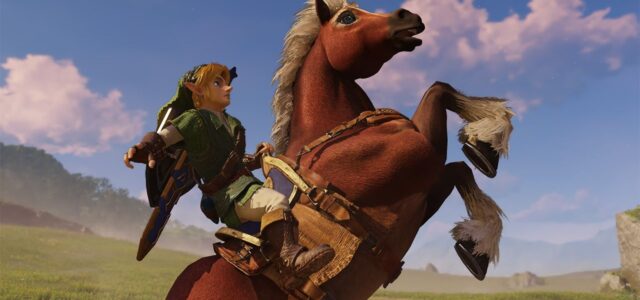
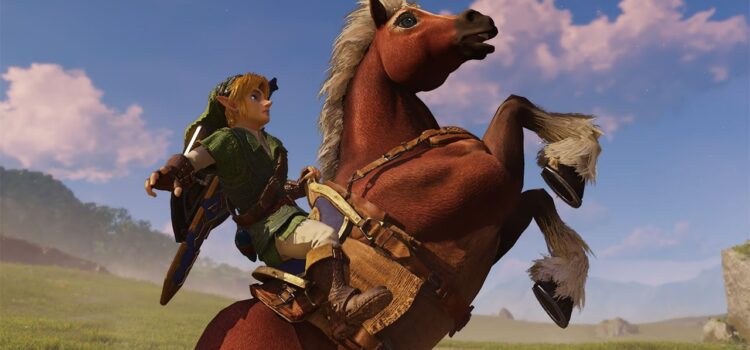
The Legend of Zelda: Ocarina of Time Review: 12 Things That Decide Nintendo’s Switch 2 Remake
Gaming Reviews 11th November 2026 Leo Wilson
Filmoria Review
This article contains affiliate links. As an Amazon Associate, Filmoria earns from qualifying purchases.
The Legend of Zelda: Ocarina of Time is Nintendo’s full remake of the 1998 Nintendo 64 classic, released exclusively on Nintendo Switch 2 on 5 November 2026 and available in the UK from the Nintendo eShop and high-street retailers. Filmoria’s verdict is 5 out of 5 stars: it’s the definitive way to play Ocarina of Time today, a careful, gorgeous rebuild that fixes the old game’s clunkiest edges, even if veterans will find it a little too easy and a little too safe.
Filmoria verdict card
★★★★★ 5/5
Filmoria’s verdict: The best version of one of the best games ever made, rebuilt with real care rather than reinvented.
Metacritic: 96 (80+ critics) | Platform: Nintendo Switch 2 | Out: 5 November 2026
TL;DR: Nintendo hasn’t reinvented Ocarina of Time. It has re-recorded it, relit it, given Link a jump button and a proper camera, voiced the people of Hyrule and sanded down the bits that made 1998 feel like 1998. The result looks brand new and plays like the game you remember on its very best day. Play it if you’ve never finished Ocarina, or if you’ve been waiting 28 years to see Hyrule Field like this. Skip it if you wanted Master Quest, a hard mode or a radical rethink.
Quick Facts
- Developer / publisher: Nintendo
- Platform: Nintendo Switch 2 only (TV, tabletop and handheld modes; 1 player)
- Release date: 5 November 2026
- Price: US$59.99 digital, US$69.99 physical (the boxed version has a textured foil cover while stocks last)
- File size: under 25GB, according to Game Informer
- Critic scores: Metacritic 96; OpenCritic Top Critic Average in the mid-90s with a 100% recommendation rate
- Original release: Nintendo 64, 1998 (Metacritic 99); Ocarina of Time 3D on 3DS scored 94
In the UK
- UK release date: 5 November 2026, on Nintendo Switch 2.
- Where to buy: Nintendo eShop (digital) and UK retailers such as Currys (physical cartridge).
- Age rating: PEGI 12, as listed by UK retailer Currys and on the UK eShop listing.
- UK price: Nintendo’s official UK RRP was not confirmed in the sources we checked, so look at the eShop and retailer listings for current pricing.
Buy The Legend of Zelda: Ocarina of Time (Nintendo Switch 2) on Amazon UK
This is a list of the twelve aspects that decide whether the Nintendo Switch 2 remake of The Legend of Zelda: Ocarina of Time is worth your time and money, from its controls and dungeons to its performance and how it stacks up against the 1998 and 2011 versions.
We’ve ordered the items the way a first play-through unfolds: what the remake is trying to be, then how it plays, looks and sounds, then how it runs, how it compares with the N64 and 3DS versions, who it’s for, and finally our score. Every critic score and technical figure below comes from published reviews and Nintendo’s own listings.
| # | Aspect | Rating | Verdict |
|---|---|---|---|
| 1 | Remake approach | Excellent | Faithful 1:1 layout, refined rather than reinvented |
| 2 | Controls and camera | Excellent | Jump button, free camera and sprint transform movement |
| 3 | Visuals and art direction | Excellent | Storybook lighting and rebuilt models; child designs divide opinion |
| 4 | Dungeons | Very good | Fewer keys and less friction, but fewer ‘aha’ moments |
| 5 | Combat and difficulty | Good | Snappier swordplay, but too easy for veterans and no hard mode |
| 6 | Voice acting and Navi | Mixed | Ganondorf shines, others stiff; Navi far less annoying |
| 7 | Music | Outstanding | Koji Kondo’s score re-recorded with a full orchestra |
| 8 | Quality-of-life features | Excellent | Threads of Time log, quick-select bar, microphone ocarina |
| 9 | Technical performance | Very good | Smooth docked; handheld between 720p and 1080p; under 25GB |
| 10 | Versus N64 and 3DS | Best version | Beats the 3DS remake (94) and sits just under the N64 legend (99) |
| 11 | Who it’s for | Broad | Ideal for newcomers; veterans get spectacle more than challenge |
| 12 | Final score | 5/5 | The definitive Ocarina of Time |
1. The Remake Approach (2026, Nintendo Switch 2, Nintendo)
What makes it stand out: This is a ground-up rebuild that keeps the 1998 map, story and dungeon order intact rather than remixing them.
Key data: Released 5 November 2026 as a Switch 2 exclusive, it keeps Hyrule Field’s layout 1:1 with the N64 original and has a Metacritic score of 96 from more than 80 critics.
Why it matters: Ocarina of Time is still the highest-scoring game Metacritic has ever recorded, so the remake’s whole job was to change how it feels without changing what it is.
The first thing to understand about this remake is what it isn’t. It isn’t Final Fantasy VII Remake, splitting one game into a trilogy and rewriting fate. It isn’t Link’s Awakening on Switch either, where the toy-box art style was the point. Nintendo has taken the most revered 3D adventure of the 1990s and rebuilt it from scratch with modern tools, then made a deliberate decision to leave the bones alone.
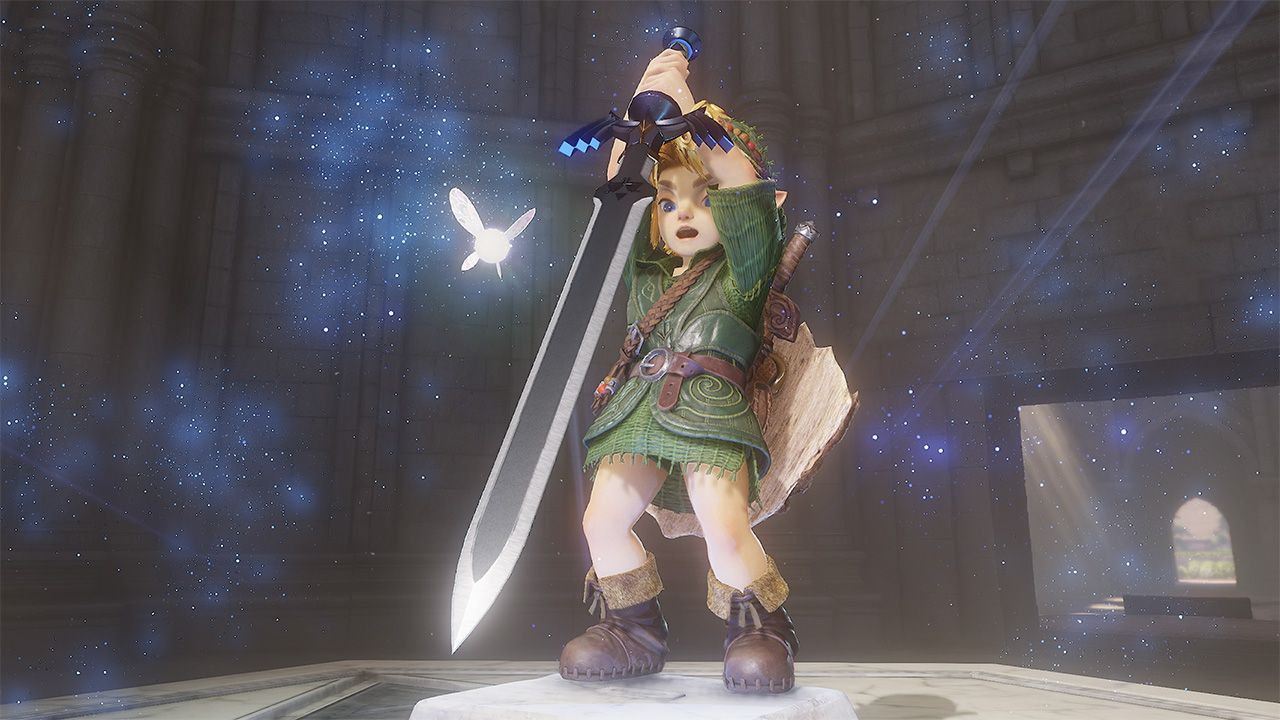
So you still wake up in the Kokiri Forest. You still crawl through the Great Deku Tree, ride out across Hyrule Field, sneak into the castle courtyard and pull the Master Sword out of its pedestal. The surprise of the seven-year jump still lands. Whole cutscenes play out beat for beat, with a few extra lines here and there, especially for Ganondorf.
VGC’s review put it neatly: rather than reinventing a masterpiece, Nintendo has carefully refined what made it special. That’s exactly right, and it’s also the source of the only real argument against it. Game Informer’s Kyle Hilliard, who gave it 9.25, said it “looks new, but doesn’t feel particularly new”. We understand the complaint, but we don’t share it. Ocarina’s structure is still the template that half the industry has been copying for nearly three decades. It didn’t need fixing. Its controls, camera and pacing did, and that’s where Nintendo spent its effort.
2. Controls, Camera and Movement (Switch 2 Joy-Con 2 and Pro Controller)
What makes it stand out: Link finally has a dedicated jump button, full right-stick camera control and a sprint.
Key data: Auto-jumping off ledges is gone, Z-targeting remains, and holding the roll button makes Link sprint, which you can remap to the Pro Controller’s GL and GR buttons.
Why it matters: These three changes do more to modernise Ocarina than any amount of new lighting.
Go back to the N64 version today and the thing that hits you isn’t the fog or the low-poly faces. It’s the camera. In 1998 you nudged it with the shoulder button and prayed. Here the right stick does what it does in every modern 3D game, and that alone turns exploration from a chore into a pleasure. Game Informer singled out the areas that used to be pre-rendered backdrops, such as the castle market, which you can now look around properly for the first time.
The jump button is the bigger philosophical change. Ocarina’s original design was built around automatic jumping, and the levels assume it. Nintendo has clearly retuned some spaces to cope, and for most of the game it feels natural. The trade-off is that a few old obstacles lose their teeth. Hilliard’s line about being able to jump over Blade Traps sums it up: things that used to be threats are now speed bumps.
Sprinting is the change we’d miss most if it vanished. Hyrule Field is big, and chaining rolls across it was always a bit silly. Our one complaint is the default layout. Nintendo Everything’s reviewer found holding A to run while steering the camera with the right stick awkward, and we’d agree. If you have a Pro Controller, map sprint to the back buttons straight away.
3. Visuals and Art Direction (Switch 2, Rebuilt Models and Lighting)
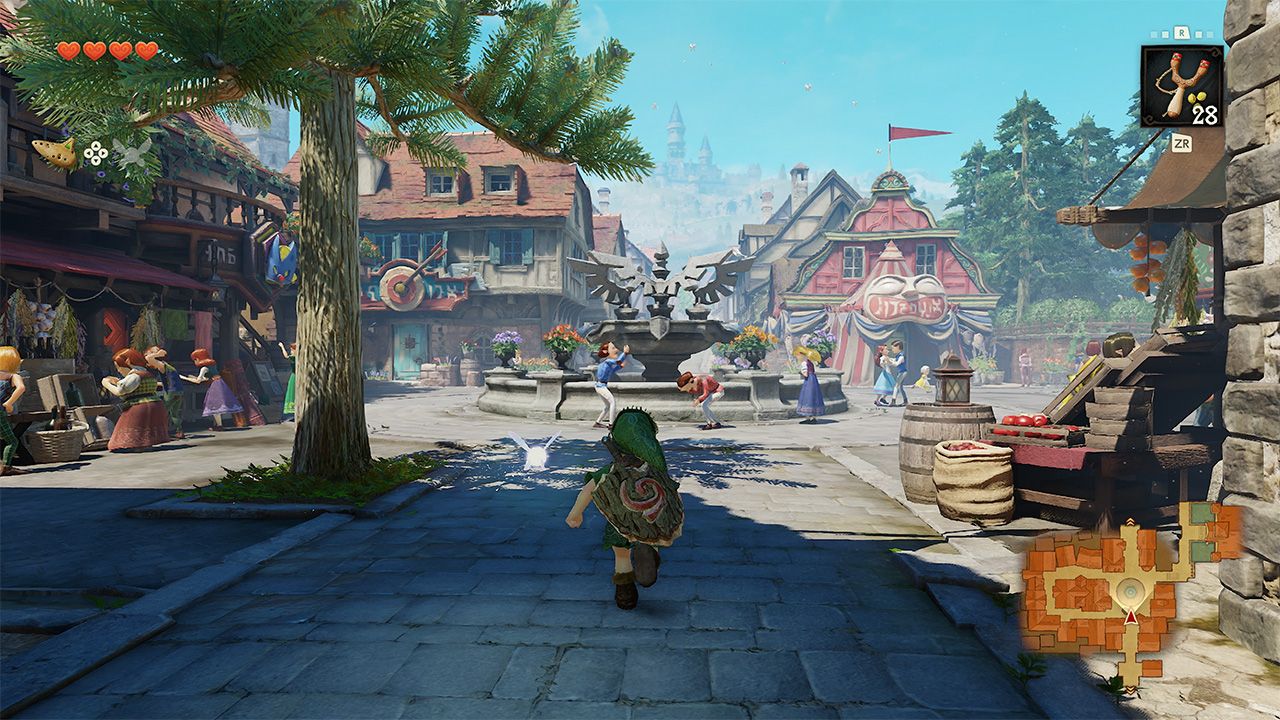
What makes it stand out: Global lighting, volumetric fog, layered foliage and wet-weather reflections give Hyrule a soft, storybook look.
Key data: Every character model is rebuilt, overworld areas gain night-time themes, Hyrule Field has new streams, and Castle Town’s interiors are bigger than the original’s single-purpose rooms.
Why it matters: This is the first time Ocarina’s world looks the way players imagined it in 1998.
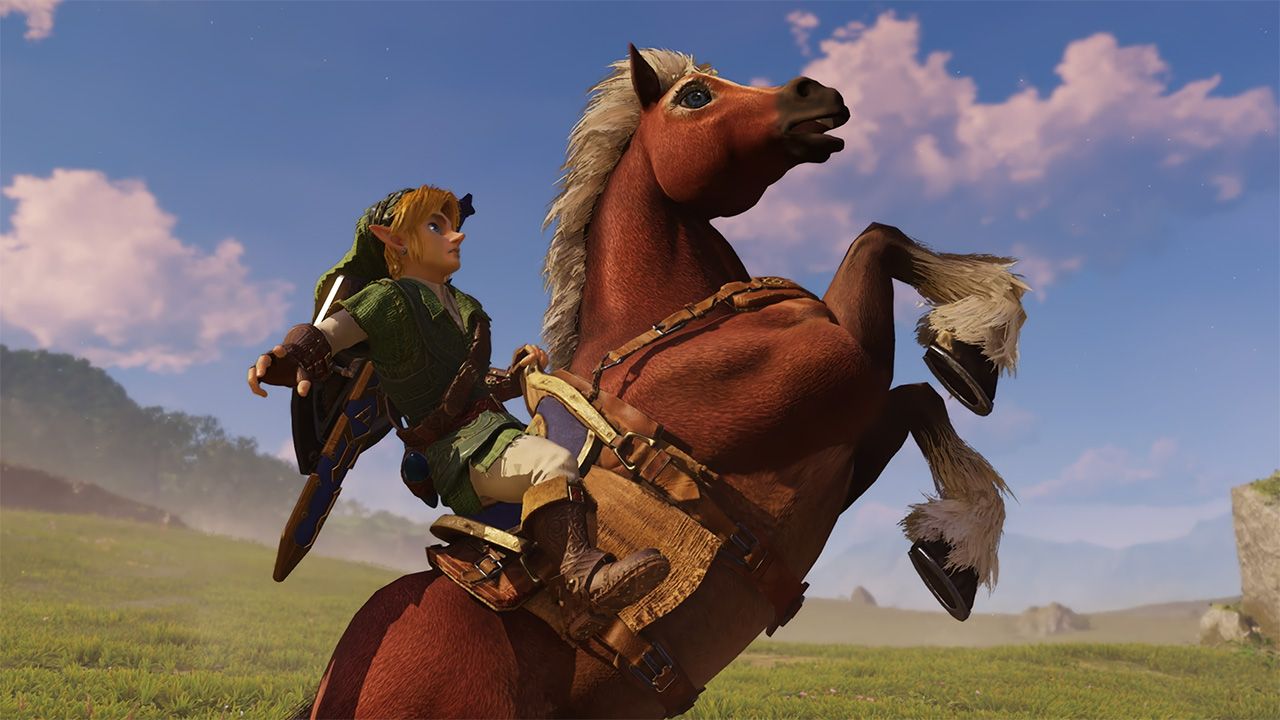
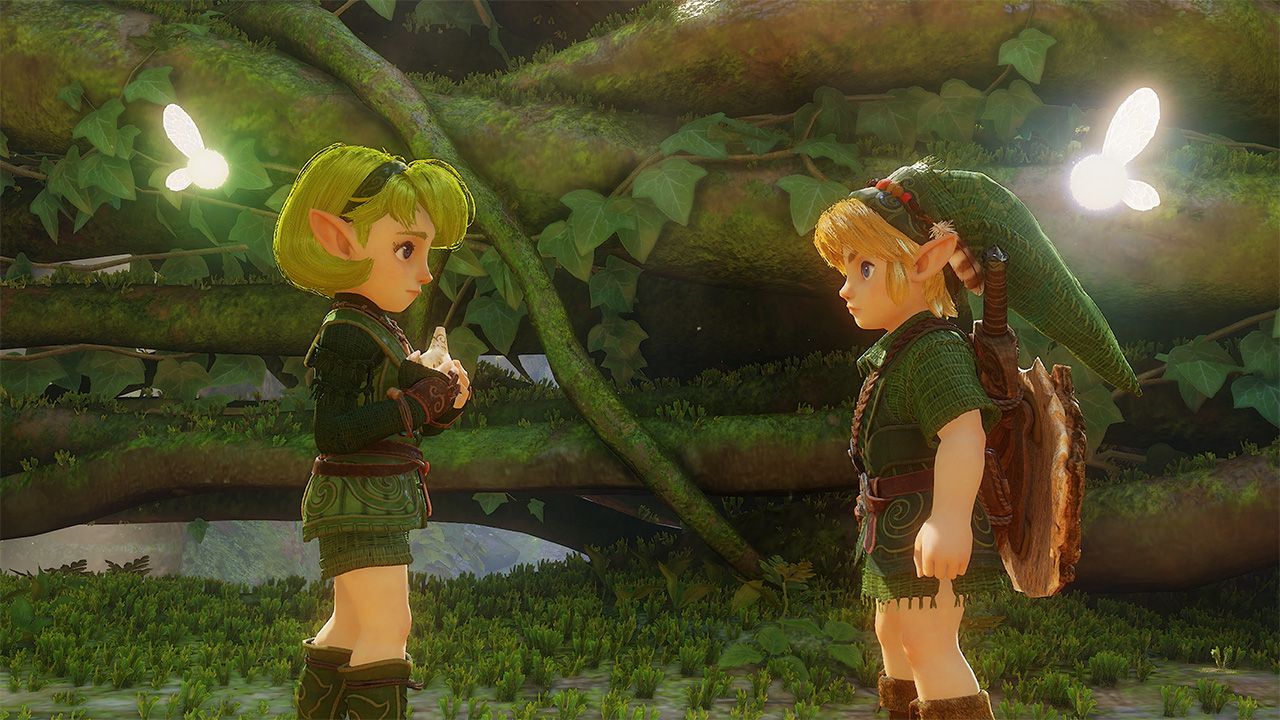
The remake is beautiful in a way that’s slightly hard to describe. It isn’t going for the painterly cel-shading of Breath of the Wild or the realism of Twilight Princess. It sits somewhere between the two, like an expensive animated film. Kokiri Forest glows. Kakariko at night looks like a postcard. Rain leaves the stones slick and reflective. Death Mountain finally looks like a volcano rather than a brown cone.
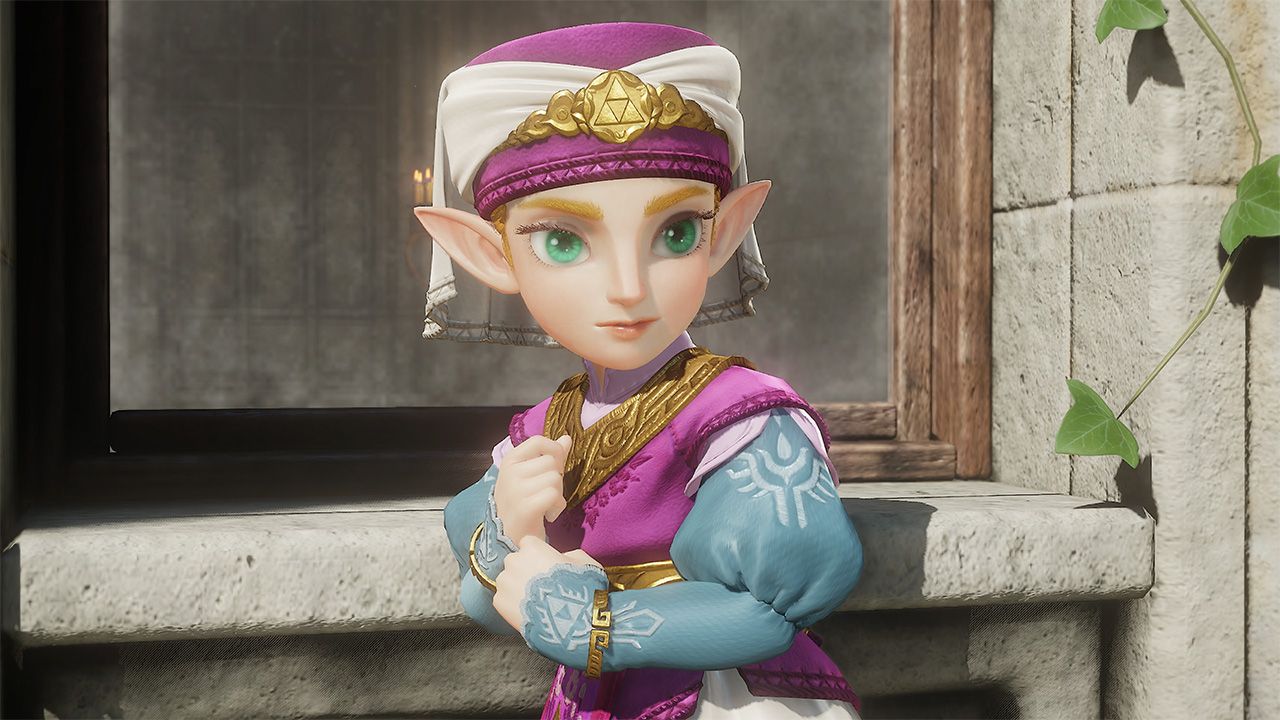
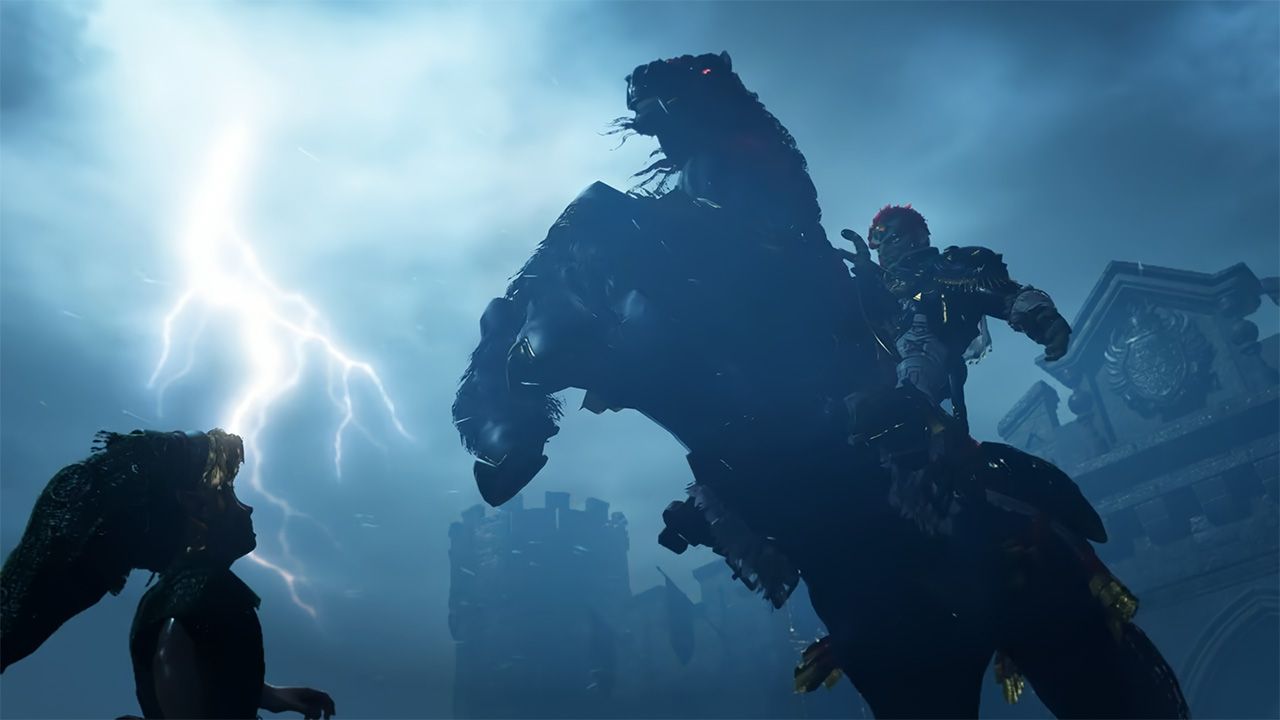
Nintendo Life called it a stellar reimagining with stunning visuals, and nobody we read disagreed on the environments. The arguments are about faces. The new child Link and young Zelda have big eyes and doll-like proportions, and Game Informer’s reviewer admitted they never quite warmed to them. We had the same wobble for the first hour, then stopped noticing. Adult Link looks superb. So does Ganondorf, who gets more screen time and some extra dialogue in cutscenes, and is all the more menacing for it.
The world also feels more alive. NPCs in Castle Town now follow day and night schedules, and the day-night cycle keeps running when you step indoors. Shop entrances load without a break. They’re small things, but they make Hyrule feel like a place rather than a series of stages.
4. The Dungeons (Forest, Fire, Water, Shadow and Spirit Temples)
What makes it stand out: The dungeons keep their layouts and themes but cut a lot of the busywork, especially key-hunting.
Key data: Some puzzles are streamlined, and the Water Temple in particular needs fewer keys, according to Game Informer and IGN.
Why it matters: The dungeons are where Ocarina built its reputation, so this is where streamlining is most likely to divide fans.
Let’s talk about the Water Temple, because everyone will. The 1998 version is famous for being confusing, mostly because of a tight key economy, constant trips to the menu to put on and take off the Iron Boots, and water levels you had to raise and lower in the right order. The remake keeps the central idea but trims the keys and puts your boots on the quick-select bar. It’s still the most demanding dungeon in the game. It just stops punishing you for one missed small key on the other side of the map.
That’s mostly a win. IGN’s Logan Plant, who scored the remake 9/10, put the counter-argument best: the dungeons are still largely fantastic, but he wished they trusted the player more, and the reduced key count means the big ‘aha’ moments come less often. Nintendo Life made a similar point, calling the remake very safe and possibly short on challenge for returning players.
Our view sits between the two. The Forest Temple is still a brilliant haunted-house puzzle box. The Shadow Temple is still the creepiest thing Nintendo has ever made. If you’re new, you’ll get the full sense of discovery. If you’ve played Ocarina five times, you’ll notice where the rough edges used to be and maybe miss them a little.
5. Combat, Bosses and Difficulty (No Master Quest, No Hard Mode)
What makes it stand out: Swordplay has new effects and more weight, and boss fights look spectacular.
Key data: There is no Master Quest and no hard mode, either from the start or after the credits, as Nintendo Everything and Nintendo Life both confirm.
Why it matters: For returning players the missing hard mode is the single biggest omission in the package.
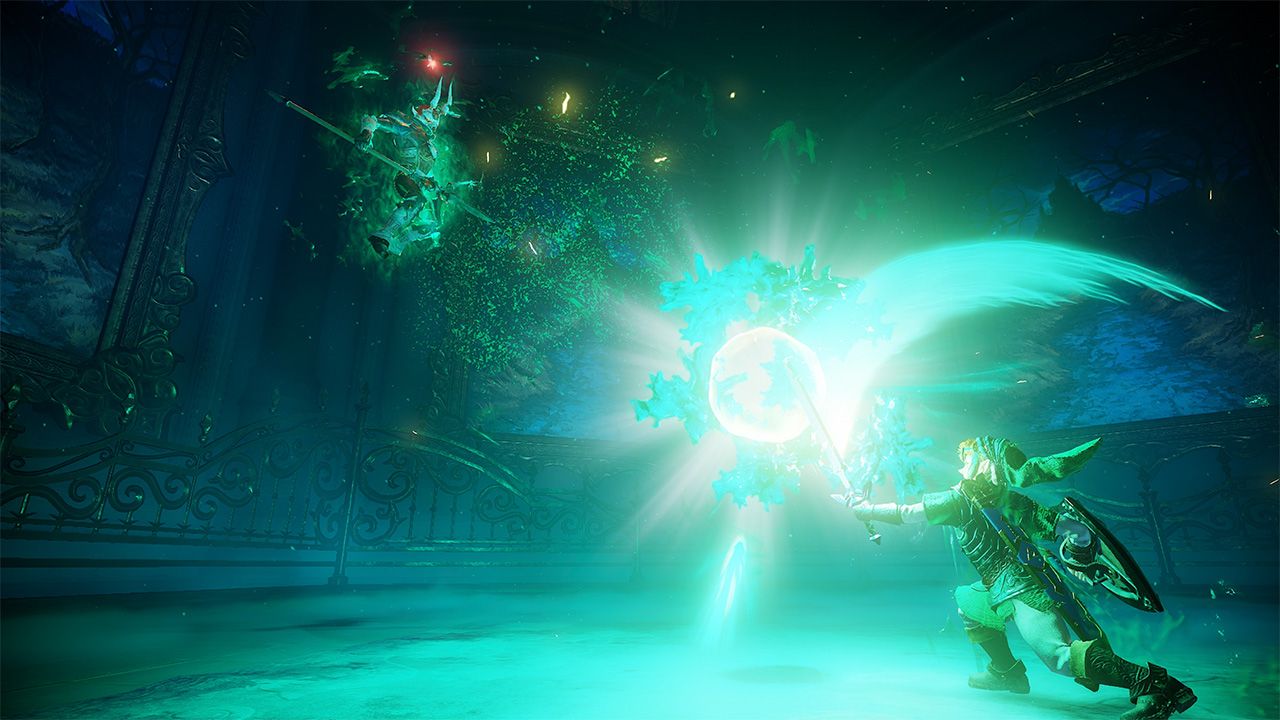
Combat is still built on Z-targeting, the system Ocarina invented and every action game since has borrowed. It feels crisper now. Hits land with more impact, shield bashes look right, and boss fights such as Phantom Ganon in the Forest Temple, where you swat his energy ball back and forth like tennis, are dramatic in a way the N64 hardware could only hint at.
The trouble is that none of it is hard. Ocarina was never a punishing game, and the new movement options and gentler dungeons make it easier still. Nintendo Everything said plainly that the remake isn’t challenging, especially for returning players. GameSpot, which stopped short of a perfect score, said the remake smooths over some rough edges and leaves others intact.
The obvious fix would have been Master Quest. The 3DS version shipped with it, including a mirrored world and double damage. Its absence here is a strange decision, and it’s the main reason we’d tell Ocarina veterans to think about how much they value spectacle over challenge. It isn’t enough to knock a star off for us, but if a post-launch update added a hard mode it would close the only real gap in the package.
6. Voice Acting and Navi (Full NPC Voice Cast, Silent Link)
What makes it stand out: For the first time, the people of Hyrule speak, while Link stays silent as he always has.
Key data: NPCs are fully voiced, Ganondorf gets extra lines, and Navi’s hints now appear in small pop-up boxes instead of stopping the game.
Why it matters: Voice acting is the most visible new layer in the remake and the one critics disagree about most.
This is the weakest part of the remake, and it’s also the part where reviews split the hardest. Some critics loved it. Others, including Game Informer, said Nintendo continues to fumble voice acting with stiff performances, and VGC admitted the cast wasn’t always to its taste. Nintendo Everything praised Ganondorf but found the voice direction for other characters exaggerated.
We land closer to the critics. Ganondorf is excellent: low, controlled and genuinely threatening, and his extra scenes are among the best additions to the game. A lot of the supporting cast, though, is pitched as if the actors were reading to a room full of children. It works for the Kokiri. It’s less convincing for the sages.
The happy surprise is Navi. “Hey! Listen!” has been a running joke for 28 years, and the remake finally fixes it. Her tips arrive in a small box at the edge of the screen and let you keep playing, and her new voice is cheerful rather than shrill. One reviewer called her far more likeable than in the original, and we’d go further. She’s useful now.
7. The Music (Koji Kondo’s Score, Fully Orchestrated)
What makes it stand out: Koji Kondo’s original compositions have been re-recorded with a full orchestra, without changing the melodies.
Key data: Highlights picked out by critics include the house theme, the Hyrule Castle courtyard theme and a new night-time version of the Kakariko Village music.
Why it matters: Ocarina’s music is part of the gameplay, and getting it wrong would have sunk the remake.
If there’s one aspect nobody argued about, it’s this. Game Informer called the new orchestrations incredible. Nintendo Everything said they feel fresh while keeping the character of the originals. We’d simply say the Hyrule Field theme hits harder than it has any right to, and Gerudo Valley might be the best piece of game music Nintendo has ever recorded.
What’s clever is the restraint. Nintendo hasn’t added new leitmotifs or rewritten anything. The songs you play on the ocarina are the same notes in the same order, so muscle memory from 1998 still works. And the night themes for the overworld add variety without stepping on the classics. It’s a soundtrack worth buying the game for on its own, and one we’d love to see on streaming services.
8. Quality-of-Life Features (Threads of Time, Quick-Select Bar, Microphone Ocarina)
What makes it stand out: A run of small additions removes most of the friction from the original’s menus and navigation.
Key data: Items now sit on a horizontal quick-select bar with descriptions; a new Threads of Time log records chapters and your current objective; and songs can be played with buttons or by humming into the Switch 2 microphone.
Why it matters: These are the changes that make a 28-year-old game easy to pick up and put down in 2026.
The quick-select bar is the hero. In 1998 you had three C-buttons and a pause-menu grid, which is why the Water Temple became a meme. Now your items sit along the bottom of the screen and swapping is instant. It doesn’t sound exciting. It changes everything.
Threads of Time is the other big one. Ocarina is a game people abandon halfway and come back to months later, completely lost. The new log tells you which chapters you’ve done and what you’re meant to be doing next. Hardcore fans can ignore it. Everyone else will be grateful.
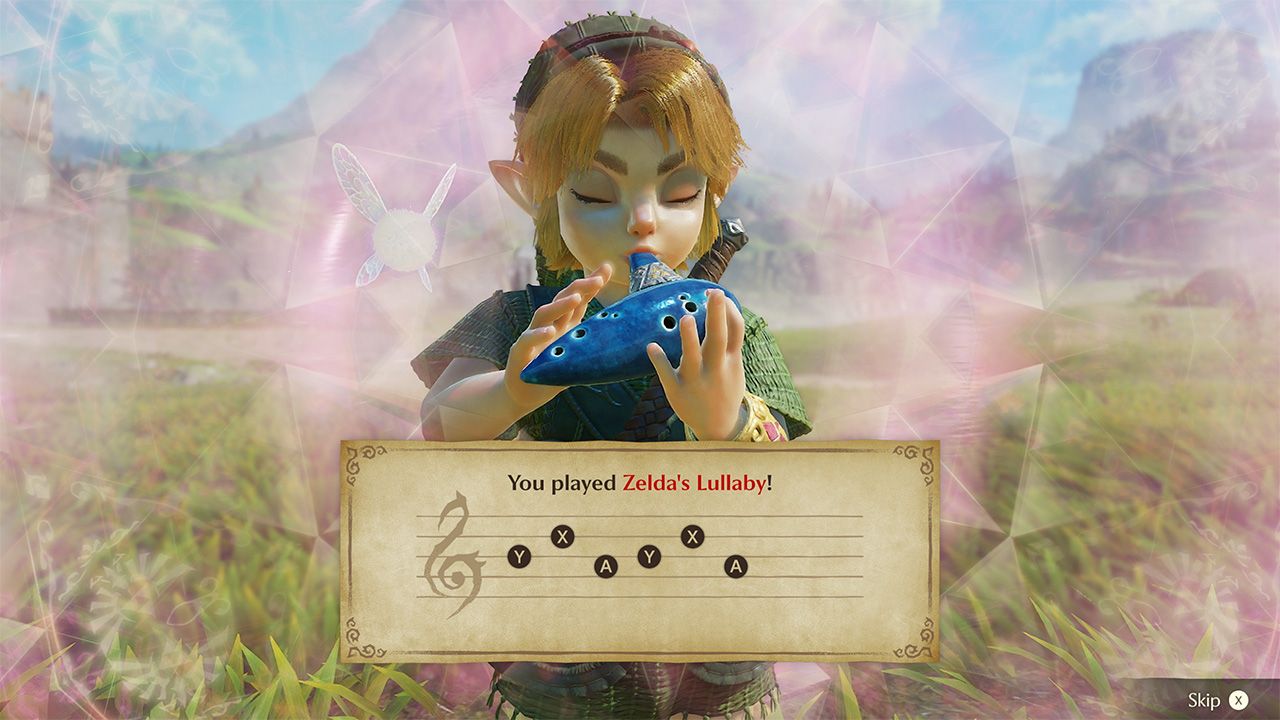
The microphone feature is the one you’ll show your friends. Hum Zelda’s Lullaby, or play it on a real instrument, and Link plays the matching song in-game. It only works for songs that do something in the game, and it’s more party trick than revolution, but it’s charming. Nintendo Everything also mentions Zelda Notes support, which lets you check your 100% completion progress from your phone. Our one gripe here is a strange one: there’s only a single manual save slot, which feels mean for a game families will share.
9. Technical Performance (Docked and Handheld on Switch 2)
What makes it stand out: It runs smoothly docked and fits a remarkably detailed world into a small install.
Key data: The game is under 25GB, renders between roughly 720p and 1080p in handheld mode according to Nintendo Everything, and Digital Foundry’s analysis of the pre-release teaser counted 1440p at 60fps.
Why it matters: Switch 2 owners have been burned by ports that struggle in handheld, so stable performance is a big part of the recommendation.
This is a technically confident release. Docked, it runs smoothly and the extra resolution brings out the environmental detail. None of the major reviews we read reported frame-rate problems. Game Informer called the size an engineering marvel, and it’s hard to argue: a game that looks this good in under 25GB is a nice change from 150GB downloads elsewhere.
Handheld is a touch softer. Nintendo Everything’s reviewer said resolution usually sits between 720p and 1080p and wished it were a bit sharper at times. On the Switch 2’s screen that’s fine, if not razor-sharp, and it’s still a big step up from anything the original Switch could manage.
One caveat on the numbers: the 1440p and 60fps figures come from Digital Foundry’s look at a pre-release teaser, not a full analysis of the retail game, so treat them as a guide rather than a guarantee. What we can say is that nothing in the launch reviews suggests the final game falls short of that target in docked play.
10. Compared With the N64 Original and Ocarina of Time 3D (1998 and 2011)
What makes it stand out: This is the third official version of Ocarina of Time, and the first built from scratch for a home console since 1998.
Key data: The N64 original holds a Metacritic score of 99, the 3DS remake scored 94, and the Switch 2 remake sits at 96, putting it among Metacritic’s 30 highest-rated games of all time.
Why it matters: The numbers tell you exactly where this version sits: better than the last remake, just behind a legend no remake was ever going to topple.
GamesRadar ran a headline early in the review cycle saying the first review placed the remake below the N64 original but on a par with the 3DS version. As more reviews arrived, the score settled at 96, two points above Ocarina of Time 3D. That feels right to us.
The 3DS version, made with Grezzo, was a fine portable remake with Master Quest and Boss Challenge modes bundled in. The Switch 2 version wins on almost everything else: visuals, music, controls, camera, menus and quality of life. It loses on extras, because Master Quest is gone.
As for the N64 original, comparing scores across 28 years of changing expectations isn’t really fair. Ocarina in 1998 was a revolution. This is a restoration. Our honest advice is that the remake is now the version to play, and the original is the version to respect. If you have Nintendo Switch Online with the Expansion Pack, playing an hour of the N64 version after a few hours of the remake is a fascinating history lesson.
It’s also worth comparing it with Nintendo’s other recent remakes. Link’s Awakening (2019) had more personality in its art. Super Mario RPG (2023) was smaller in scope. This is Nintendo’s most ambitious remake to date, and the most expensive-looking.
11. Who It’s For (Newcomers, Veterans and Families)
What makes it stand out: It’s the most welcoming version of Ocarina ever made.
Key data: It’s rated PEGI 12 in the UK and E10+ by the ESRB in the US, and the original took around 25 to 27 hours to finish according to HowLongToBeat, so expect a similar main-story length.
Why it matters: Most Switch 2 owners weren’t born when Ocarina came out, and the remake is clearly built for them first.
RPG Site, which gave the remake one of its lowest scores at 8/10, said it feels designed for new players first and foremost. That’s accurate, and we think it’s the right call. Ocarina’s influence is everywhere, from Dark Souls’ lock-on to Tears of the Kingdom’s dungeons, and plenty of people who love those games have never played the one that started it all. Now they can, without fighting a 1998 camera.
Play it if: you’ve never finished Ocarina of Time; you loved Breath of the Wild or Tears of the Kingdom and want to see where it all began; you want a 25 to 30 hour adventure for a 12-year-old in the house; or you just want to see Hyrule Field as you imagined it in 1998.
Skip it if: you’ve replayed the original recently and want a real challenge; you were hoping for Master Quest or new dungeons; or you strongly prefer the original’s silent, text-only presentation.
12. Final Verdict and Score (5/5)
What makes it stand out: It manages the rare trick of making a sacred game easier to love without making it lesser.
Key data: Filmoria gives it 5 out of 5 stars, in line with a Metacritic score of 96, perfect scores from GamesRadar+, Destructoid and VGC, and 9/10 from IGN and Nintendo Life.
Why it matters: This is the best-reviewed Switch 2 game so far, and the version of Ocarina of Time most people will play for the next decade.
GamesRadar+ called it “a remake for the ages”, blending the charm and whimsy of the original with more digestible gameplay. We’d sign up to that. Destructoid said it’s a must-play whether you’re a franchise fan or not, and that’s true too.
Our five stars aren’t blind. The voice acting is uneven. The dungeons are slightly too kind. The lack of Master Quest or a hard mode is a real miss, and one manual save slot is an odd decision. Game Informer’s point that the remake doesn’t look back at Ocarina’s place in history, with no museum or developer extras, is fair as well.
But weigh those against what Nintendo has done right. It fixed the camera. It added a jump. It made the menus disappear. It re-recorded one of the greatest soundtracks ever written with a full orchestra. It made Navi likeable, which we’d have bet against. And it did all that while keeping the story, the structure and the sense of wonder exactly where they were.
The Legend of Zelda: Ocarina of Time on Switch 2 isn’t a new game. It’s the old one, the way it always should have been played. That’s worth five stars.
The Bottom Line
Ocarina of Time on Nintendo Switch 2 is the definitive version of a landmark game: faithful where it matters, modern where it needed to be, and gorgeous throughout. Veterans may find it too easy and too safe, and the voice cast is hit and miss, but for anyone who’s never reached the Temple of Time, this is the place to start. It’s a Switch 2 essential and a comfortable 5/5.
Sources: Nintendo official game page; Game Informer review; Nintendo Everything review; The Shortcut review roundup; GGRecon Metacritic report; All Things How change list.
Frequently Asked Questions
Is the Ocarina of Time remake worth buying on Switch 2?
Yes, the Ocarina of Time remake is worth buying if you have a Switch 2, especially if you have never finished the game. It averages 96 on Metacritic and Filmoria gives it 5 out of 5, though veterans should know there is no hard mode or Master Quest.
When did Zelda: Ocarina of Time come out on Switch 2 in the UK?
The Legend of Zelda: Ocarina of Time came out on Nintendo Switch 2 in the UK on 5 November 2026, the same day as the rest of the world.
Is the new Ocarina of Time a remake or a remaster?
It is a full remake built from scratch, not a remaster. Nintendo rebuilt the models, lighting, music and controls while keeping the original map, story and dungeon order.
Can you play Ocarina of Time remake on the original Nintendo Switch?
No, the Ocarina of Time remake is a Nintendo Switch 2 exclusive and is not available on the original Nintendo Switch.
How long does it take to beat the Ocarina of Time remake?
Expect roughly 25 to 30 hours for the main story. HowLongToBeat lists the original at about 27 hours and the 3DS version at about 25, and the remake keeps the same structure.
Does the Ocarina of Time Switch 2 remake include Master Quest?
No, the Switch 2 remake does not include Master Quest, either from the start or after finishing the game, and it has no separate hard mode.
What is the Metacritic score for Ocarina of Time on Switch 2?
Ocarina of Time on Switch 2 has a Metacritic score of 96 from more than 80 critic reviews, below the N64 original’s 99 but above the 3DS version’s 94.
Can you jump in the Ocarina of Time remake?
Yes, the remake adds a dedicated jump button, replacing the automatic jumping of the 1998 original. It also adds full right-stick camera control and a sprint.
Is Link voiced in the Ocarina of Time remake?
No, Link stays silent, but the other characters are now fully voiced, including Ganondorf, who also gets extra dialogue in some cutscenes.
What age rating is Ocarina of Time on Switch 2?
Ocarina of Time on Switch 2 is listed as PEGI 12 in the UK and is rated E10+ by the ESRB in the US.
📸 Follow us on Instagram for daily film, TV & gaming news: @filmoriauk

Leo Wilson
The byline used for guest contributions to Filmoria. Individual pieces credit their own writer wherever one has been supplied.