


David Fincher’s Cliff Booth AI Row: 12 Things to Know About the Generative AI Backlash
AI & Future of Film 22nd November 2026 Radek Sinclair
By the Filmoria News Desk

David Fincher’s The Further Mis-Adventures of Cliff Booth, the Netflix sequel to Once Upon a Time in Hollywood, has been accused of using generative AI in key scenes, with the first complaints posted on 19 November 2026 and critics pointing to a “generative supervisor” in the end credits. Fincher told the Los Angeles Times he’s “not a Luddite” but hasn’t said what AI was used for, and Netflix hasn’t commented. The film opens in UK IMAX cinemas on 25 November and streams on Netflix UK from 23 December 2026.
Quick Facts
- Film: The Further Mis-Adventures of Cliff Booth (Netflix, 2026), 2 hours 21 minutes
- Director and writer: David Fincher directs a screenplay by Quentin Tarantino
- The accusation: “Blatant and egregious” generative AI use, according to filmmaker Patrick Tomasso on 19 November 2026
- The credit: A “generative supervisor” is listed in the end credits, as noted by critic Louis Peitzman
- The AI firm linked to the film: InterPositive, Ben Affleck’s start-up, which Netflix bought in March 2026 for about $587 million
- Official response: None from Netflix so far; Fincher has spoken about AI only in general terms
- Reviews: 84% positive on Rotten Tomatoes as of 20 November, per Kotaku
In the UK
- Cinema: IMAX only from Wednesday 25 November 2026 for a two-week run, mostly at ODEON IMAX sites plus independents such as the BFI IMAX in London.
- Streaming: Netflix UK from Wednesday 23 December 2026, included in every Netflix UK plan at no extra cost.
- BBFC rating: not yet confirmed for the UK in the sources we checked.
- Ticket prices: set by each IMAX cinema; Netflix hasn’t announced any UK pricing beyond its standard plans.
This is a list of the 12 things you need to know about the generative AI row around David Fincher’s The Further Mis-Adventures of Cliff Booth. We’ve ordered it as the story unfolded: first the accusations and what’s actually on the record, then Netflix and the AI company behind the claims, then the rules and history that put the row in context, and finally what happens next.
| # | Item | Date | Who | Status |
|---|---|---|---|---|
| 1 | The walkout post that started it | 19 November 2026 | Patrick Tomasso | Public post on X |
| 2 | Reviews that flagged AI | Week of 19 November 2026 | Next Best Picture, Louis Peitzman | Published |
| 3 | The generative supervisor credit | Seen at screenings | Name not disclosed | In end credits |
| 4 | Fincher’s ‘not a Luddite’ comments | 19 November 2026 | David Fincher, LA Times | General, no specifics |
| 5 | Netflix’s response | As of 21 November 2026 | Netflix | No comment |
| 6 | The InterPositive link | Reported 2026 | Bloomberg | Reported, not confirmed by Netflix |
| 7 | Netflix buys InterPositive | March 2026 | Netflix, Ben Affleck | About $587 million, completed |
| 8 | Affleck’s Animals precedent | October 2026 | Ben Affleck | AI use admitted |
| 9 | Netflix’s wider AI push | 2025 to 2026 | Netflix | About 300 titles in 2026 |
| 10 | What SAG-AFTRA’s 2026 deal allows | Ratified June 2026 | SAG-AFTRA, AMPTP | In force until 2030 |
| 11 | Fincher’s digital track record | 2008 to 2026 | David Fincher | Long history |
| 12 | What happens next | 25 November to 23 December 2026 | Netflix, critics, awards voters | Ongoing |
1. The Walkout Post That Started It (19 November 2026, X)
What makes it stand out: One filmmaker’s angry post turned a well-reviewed prestige film into the year’s most talked-about AI argument overnight. Key data: Indie filmmaker Patrick Tomasso posted on X on 19 November 2026 that he “walked out of Cliff Booth completely gutted”, calling the film’s AI use “blatant and egregious”. Why it matters: It’s the first time a major studio-scale film from a director of Fincher’s standing has been publicly called out for generative AI by people who’d actually seen it.
Tomasso didn’t hedge. He wrote that the sequel was overshadowed by “some of the most blatant and egregious AI use” he’d seen in a studio film, and promised “more thoughts with receipts” once the film is streaming and people can pause on the frames themselves. That’s a fairly big promise, and he hasn’t yet said which scenes he means.
The timing is what made it travel. Reviews had only just started landing, most of them positive, and the conversation was supposed to be about whether Fincher’s cool precision and Tarantino’s loose, chatty writing actually fit together. Instead, a lot of the timeline turned into people asking which shots were fake.
It’s worth being careful here. A walkout post from one viewer isn’t proof of anything on its own. Plenty of films use digital effects that look odd to a trained eye, and “AI” has become a catch-all insult for anything that looks a little too smooth. But Tomasso wasn’t the only one who noticed something, as the next two items show.
2. The Reviews That Flagged It (Next Best Picture and Letterboxd)
What makes it stand out: Working critics, not just social media users, raised the AI issue in their write-ups. Key data: Next Best Picture’s review called the generative AI in “key moments of the film” “nothing but an eyesore”; Louis Peitzman wrote on Letterboxd that “the use of generative AI depresses the hell out of me, though.” Why it matters: When reviewers who liked or half-liked a film still single out the AI, it stops being a fringe complaint.
Peitzman, who has written for Vulture and The New York Times, didn’t pan the film. That “though” at the end of his line is doing a lot of work: it reads like someone who enjoyed much of it and still came out bothered. Next Best Picture was blunter, describing the AI moments as an eyesore without listing them.
Neither review pinned the complaints to specific shots, and TheWrap noted that on 21 November. So we’re left with a strange situation. Several people who’ve seen the film say the AI is obvious, but nobody outside the production has said exactly where it is.
The wider critical picture is mixed rather than hostile. Variety called it a very fun Tarantino hangout movie, while Looper gave it 5/10 and the A.V. Club argued it misfires. None of the major reviews we’ve seen make the AI the main reason for their verdict. It’s more of a nagging footnote, which in some ways is worse for Netflix, because it suggests the effect is visible even to people who weren’t looking for it.

3. The “Generative Supervisor” in the End Credits
What makes it stand out: It’s the closest thing to an admission so far, and it’s sitting in the film itself. Key data: Peitzman pointed to a generative supervisor credit after the film; reports differ on the exact job title, and no outlet has named the person. Why it matters: A dedicated credit means generative AI was a planned part of the production, not a one-off fix.
Credits tell you how a film was made, and a new job title tends to appear only when a role has become big enough to need its own line. Visual effects supervisors, colourists and digital intermediate producers all went through that same journey. Seeing a generative role in the credits of a Fincher film is a signal that this is now a department, not a favour from the VFX house.
What the credit doesn’t tell you is the scale. It could cover anything from cleaning up backgrounds and fixing continuity to building whole shots that were never filmed. Those are very different things, ethically and creatively, and the credit alone can’t separate them.
Some coverage has called the credit proof of AI use, while other reports say it shows only that the technology was available to the team. Both are fair readings. What we can say for certain is that generative AI was involved in the film to the point of a named credit, and that nobody has yet explained what that person actually did.
4. Fincher’s “I’m Not a Luddite” Comments (19 November 2026, Los Angeles Times)
What makes it stand out: Fincher talked about AI on the very day the backlash began, but only in broad terms. Key data: In a Los Angeles Times interview published on 19 November, Fincher said, “I’m not a Luddite, so I don’t fear the unknown,” and asked of AI, “Well, it exists. Should we not use it?” Why it matters: It’s the clearest sign yet of where one of cinema’s most technically obsessive directors stands, even if it isn’t a confession.
Fincher used the interview to ask a bigger question. Should filmmakers go back to celluloid, he wondered, and is it really necessary to have “the ability to change the color of that person’s eyes” at your fingertips? It’s a fair point from someone who has spent 30 years pushing digital tools further than almost anyone else.
But notice what he didn’t say. He didn’t confirm that AI was used on Cliff Booth, didn’t say which scenes, and didn’t name InterPositive. TheWrap pointed out on 21 November that he hasn’t gone on record about using AI himself. So when people quote “not a Luddite” as a defence of this film, they’re stretching it slightly.
Still, the tone is telling. This isn’t a director apologising or promising to remove anything. It’s someone who sees generative tools as the next step in a long line of digital techniques and is a bit puzzled that anyone expects him to ignore them. Whether audiences accept that view is a different matter.
5. Netflix Hasn’t Said a Word (As of 21 November 2026)
What makes it stand out: The company that paid for the film, distributes it and owns the AI firm linked to it is staying quiet. Key data: Netflix didn’t respond to TheWrap’s request for comment, and as of 21 November it had neither confirmed nor denied generative AI use in the film. Why it matters: Silence tends to fuel speculation, especially four days before a big IMAX release.
Netflix’s silence is a little odd, given how openly it has talked about AI elsewhere. Its executives have bragged on earnings calls about generative effects saving time and money (more on that in item 9). So why not simply say what was used here and why?
There are a few likely reasons. Fincher is famously protective of his process, and Netflix has an exclusive deal with him that it values. The film is also about to open in IMAX for a fortnight, a release the company has framed as a cinema event, so the last thing it wants is a week of headlines about fake shots. And any detailed answer would invite people to go hunting for the exact frames.
The risk is that silence lets the story fill itself in. Right now, the loudest version is the worst one: that a $200 million film from a major director has AI shots that viewers can spot. If the truth is mostly background clean-up, Netflix would probably be better off saying so.

6. The InterPositive Link (Bloomberg, 2026)
What makes it stand out: A Bloomberg report had already tied Fincher to Ben Affleck’s AI company months before anyone saw the film. Key data: Bloomberg reported that Fincher used InterPositive to help produce “an upcoming film starring Brad Pitt”; Cliff Booth is the only Fincher film with Pitt in that window. Why it matters: It gives the critics’ complaints a likely source, and it puts Netflix’s own technology at the centre of the row.
When Bloomberg first reported the Netflix and InterPositive deal, the Fincher detail was a line near the bottom. At the time, it read as a selling point: a director known for his perfectionism was already using the tools. Several outlets inferred the Pitt project was the Cliff Booth film, which Netflix was distributing, though the report didn’t name it.
Now that same line looks rather different. It means the AI in the film, whatever it is, very likely came from a company Netflix owns. That turns a question about one director’s choices into a question about Netflix’s whole strategy.
Kotaku, which rounded up the criticism on 20 November, drew the line between the two directly. There’s an obvious caveat: nobody has confirmed that every shot people are complaining about came from InterPositive, rather than a traditional VFX vendor using its own AI tools. Modern effects houses use machine learning all the time. But the link has been on the public record since the spring, and it’s the first thing most people reached for.
7. What InterPositive Actually Does, and the $587 Million Deal (March 2026, Netflix)
What makes it stand out: It isn’t a text-to-video generator like Sora, and that distinction is central to Netflix’s defence of the technology. Key data: Netflix completed the purchase in March 2026 for about $587 million in cash, according to its own filing; the team joined Netflix and Affleck became a senior adviser. Why it matters: If the tools only reshape footage that was actually shot, the argument about “AI-made” scenes gets a lot more nuanced.
According to TheWrap and Netflix’s own descriptions, InterPositive’s tools handle production problems: replacing missing shots, reframing, correcting lighting, and replacing or enhancing backgrounds. Netflix’s Elizabeth Stone put it this way: “It’s not text to video prompts, but rather tools that fit into real production workflows.” Each model is trained on footage from the specific production it’s used on, and Netflix said in March that the training data focuses on filmmaking techniques rather than performances.
That matters. A tool that fixes a continuity error using a film’s own footage is a long way from one that conjures a crowd scene from a text prompt. Ted Sarandos summed up Netflix’s line at the time: “Movies are being made by people who make movies.”
The deal itself had a rocky reception. Affleck had kept his ownership of InterPositive quiet, and when the sale was announced, the online backlash was immediate, partly because he’d previously sounded sceptical about AI. Early reports put the price at up to $600 million. Netflix’s later filing settled on roughly $587 million, with extra payments possible if the business hits performance targets.
For anyone trying to judge Cliff Booth, here’s the awkward bit. “Replacing a missing shot” can mean almost anything, including creating a shot that was never filmed. So even the narrow description leaves room for exactly the kind of moments critics are describing.
8. The Animals Precedent (October 2026, Netflix)
What makes it stand out: Affleck openly admitted using InterPositive’s generative tools “for lots of things” on his own Netflix film just weeks before the Cliff Booth row. Key data: Animals, directed by and starring Ben Affleck with Kerry Washington, began streaming on Netflix on 9 October 2026; Affleck discussed its AI use at Bloomberg’s Screentime summit. Why it matters: It’s the template for how Netflix and its filmmakers talk about AI: yes, we used it, no, we won’t tell you where.
Affleck’s comments were striking. He said he was “a little bit hesitant to point out what they are” because filmmaking is about fostering “the illusion of reality”. He also argued that Animals was a good example of ethical AI use “because it’s a very human movie”, and called AI “another form of computing”, in line with earlier technical shifts in film and TV.
The trouble with that approach became clear almost immediately. A clip from Animals racked up millions of views on social media, with viewers asking whether it was one of the AI scenes. When filmmakers refuse to say where AI was used, audiences start guessing, and they guess at everything.
That’s exactly what’s now happening with Cliff Booth, just on a bigger stage. Fincher’s film has a much larger budget, a more famous star and a far more devoted audience. The “we won’t point them out” approach may protect the illusion for some viewers, but it also turns every slightly odd frame into a suspect.

9. Netflix’s Wider AI Push (2025 to 2026, Netflix)
What makes it stand out: Cliff Booth isn’t a one-off. Netflix has been steadily building generative AI into its productions for more than a year. Key data: Generative AI workflows appeared in roughly 300 Netflix titles in 2026, mostly in post-production, according to the company’s disclosures reported by TheWrap. Why it matters: The row is really about how normal this has already become, and how little audiences are told about it.
The first big public marker came in July 2025, when Ted Sarandos said the Argentine series El Eternauta featured Netflix’s first generative AI footage in a final cut: a building collapse in Buenos Aires, finished about ten times faster than traditional effects would have allowed. He presented it as a win for a smaller production that couldn’t have afforded the shot otherwise.
Since then, the numbers have climbed. Netflix has issued guidance to its production partners on using generative tools, bought InterPositive and folded it in alongside its in-house tech unit, Eyeline. By this year, generative workflows were showing up in roughly 300 titles.
Most of that work is invisible, and that’s the point. Clean-up, de-ageing touches, background extensions and fixes that would once have needed a reshoot are now cheaper and faster. Very few people object to those uses in principle. The fight starts when the work becomes visible, or when it replaces something a human would otherwise have been paid to do.
For more on how the big studios are choosing sides, see our guide to Disney’s Firefly Foundry deal with Adobe, which is a very different bet on the same technology.
10. What SAG-AFTRA’s 2026 Contract Allows (Ratified June 2026)
What makes it stand out: The actors’ union signed new AI rules this summer, and they shape what Netflix can and can’t do with Brad Pitt’s face. Key data: Members ratified the four-year deal by 91.4% to 8.6% on 19.3% turnout; producers may use a synthetic performer only if it offers “significant additional value” over a live actor or that actor’s digital avatar. Why it matters: Nothing in the criticism so far suggests a performer was replaced, but the contract is the line everyone will measure this against.
The 2026 contract builds on gains from the 2023 strike. Performers must consent to digital replica use and be paid for it. If studios start using synthetic actors, the union gets notice and a chance to bargain. Duncan Crabtree-Ireland, SAG-AFTRA’s national executive director, said the goal was to “ensure synthetics remain the exception in our industry instead of the rule.”
There’s a catch, though. Under the deal, the union can’t strike over synthetic actor use until 2030. That’s four years in which disputes go through arbitration rather than picket lines.
How does that apply to Cliff Booth? Honestly, we don’t know yet. If the AI shots are environments, crowds or clean-up, the contract barely touches them. If any involve altering an actor’s performance or generating a likeness, consent rules kick in, and the cast would almost certainly have agreed to them in their contracts. The union hasn’t commented on the film, and there’s no sign of a complaint. But if Tomasso’s promised “receipts” show faces rather than backgrounds, expect that to change quickly.

11. Fincher’s Long Digital Track Record (2008 to 2026)
What makes it stand out: Fincher has been quietly rebuilding actors and images with computers for nearly two decades, often to awards acclaim. Key data: The Curious Case of Benjamin Button (2008) put Brad Pitt’s digitally aged face on other performers’ bodies and won the Oscar for visual effects; The Social Network (2010) mapped Armie Hammer’s face onto Josh Pence to create the Winklevoss twins. Why it matters: It explains why Fincher sees generative AI as an evolution rather than a betrayal, and why some fans see it as a line crossed.
Fincher’s films are full of invisible work. He’s known for shooting at higher resolution than he needs so he can reframe and stabilise shots later, for building split-screens that combine the best bits of different takes, and for treating the edit as a place where images can be quietly improved. Mank, shot digitally and finished in black and white, won its cinematographer Erik Messerschmidt an Oscar. Messerschmidt shot Cliff Booth too.
So when Fincher says he’s not a Luddite, he’s understating it. He has always been the director most willing to swap a real image for a better one if it serves the scene. Nobody calls the Benjamin Button work fake, because it was crafted by a big team of artists over years, and it was celebrated as such.
That’s where the generative question bites. Critics aren’t complaining that the film is manipulated. They’re complaining that some of it looks manipulated, which is a different charge entirely, and an unusual one for Fincher. If the AI shots stand out to trained eyes, that’s a craft problem as much as an ethical one. And for a director whose reputation rests on control, that may sting more than any debate about jobs.
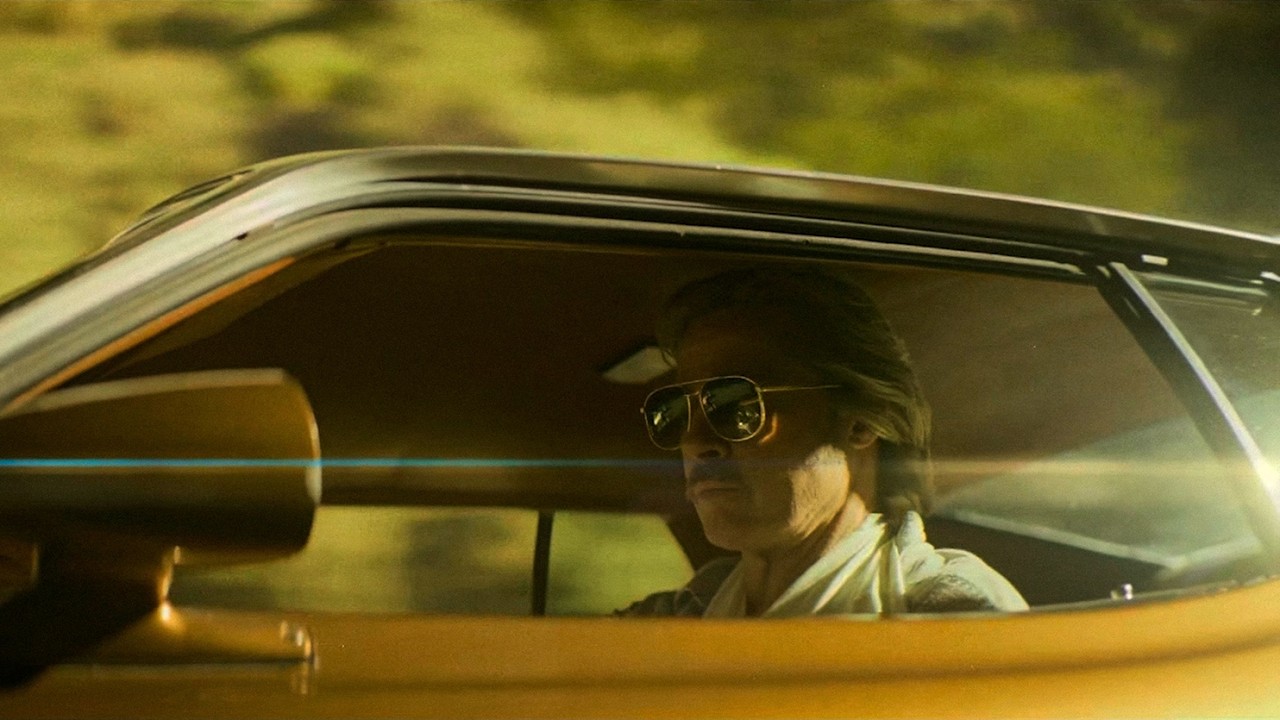
12. What Happens Next (25 November to 23 December 2026)
What makes it stand out: The row now plays out in public, first on IMAX screens, then on millions of Netflix accounts where every frame can be paused. Key data: IMAX-only release from 25 November 2026 for two weeks; Netflix worldwide from 23 December 2026; the film runs 2 hours 21 minutes on a reported budget of about $200 million. Why it matters: Once it streams, the guessing stops and people will go frame by frame.
The next month has three clear pressure points. The first is the IMAX run, where audiences will see the film at its largest and sharpest, and where any dodgy shots will be most obvious. Expect plenty of posts from opening night.
The second is 23 December. Tomasso has already promised to share examples once the film streams, and he won’t be the only one. Netflix’s own pause button will turn the film into a giant spot-the-difference puzzle, which is exactly the kind of attention Affleck said he wanted to avoid with Animals.
The third is awards season. Netflix will want to campaign for Pitt, for Tarantino’s script and probably for Messerschmidt. The Academy’s current rules, set in April 2025, say generative AI use neither helps nor hurts a film’s chances, but voters are told to consider how far a human was at the heart of the creative work. That leaves plenty of room for AI to quietly count against a film in voters’ minds.
Would a straight answer help? Probably. A short statement saying what was used and where would settle most of the guessing. Given Fincher’s comments and Netflix’s silence so far, though, don’t hold your breath.

The Bottom Line
The Cliff Booth row isn’t really about whether Fincher used AI. A named credit and a Bloomberg report make it very likely he did, and he clearly isn’t embarrassed about it. It’s about disclosure and visibility. Netflix owns the tool, has used it across hundreds of titles and still won’t say where it appears in its biggest Christmas film. Until it does, viewers will do the detective work themselves, from 25 November in IMAX and from 23 December on Netflix UK. If you want the basics on the film itself, our guide to The Further Mis-Adventures of Cliff Booth covers the cast, story and release.
Sources: Kotaku, TheWrap (Fincher on AI), TheWrap (InterPositive price), The A.V. Club (Animals), Variety (SAG-AFTRA deal), Netflix Tudum
Frequently Asked Questions
Did David Fincher use AI in The Further Mis-Adventures of Cliff Booth?
It appears so: the end credits list a generative supervisor and Bloomberg reported that Fincher used InterPositive’s AI tools on a Brad Pitt film, but neither Fincher nor Netflix has confirmed which scenes used AI.
Who first accused the Cliff Booth movie of using AI?
Indie filmmaker Patrick Tomasso posted on X on 19 November 2026 that the film had some of the most blatant and egregious AI use he had seen in a studio film.
Which scenes in Cliff Booth use generative AI?
Nobody has publicly identified the specific scenes yet; critics say the AI appears in key moments, and Tomasso has promised to share examples once the film streams.
What did Fincher say about AI?
Fincher told the Los Angeles Times on 19 November 2026 that he is not a Luddite and does not fear the unknown, adding that AI exists and asking whether filmmakers should not use it.
Has Netflix responded to the Cliff Booth AI claims?
No, as of 21 November 2026 Netflix had not responded to requests for comment or confirmed or denied generative AI use in the film.
What is InterPositive?
InterPositive is Ben Affleck’s AI filmmaking company, which makes tools for tasks such as replacing missing shots, reframing, fixing lighting and changing backgrounds, and which Netflix bought in March 2026.
How much did Netflix pay for Ben Affleck’s AI company?
Netflix paid about 587 million dollars in cash for InterPositive, according to its own filing, with extra payments possible if performance targets are met.
Did Ben Affleck use AI in Animals?
Yes, Affleck said he used generative AI for lots of things in Animals, which began streaming on Netflix on 9 October 2026, but declined to say which scenes.
Does the SAG-AFTRA contract allow AI actors?
Only in limited cases: the 2026 contract lets producers use a synthetic performer only if it offers significant additional value over a live actor, and performers must consent to and be paid for digital replicas.
Can AI use affect a film’s Oscar chances?
Officially no: the Academy’s April 2025 rules say generative AI neither helps nor harms a nomination, but voters are asked to consider how far a human was at the heart of the creative work.
📸 Follow us on Instagram for daily film, TV & gaming news: @filmoriauk

Radek Sinclair
Writes on European and world cinema for Filmoria, with a particular interest in festival titles making their way onto UK screens and streaming services.