

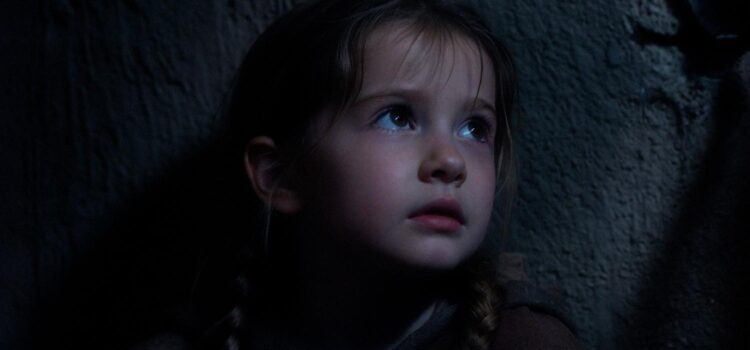
Raphael, Korea’s Fully AI Feature Film: 12 Things to Know as AI Movies Face the Box Office Test
AI & Future of Film 29th November 2026 Oliver Laurent
By the Filmoria News Desk
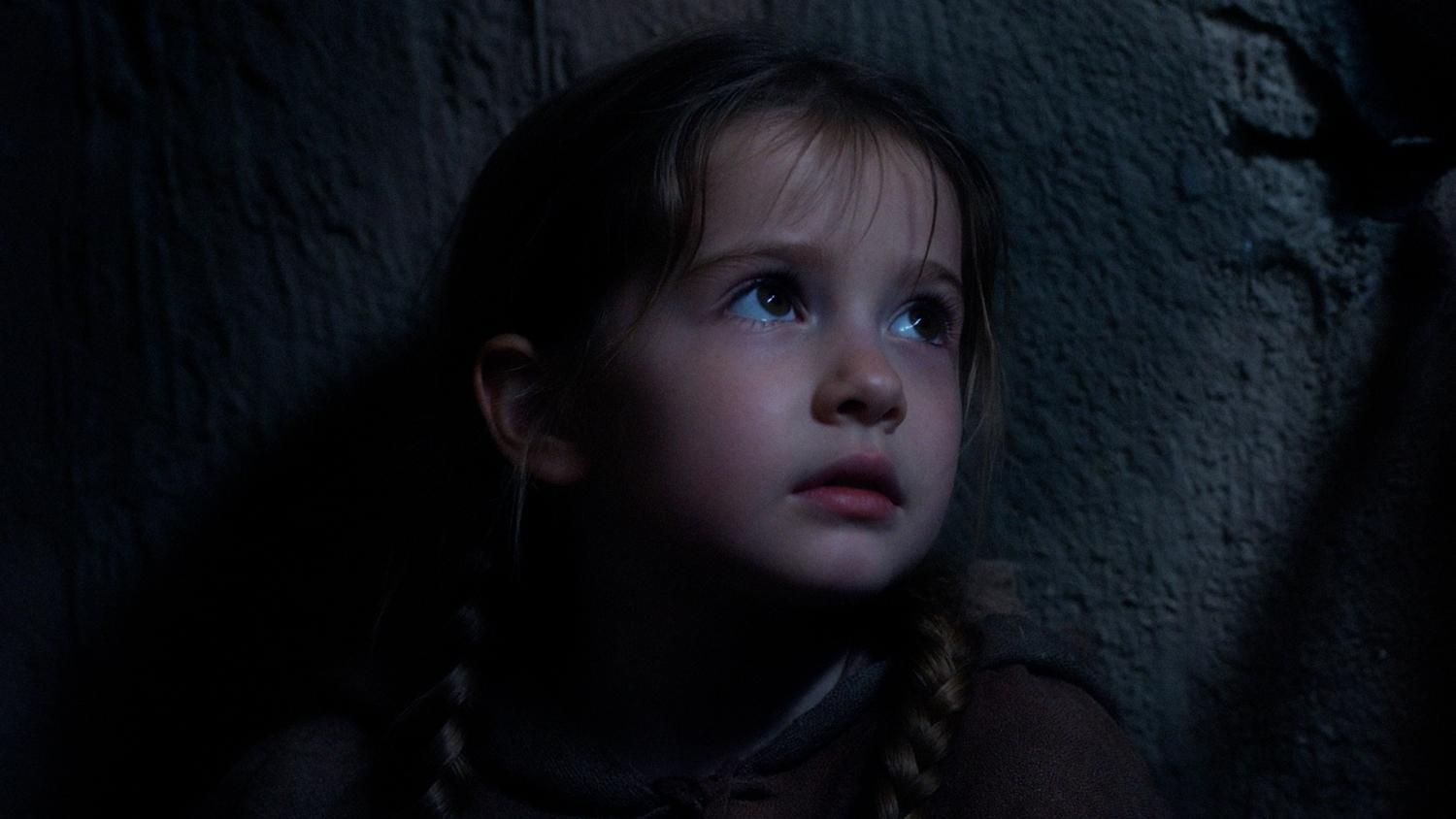
Raphael, billed as South Korea’s first feature film made entirely with generative AI, opened in Korean cinemas on 25 November 2026. Directed by Yang Ik-june, Moon Shin-woo and Jung Joo-won for Matteo AI Studio and MBC C&I’s AI Content Lab, it uses no live-action footage at all, and it arrives weeks after China’s first fully AI feature, Sanxingdui: Future Past, flopped. Raphael has no UK release date and no UK distributor announced yet.
Quick Facts
- Film: Raphael (라파엘), sci-fi drama
- Korean release: 25 November 2026
- Directors: Yang Ik-june, Moon Shin-woo, Jung Joo-won
- Producers: Matteo AI Studio and MBC C&I AI Content Lab
- Made with: Generative AI for characters, sets, voices, music and sound effects; script written by humans
- Runtime: 138 minutes, per The Korea Times review (an 80-minute version was described earlier in 2026)
- Festival history: Opening film of the 2nd Busan International AI Film Festival (2025); shown at a Kling AI event at the Cannes Marché du Film in May 2026
In the UK
- UK cinema release: not yet confirmed for the UK
- UK streaming: not yet confirmed for the UK; the team has said it is looking for overseas distributors
- BBFC rating: none published
- Related titles: Steelay and Sanxingdui: Future Past also have no announced UK release
This is a list of the 12 most important things to know about Raphael and the wave of fully AI-generated feature films that have reached cinemas in South Korea and China during 2026. We start with Raphael itself, then move through the other theatrical AI features in release order, and finish with the money, the audience data and the filmmakers’ arguments that will decide whether any of this lasts.
| Title | Country | Release | Runtime | Budget | Audience result |
|---|---|---|---|---|---|
| Raphael | South Korea | 25 Nov 2026 (cinemas) | 138 min | Not disclosed | Not yet reported |
| Steelay | South Korea | 14 Oct 2026 (cinemas) | 90 min | Under 1 billion won (about $743,000) | Not disclosed; break-even about 300,000 admissions |
| I’m PoPo | South Korea | May 2026 (cinemas) | Just over 60 min | Not disclosed | 781 admissions |
| Man in Hanbok | South Korea | May 2026 (cinemas) | Just over 60 min | Not disclosed | 640 admissions |
| The House | South Korea | May 2026 (Tving) | 60 min | Not disclosed | Streaming, no figures |
| Sanxingdui: Future Past | China | 23 Oct 2026 (cinemas) | 100 min | About $1.5 million | About $181,000 in four days |
1. Raphael (2026, South Korea, Matteo AI Studio)
What makes it stand out: It’s the first Korean feature to go on general theatrical release with every frame, voice and music cue made by generative AI and a photoreal rather than cartoon look.
Key data: Opened 25 November 2026 in Korean cinemas; 138 minutes according to The Korea Times; produced by Matteo AI Studio and MBC C&I AI Content Lab; distributed by Sambaeksanghoe, according to MTN.
Why it matters: Earlier Korean AI features were short, rough and gone within a fortnight, so Raphael is the first real test of whether an AI-made film can hold a cinema screen on its own merits.
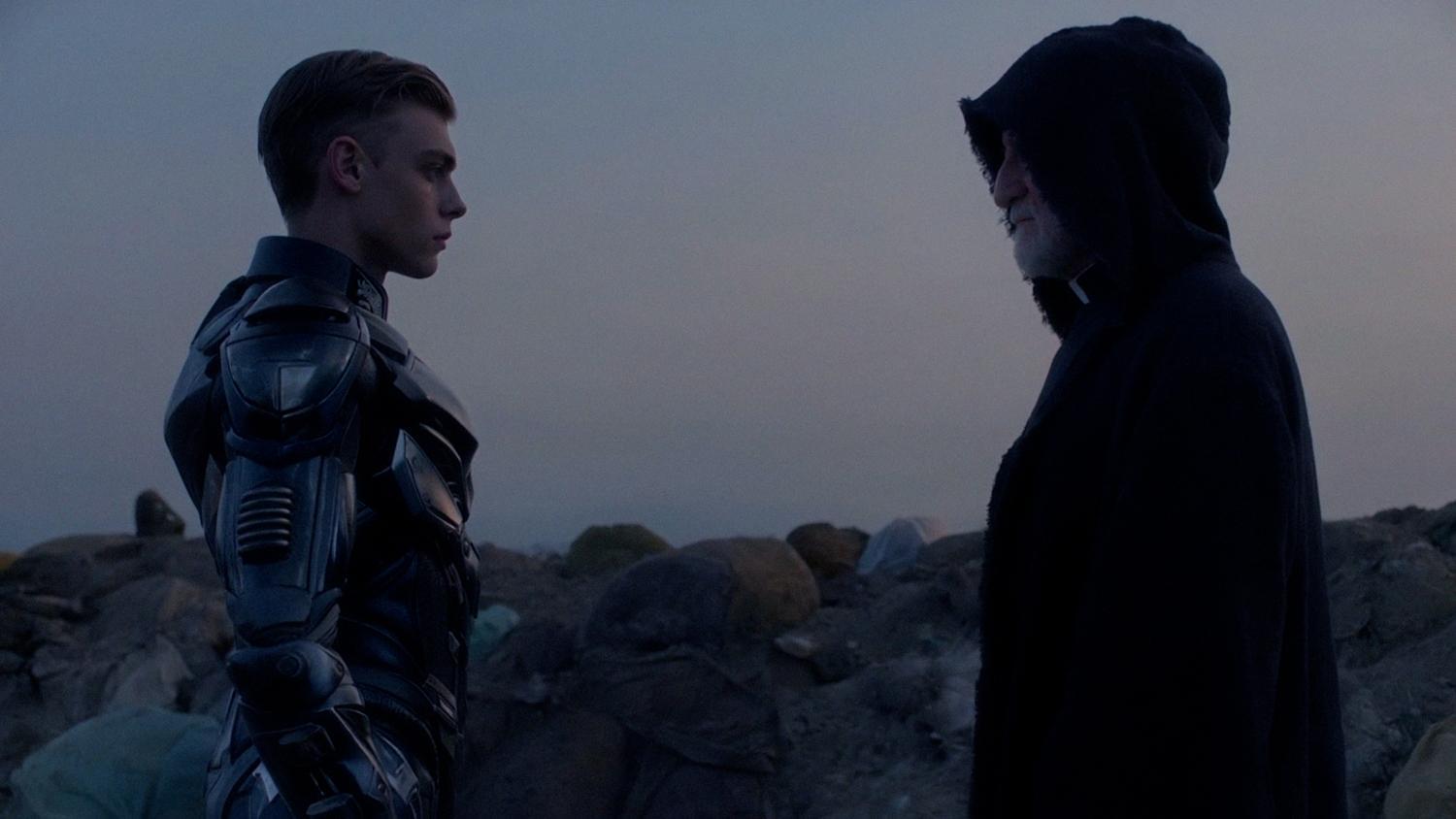
The story is set in the 2050s, after climate disasters and wars have flattened civilisation. What’s left of humanity lives in Delmore, a tightly controlled virtual city. The lead is Alexei, a combat android whose face was modelled on a dictator’s younger self. He meets Sophia, an unregistered girl who shouldn’t exist in Delmore’s records, and Michael, described as humanity’s last priest. Over the course of the film, Alexei starts to feel something like emotion and begins asking whether a machine can have a soul, and whether it could get into heaven.
That’s a pointed premise for a film made by machines, and the directors know it. Nobody stood in front of a camera. There are no credited actors. According to The Korea Times, generative AI produced the characters’ appearances, the landscapes, the voice performances, the music and the sound effects. The planning and the screenplay, though, were done by people, which is a line every serious AI production has now drawn in public.
Yang Ik-june has been blunt about the ambition. “We were the only 100% AI film with a realistic style,” he told MTN. “We wanted to compete with existing films, not other AI content.” That’s the bar Raphael has set itself, and it’s a much higher one than any of the AI features that came before it in Korea.
2. The Directors: Yang Ik-june, Moon Shin-woo and Jung Joo-won (Matteo AI Studio, founded 2025)
What makes it stand out: One of the three directors is Yang Ik-june, the actor-filmmaker who wrote, directed and starred in the 2008 indie Breathless, which gives the project a credibility most AI films lack.
Key data: The three met in June 2024 in MBC C&I’s New Media New Technology Lab, a programme run by Korea’s Ministry of Culture, Sports and Tourism and the Korea Creative Content Agency (KOCCA); Matteo AI Studio was formally founded in April 2025 and has about 20 staff, plus about 15 at its subsidiary Kreex AI.
Why it matters: Raphael isn’t a tech demo from a software company; it’s a film made by people who came out of a state-funded training scheme, which shows how deliberately Korea is building this sector.
“We never meant to start a company,” Moon Shin-woo told MTN. “We began as three people who wanted to make a feature film.” The trio worked together for eight months in the lab programme before their short film Matteo won an award, and that win led straight to the feature.
The split of duties sounds a lot like any small indie crew. Moon and Jung led the screenplay. Yang handled the edit. Jung also took on distribution and commercial work once post-production began, and all three shared directing credit.
Yang’s involvement is the interesting part for anyone outside the AI bubble. Breathless was a raw, violent, very human film, made on almost nothing and powered by performance. Seeing him move to a medium with no performers at all is a bit like watching a theatre director take up puppetry. He told Cine21 in June that he wanted “well-made content that gives a cinema experience, not just something quick and easy with AI,” and that the team’s long-term aim is to build a genre it calls “live-action-based animation.”
3. How Raphael Was Made (Kling AI, 2025 to 2026)
What makes it stand out: The hardest scenes weren’t the battles but two people talking, which tells you a lot about where generative video still falls short.
Key data: Developed with Kling AI, with Photoshop used to keep tone and look consistent across shots; planning began in February 2025 and production ran from August 2025; The Korea Times puts the full process at 14 months of work on character consistency.
Why it matters: The team’s account of what went wrong is the most useful public record yet of what it actually takes to make a feature-length AI film.
Early in the process, a few seconds of a hallway fight took a month to get right. That’s a staggering ratio, and it’s the kind of detail AI boosters tend to leave out. Even simple direction was a fight. “Even small gaze directions are hard,” Moon said. “Even when I prompt them to look somewhere, they don’t look there.”
Then there’s the big one: keeping a character looking like the same person from scene to scene. Yang told Cine21 that “the most important thing was character consistency,” and the 14 months The Korea Times reports were largely spent on exactly that. Generated faces drift. Hands change. Costumes mutate between cuts. Each fix means regenerating and checking again.
And the dialogue scenes were worse than the action. “The fighting scenes weren’t hard,” Yang said. “The underground scene where two people talk about religion was really difficult.” It makes sense. In a fight, motion hides flaws. In a quiet two-hander, every flicker of an eye is on display, and audiences are extremely good at noticing when a face isn’t quite right.
The team even built around the limits. Jung Joo-won explained that they “designed a character without emotion because of technical limits, but in the story he has to find humanity.” An emotionless android lead isn’t just a theme here; it’s a workaround. The team also said it checked generated faces against real actors and celebrities to avoid accidentally copying anyone’s likeness, a step that matters a great deal given SAG-AFTRA’s fights over AI likeness in the US.
Cine21 estimated that a conventional live-action version would have needed around 300 crew and a budget well above $7 million. Matteo AI Studio hasn’t disclosed what Raphael actually cost.
4. The First Reviews (The Korea Times, 16 November 2026)
What makes it stand out: The verdict is the one AI filmmakers least want to hear: it looks good, but the story is familiar.
Key data: Reviewed by Baek Byung-yeul for The Korea Times on 16 November 2026, nine days before release; no admissions figures had been published at the time of writing.
Why it matters: Visual quality was the main criticism of earlier AI features, so if the complaint has shifted to storytelling, the technology has crossed one bar and run straight into the oldest one in cinema.
Baek praised Raphael’s “polished visuals and ambitious philosophical questions,” and noted fewer glitches and smoother lip movement than earlier AI productions. That’s a real step forward. Lip sync was one of the most obvious tells in 2025’s AI shorts.
But the review found the plot predictable and leaning hard on familiar genre formulas, with the long runtime making that more obvious. An android who learns to feel is about as well-worn as sci-fi gets, from Blade Runner onwards. Baek’s closing line could stand as a verdict on the whole AI film wave so far: “compelling storytelling and original ideas remain the true driving forces behind memorable cinema.”
There’s one oddity worth flagging. Coverage from the Cannes period, including Cine21 in June and Korea JoongAng Daily in September, described Raphael as an 80-minute film. The Korea Times now lists it at 138 minutes. The studio hasn’t explained the gap publicly, so it isn’t clear whether the theatrical cut was expanded or whether one of the figures is wrong.
5. Steelay (2026, South Korea, Laon Company and AI Know Studio)
What makes it stand out: It beat Raphael to cinemas by six weeks and published its budget, which makes it the clearest case study of AI film economics so far.
Key data: Released 14 October 2026; 90 minutes; directed by Seol Woo-in; budget under 1 billion won (about $743,000), of which 500 to 600 million won went on generative AI tools; about 13,000 AI-generated clips made the final cut; break-even estimated at around 300,000 admissions.
Why it matters: Steelay cost less than an eighth of the average Korean commercial film, which is exactly the pitch the AI industry is making to producers.
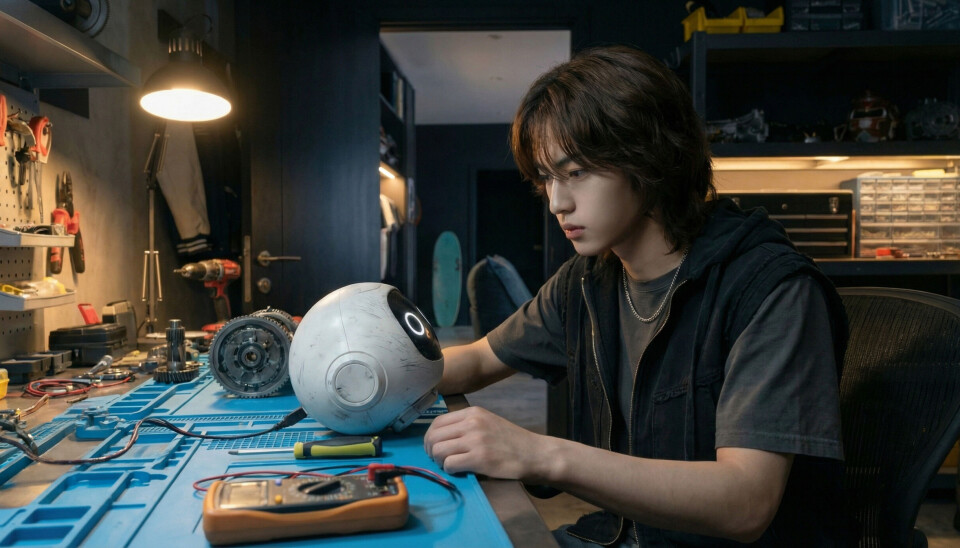
Steelay is a sci-fi action film with no live actors and no physical sets. Laon Company co-produced, AI Know Studio handled the AI production, and the Seoul Film Commission provided office space. It was finished in six months.
The numbers are striking. NICE Investors Service estimates the average Korean commercial film cost 8.36 billion won to make in 2025, before marketing. Steelay came in under 1 billion. But more than half of that went on the AI tools themselves, which is a reminder that “cheap” doesn’t mean free. Subscriptions, generation credits and the sheer volume of clips (13,000 kept, many more thrown away) add up.
Seol also hit a problem every AI filmmaker will recognise. “A new version of the tool was released after we had already finished about 90 percent of the film,” he told Korea JoongAng Daily. When the tools improve every few months, a film that takes half a year to make can look dated before it opens.
Ham Seul-gi, head of AI Know Studio, framed the release as a necessary first step: “If a film never makes it out into the world, there is no precedent to build on.” Steelay’s final admissions haven’t been widely reported, and The Korea Times noted only that earlier AI releases had shown technical novelty alone doesn’t sell tickets.
6. I’m PoPo (2026, South Korea, Kim Il-dong)
What makes it stand out: It was billed as Korea’s first AI-produced feature, and its box office became the cautionary tale everyone now quotes.
Key data: Released in Korean cinemas in May 2026; just over 60 minutes; made in about two months without actors or a conventional crew; 781 admissions according to the Korean Film Council; pulled in under two weeks; Cine21 critic Lee Yong-cheol gave it 5/10.
Why it matters: Fewer than 800 tickets sold showed that “first AI film” is a headline, not a reason to buy a ticket.
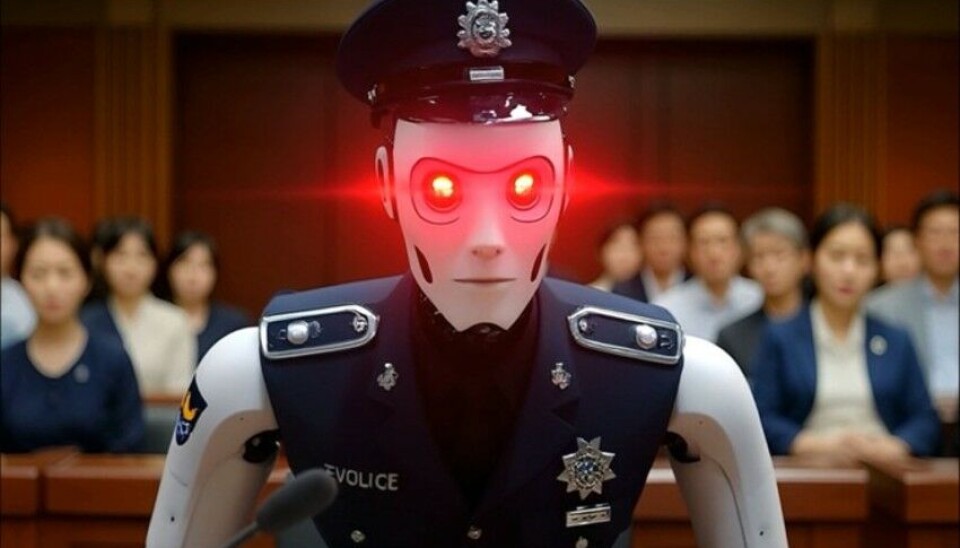
Director Kim Il-dong was upbeat before release, calling the film the “beginning of an era of one-person filmmaking.” That idea, a single creator making a feature with no crew, is the dream that powers a lot of AI film enthusiasm online.
The reality was 781 admissions. Lee Yong-cheol of Cine21 called it “an excessive attempt driven by excessive imagination.” Its short runtime also counted against it. At barely an hour, it sat awkwardly in a cinema schedule built around 100-minute-plus features.
Still, it’s worth being fair to Kim. Two months, no crew, a theatrical release. A few years ago that sentence would have been science fiction. The problem wasn’t that I’m PoPo got made. It’s that making it turned out to be the easy part.
7. Man in Hanbok (2026, South Korea, Blue Film Works)
What makes it stand out: It opened in the same May window as I’m PoPo and did even worse, making it the lowest-attended AI feature on record in Korea.
Key data: Released in Korean cinemas in May 2026; just over 60 minutes; 640 admissions according to the Korean Film Council; pulled in under two weeks; Cine21’s Lee Yong-cheol gave it 3/10.
Why it matters: Two AI features flopping in the same month made it hard to blame bad luck and set a low bar Raphael now has to clear.
Man in Hanbok gets less attention than I’m PoPo, mostly because it wasn’t billed as the “first.” But together the two films form the baseline for every conversation about AI cinema in Korea: a combined 1,421 admissions across two releases.
Critic Sung Sang-min put his finger on why the cost argument doesn’t move audiences. “Cutting production costs only matters to the people making the film,” he told Korea JoongAng Daily. Viewers don’t pay less for a cheaper film, so cheapness gives them no reason to show up. He added that “what matters isn’t whether AI was used or not,” but whether the result is worth watching. That’s a fairly generous position for a critic to take, and it puts the burden squarely on the films themselves.
8. The House (2026, South Korea, CJ ENM and Tving)
What makes it stand out: It’s the hybrid model, with real actors performing against AI-generated visuals, backed by Korea’s biggest entertainment company.
Key data: 60-minute horror film from CJ ENM, made with Google Cloud Korea; premiered on the streaming service Tving in May 2026 rather than in cinemas.
Why it matters: The big studios seem to be betting on AI as a tool behind human performers, not as a replacement for them, and on streaming as the safer place to test it.

CJ ENM is the company behind Parasite’s distribution and a huge slice of Korean film and TV. When it experiments, the rest of the industry pays attention. Its choice here is telling. Rather than chase the “fully AI” label, it kept actors at the centre and used AI for the world around them. Horror is a smart genre for this, too. Uncanny imagery is a feature, not a bug, when the aim is to unsettle.
The streaming-first release also lowered the stakes. No admissions figures means no embarrassing headline about 700 tickets. It’s a quieter, more corporate approach, and it’s probably closer to how AI will actually spread through mainstream production: in pieces, inside conventional films, rather than as all-or-nothing features.
That’s also the model playing out in Hollywood right now. Filmoria has covered the row over David Fincher’s The Further Mis-Adventures of Cliff Booth and its generative AI credits, and Disney’s Firefly Foundry deal with Adobe. Both are about AI inside human-led productions, not AI instead of them.
9. Sanxingdui: Future Past (2026, China, Bona Film Group)
What makes it stand out: China’s first fully AI-generated feature to win a theatrical release permit got a huge rollout and still found almost no audience.
Key data: Released 23 October 2026 with more than 10,000 scheduled screenings; 100 minutes; reported budget about $1.5 million; nearly 100 people worked on it for over two years; about $181,000 (1.21 million yuan) by 26 October, per ticketing platform Maoyan, and around $253,000 after 11 days, according to later tallies.
Why it matters: It proved that distribution muscle can’t manufacture demand for an AI film, a lesson Raphael’s backers will have watched closely.
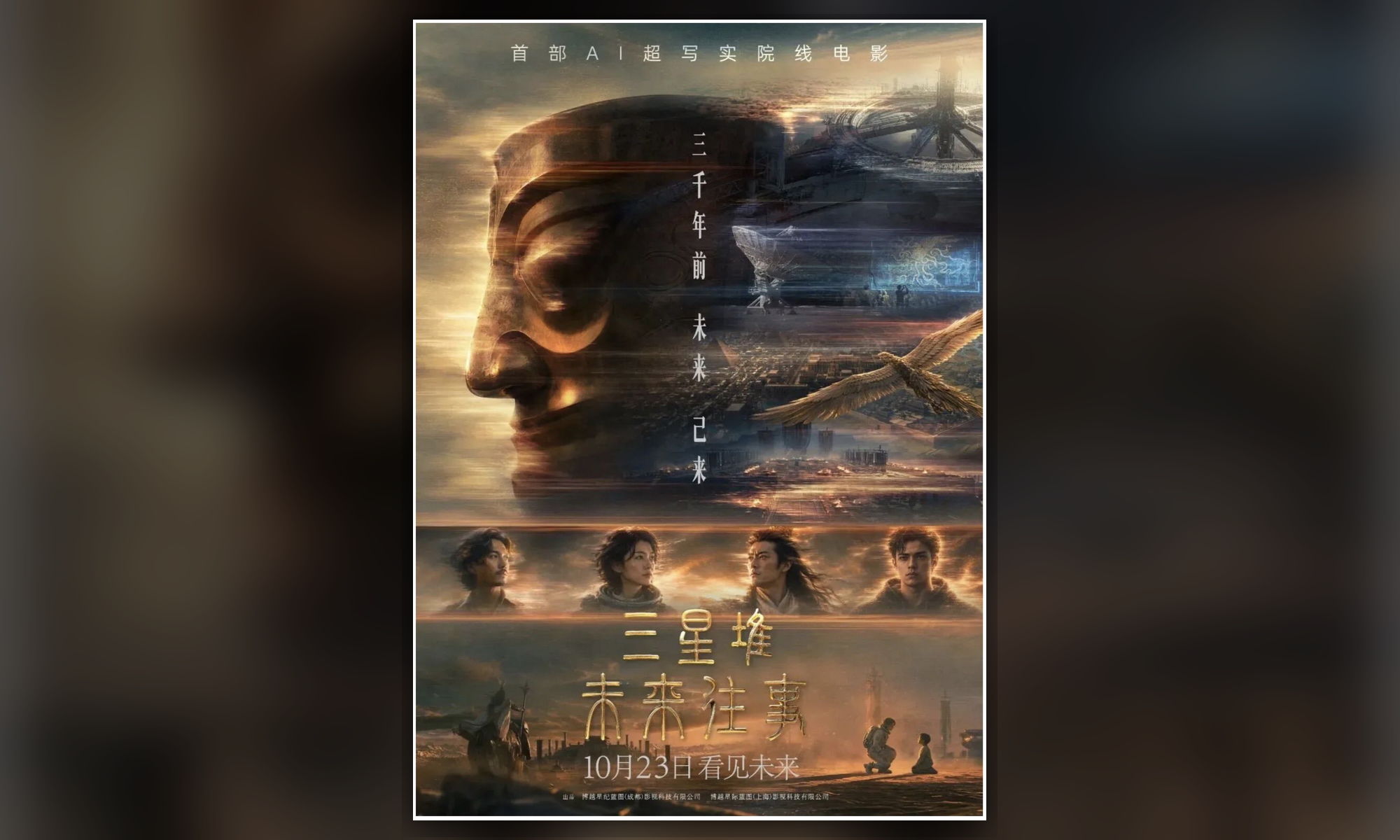
Bona is a major Chinese studio, not a startup. Sanxingdui: Future Past is a sci-fi thriller in which, according to Chinese state media, an archaeologist must save a future world enslaved by AI. Yes, another AI film about evil AI. The irony wasn’t lost on audiences.
The screening data was brutal. National Business Daily reported that showings on 24 and 25 October averaged about two viewers each. Jiemian reported its share of admissions after eight days at 0.6%. Against a $1.5 million budget, the film made back a fraction of its cost.
Bona’s chief operating officer Jiang Defu was candid in an interview quoted by AFP and Fortune. “We are the first to try it, the first to get a theatrical release permit, and the first to be tested by the audience,” he said. “I think that is not easy at all.” Stanley Rosen, a professor at the University of Southern California who studies Chinese cinema, summed up the problem: “The public is highly skeptical about AI use in major feature films, despite their general acceptance of short-form films.”
That distinction matters. Chinese audiences watch huge amounts of AI-made short video and micro-drama. Paying for a cinema ticket to sit through 100 minutes of it is a different decision altogether.
10. Korea’s Public Money Behind AI Film (2026, KOFIC, Ministry of Culture and KOCCA)
What makes it stand out: South Korea is funding AI filmmaking more aggressively than any other national film industry, and creators are pushing back.
Key data: In January 2026 the National AI Strategy Committee issued an action plan and the Korean Film Council (KOFIC) launched support for 38 AI-based feature and short films; the Ministry of Culture, Sports and Tourism and KOCCA are investing a record 19.8 billion won in AI content production in 2026; 16 creator organisations criticised the plan in a joint statement.
Why it matters: Raphael’s directors met in a government lab, so the success or failure of these films is partly a verdict on national policy.
Korea’s film industry has had a rough few years, with rising production costs and audiences slow to come back after the pandemic. The government’s bet is that AI can cut costs and give Korean studios an edge in big-canvas genres like sci-fi that have usually been out of reach on local budgets. The Korea Times review of Raphael makes the same point, describing AI as a cost-effective route to large-scale sci-fi at a time of rising costs.
But the strategy has an awkward gap. Ha Jung-woo, vice chair of the National AI Strategy Committee, admitted that “Korea currently lacks competitive homegrown video-generation tools.” Raphael was developed with Kling AI, a Chinese platform from Kuaishou. So the public money is training Korean creators on foreign tools.
The 16 creator organisations that objected weren’t arguing against technology in the abstract. Their concern, broadly, is that subsidy aimed at AI production pulls money and attention away from the human workforce that built Korean cinema’s global reputation in the first place.
11. The Audience Problem (Hankook Research, December 2025)
What makes it stand out: The survey numbers suggest the biggest barrier to AI cinema isn’t the technology; it’s that people, especially young people, don’t like it.
Key data: Hankook Research surveyed 1,000 Korean adults in December 2025; 15% viewed AI-generated images and video positively and 32% negatively; among 18 to 29-year-olds, 47% were negative and just 14% positive.
Why it matters: Young adults are the core cinema-going audience, and they’re the group most hostile to AI-made content.
That age split runs against the usual assumption that younger audiences will shrug at AI because they grew up with it. The opposite seems to be true. Young people spend the most time online, see the most low-effort AI content in their feeds, and have built up the strongest allergy to it. “AI slop” has become an insult precisely because so many people have seen so much of it.
It’s the same mood driving the recent fuss over the poster for Luca Guadagnino’s OpenAI drama Artificial, which was illustrated by humans but was widely mocked for looking machine-made. When “looks like AI” works as a criticism of a human-made poster, a film that is AI from start to finish begins with a clear handicap.
For Raphael, this is the number to watch. The film’s selling point is also, for a big slice of its potential audience, a reason to stay away.
12. What Directors Are Saying: Yeon Sang-ho and Jia Zhangke (Busan, 2026)
What makes it stand out: Two of Asia’s most respected filmmakers have tried AI themselves and come out with very different degrees of enthusiasm.
Key data: Yeon Sang-ho, director of Train to Busan, released the four-part AI spin-off Paradise Lost Universe, made in two weeks after a delay over quality concerns; Jia Zhangke spoke about AI at a Busan International Film Festival seminar in 2026, according to The Korea Times.
Why it matters: When auteurs of this standing engage with AI rather than dismiss it, the debate moves from whether to use it to how.
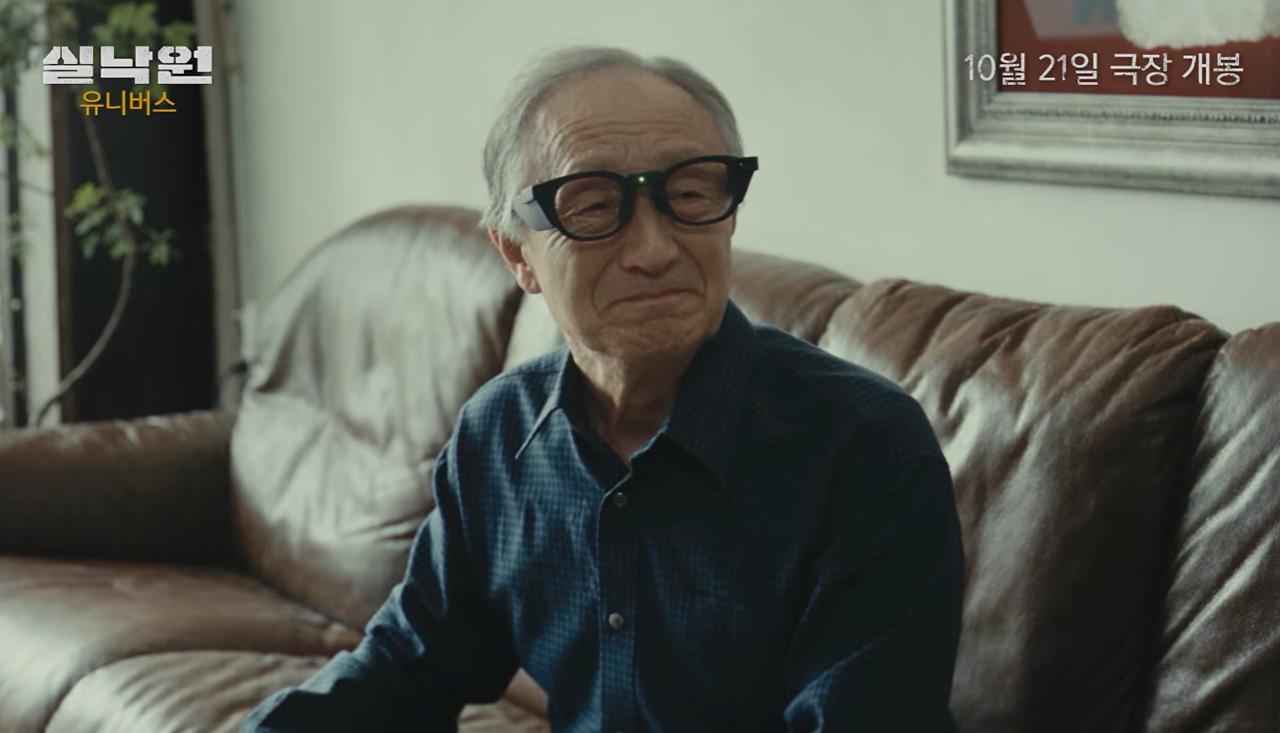
Yeon is impressed but unconvinced. “The quality is surprisingly decent and the AI characters act quite well,” he told The Korea Times. “However, it will not be easy for AI to replace real actors.” His reasoning is the sharpest thing anyone has said about this wave: “Viewers do not want pure reality, but rather a convincing illusion,” and “AI is the sum of common patterns, so it cannot capture unique individuality.” In other words, AI is very good at the average, and cinema is mostly about the exception.
Jia is more open. “When optics and chemistry advanced 130 years ago, cinema was born,” he said at Busan. “We cannot block the arrival of AI, and it is more important to make one or two films ourselves to understand it.” But he added a condition: “Human emotion and consciousness must blend into the creative process.”
Put the two side by side and you get a fair map of where serious filmmakers have landed. Nobody credible is pretending AI will vanish. The argument now is about authorship, and whether a film with no performers can carry the kind of individuality that makes people care.
Where AI Cinema Goes From Here
Raphael is the best-made fully AI feature to reach cinemas so far, and it’s arriving at a terrible moment. Its Korean predecessors drew a few hundred people each. China’s big-budget attempt played to near-empty rooms. Surveys show young audiences actively dislike AI content, and in Hollywood the conversation has turned sour over Fincher’s film and Artificial’s poster. Elsewhere, projects like Gods Don’t Give Gifts are trying to win AI films a place on the awards circuit.
If Raphael finds even a modest audience, it’ll be the first evidence that a fully AI film can win people over on story rather than novelty. If it doesn’t, expect the industry to double down on the CJ ENM model: real actors, AI behind the scenes, and as little “made with AI” branding as possible. For UK viewers, none of these films has a release date here yet, so for now the result will be measured in Korean admissions figures. Filmoria will report them once KOFIC publishes them.
Sources: The Korea Times (Raphael review), The Korea Times (AI features report), MTN (Raphael directors interview), Cine21, Korea JoongAng Daily, Fortune / AFP
Frequently Asked Questions
Which AI tool was used to make Raphael?
Raphael was developed with Kling AI, the video-generation platform from China’s Kuaishou, with Photoshop used afterwards to keep the look consistent from shot to shot.
How long did it take to make Raphael?
Raphael took about 14 months of work, according to The Korea Times, with planning starting in February 2025 and production beginning in August 2025.
Is Raphael coming to UK cinemas?
Raphael is not yet confirmed for the UK; it opened in South Korea on 25 November 2026 and its makers have said they are looking for overseas distributors.
Are there any real actors in Raphael?
No, Raphael has no live-action footage or credited actors; its characters, voices, music and sound effects were all made with generative AI, while the script was written by people.
What is Raphael about?
Raphael follows Alexei, a combat android modelled on a young dictator, who meets an unregistered girl and humanity’s last priest in a controlled virtual city in the 2050s and begins to wonder whether a machine can have a soul.
How much did Steelay cost to make?
Steelay cost under 1 billion won, about $743,000, and more than half of that, 500 to 600 million won, went on generative AI tools, according to Korea JoongAng Daily.
How many people watched I’m PoPo in cinemas?
I’m PoPo drew 781 admissions in Korean cinemas after its May 2026 release, according to Korean Film Council data, and was pulled in under two weeks.
How much did Sanxingdui: Future Past make at the box office?
Sanxingdui: Future Past made about $181,000 in its first four days from 23 October 2026, per Maoyan, and around $253,000 after 11 days, against a reported $1.5 million budget.
How much is South Korea spending on AI films?
South Korea’s Ministry of Culture, Sports and Tourism and KOCCA are investing a record 19.8 billion won in AI content production in 2026, and KOFIC is supporting 38 AI-based feature and short films.
Do audiences want to watch AI-generated films?
Most surveyed audiences are sceptical; a December 2025 Hankook Research poll found 32% of Korean adults viewed AI-generated video negatively and 15% positively, with 47% of 18 to 29-year-olds negative.
📸 Follow us on Instagram for daily film, TV & gaming news: @filmoriauk

Oliver Laurent
Writes about mainstream releases and the business behind them for Filmoria — box office, studio strategy and the long tail of franchise filmmaking.