
The Uprising Review: Andrew Garfield Carries a Gritty Medieval Epic That Trips at the Finish Line
Movie Reviews 12th September 2026 Jon Dingle
Filmoria Review
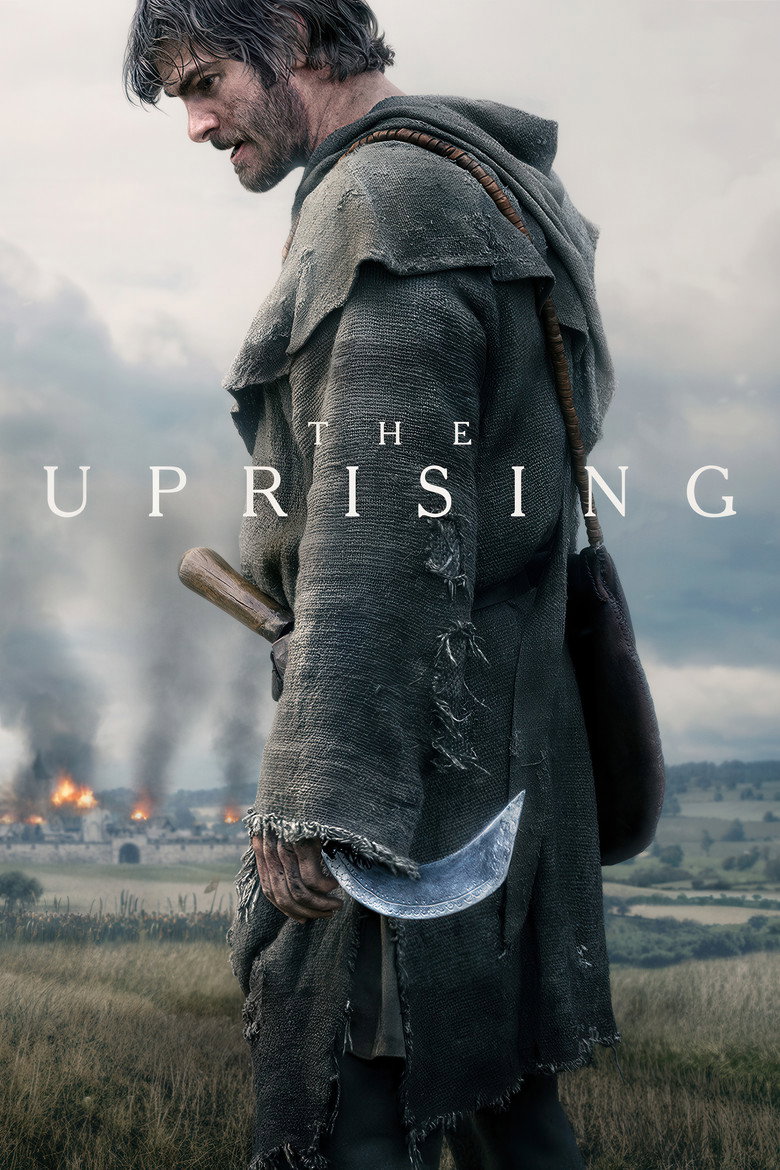
Official poster © Focus Features, via TMDB.
Quick Facts
- Director: Paul Greengrass
- Cast: Andrew Garfield, Jamie Bell, Thomasin McKenzie, Stephen Dillane, Tom Hollander, Cosmo Jarvis, Jonny Lee Miller, Woody Norman, Katherine Waterston
- Studio: Focus Features
- Release Date: September 11, 2026
- Genre: Historical Drama, Action, War
- Rotten Tomatoes: 53% critics / 62% audience at time of writing
A Long Road to the Screen
Few of this fall’s releases have had a stranger road to theaters. The project first surfaced back in 2022 under the title The Hood, with Benedict Cumberbatch attached — a version that, tellingly, leaned explicitly into Robin Hood iconography from the outset. That version stalled. It resurfaced in early 2025 as The Rage, with Matthew McConaughey set to lead. By May, McConaughey had exited and Andrew Garfield stepped in, Focus Features closed a distribution deal reported around $11 million, and by October the film had settled on its final title. Tortured development histories like this one often signal a troubled final product, and in this case the history left visible fingerprints. More on that shortly.
What Paul Greengrass — writer, director, and producer here — ultimately built is a gritty, propulsive account of the Peasants’ Revolt of 1381, the real historical uprising in which English commoners, pushed past their limit by a regressive poll tax and the devastation of recurring plague, marched on London under leaders including the real Wat Tyler. Garfield plays a composite farmer-turned-rebel whose personal losses to plague and Crown taxation tip him from resentful bystander into the movement’s most visible leader, opposite a 14-year-old King Richard II and the nobles maneuvering around him. It’s a story about how ordinary desperation curdles into collective fury, told by a filmmaker who’s built a career around exactly that kind of you-are-in-the-room immediacy, from United 93 to Captain Phillips to the Bourne sequels.
For roughly the first two-thirds of the runtime, that immediacy is the film’s greatest strength. Greengrass shoots the uprisings, skirmishes, and mob confrontations with his signature handheld camera and rapid, near-documentary cutting, and it works far better here than skeptics of “shaky-cam medieval combat” might expect. There’s a muddy, desperate, close-quarters quality to the violence that makes it feel less like choreographed spectacle and more like the chaos of people with pitchforks and stolen swords colliding with trained soldiers who hold every structural advantage. Several critics have singled out the color palette and cinematography — muted earth tones, low natural light, smoke-choked wide shots of London under siege — as some of the most immersive medieval imagery put to screen in years.
Garfield is the other reason the film works as well as it does for as long as it does. This is a performance built on barely contained grief rather than movie-star charisma. His character’s turn into a rebellion’s figurehead reads less like a hero answering destiny’s call and more like a man too broken by loss to have anything left to lose. Garfield plays the early scenes — burying family, watching tax collectors strip a village of its last resources — with a soulful, exhausted sadness, then lets that grief curdle convincingly into fury once he starts leading men into open revolt. It’s the kind of performance that reminds you his naturally empathetic screen presence, the same quality that worked so well in very different films like Tick, Tick… Boom! and Hacksaw Ridge, can carry righteous anger with real weight too.
The supporting cast runs deeper than the marketing lets on. Thomasin McKenzie brings sharp, wary intelligence to a role that could easily have been a generic “woman in a war film” part. Jonny Lee Miller and Stephen Dillane, playing nobility trying to manage a crisis they don’t fully understand, give the court scenes a needed jolt of political calculation against the mud-and-blood chaos of the streets. Woody Norman, as the boy-king Richard II, has the harder assignment — a child forced to project authority he doesn’t remotely have — and mostly succeeds at making Richard sympathetic without letting his regime off the hook.
Where the film loses its footing, and loses it badly, is the final stretch. Without spoiling specifics, the film makes a hard, sudden pivot in its closing scenes toward explicit Robin Hood mythology, a decision that makes a lot more sense once you remember this project began life literally titled The Hood. The instinct is understandable: tying a little-known medieval uprising to one of English folklore’s most recognizable legends is an easy way to give the ending a mythic, crowd-pleasing lift. In practice it plays as tonal whiplash, trading the grounded, morally messy history the film spent ninety minutes building for a swerve into legend that several critics have accurately called baffling. It doesn’t just feel unearned. It retroactively cheapens the grief and grubby realism that made the earlier hour work, swapping a genuinely angry statement about class and power for a much more conventional adventure-movie flourish.
That ending points to a broader screenplay problem that becomes clearer on reflection. For a film with real ideas about inherited wealth, state violence, and who gets to write history’s heroes, the script rarely lets its characters sit with those ideas out loud. Scenes tend to state their stakes through action and imagery rather than dialogue that actually digs into the politics at play — a defensible choice moment to moment, but one that leaves the themes feeling a little undercooked by the credits, especially once that final swerve arrives and asks you to reconsider what the story was even about.
It’s also fair to say, as several reviewers have, that Greengrass’s now-familiar handheld aesthetic doesn’t map onto medieval swordplay quite as cleanly as it did onto the modern hijackings and manhunts that made his name. There are stretches, particularly in the largest set-piece battle, where the rapid cutting and camera shake tip from visceral into simply disorienting, making it genuinely hard to track who’s fighting whom and why it matters in that moment. Minor complaint next to the film’s bigger structural issues, but a real one, and it’s the kind of thing that will bother action-cinema purists more than prestige-drama audiences.
Where It Lands Among This Year’s Historical Dramas
It’s worth placing The Uprising alongside the handful of other prestige historical dramas jostling for attention this awards season. Unlike a lot of costume-heavy period pieces built around palace intrigue, this one is fundamentally interested in the people doing the marching rather than the people giving the orders, and that ground-level focus is probably its most distinctive quality. Focus Features has been positioning it as a serious awards contender, and Garfield’s performance is likely to show up on plenty of year-end lists even if the film as a whole doesn’t. There’s also an obvious contemporary undertow to a story about ordinary people pushed to revolt by punishing taxation and a state that doesn’t see them as fully human, and the film mostly resists spelling that parallel out too bluntly, at least until its shakier back stretch.
Whether audiences turn out for a $11 million medieval drama with a downbeat first two acts and a divisive ending is a genuinely open question. Historical dramas about uprisings and revolts have had mixed luck at the box office over the past decade, and Greengrass’s reputation, while respected, hasn’t reliably translated into big opening weekends outside the Bourne franchise. Focus Features is likely counting on critical buzz and Garfield’s fan base to carry it through a platform-style rollout rather than expecting a blockbuster opening. Given how strong the film’s first ninety minutes are, that word-of-mouth path seems like the right bet, even if the ending gives some of that goodwill back.

The Verdict
The Uprising is a film of two very different halves: a gripping, angry, well-acted account of a real historical rebellion, undone somewhat by a finale that trades hard-won grit for mythic shorthand it hasn’t earned. Andrew Garfield’s performance alone makes it worth seeing, and the film’s underlying rage at inherited power and state cruelty feels pointed and current in a way historical epics rarely manage. Just be ready for an ending that plays more like a different, lesser movie than the one you spent the previous ninety minutes watching.
Frequently Asked Questions
Is The Uprising based on a true story?
Yes. It dramatizes the English Peasants’ Revolt of 1381, a real historical uprising against Crown taxation and feudal exploitation during the reign of the boy-king Richard II.
Is The Uprising connected to Robin Hood?
The film draws an explicit connection to Robin Hood mythology in its closing scenes, a choice that traces back to its earlier development title, “The Hood.”
Who directed The Uprising?
Paul Greengrass, known for “United 93,” “Captain Phillips,” and several “Bourne” films, wrote, directed, and produced it.
What is The Uprising’s Rotten Tomatoes score?
At the time of this review, the film sits at roughly 53% with critics and 62% with audiences, reflecting a divided but not dismissive reception.
Is The Uprising very violent?
Yes, it’s a gritty, R-rated war drama with intense, close-quarters battle sequences shot in Greengrass’s signature handheld style.
Poster image courtesy of Focus Features / TMDB, used for editorial review purposes.
📸 Follow us on Instagram for daily film, TV & gaming news: @filmoriauk

Jon Dingle Editor
A film journalist, writer and a filmmaker in business for over 20 years. I am passionate about movies, television series, music and online games. When I'm not reviewing the latest releases, you'll usually find me deep in a retro gaming session or catching up on the newest prestige drama. I believe great storytelling deserves an honest take, whatever the screen it's on.