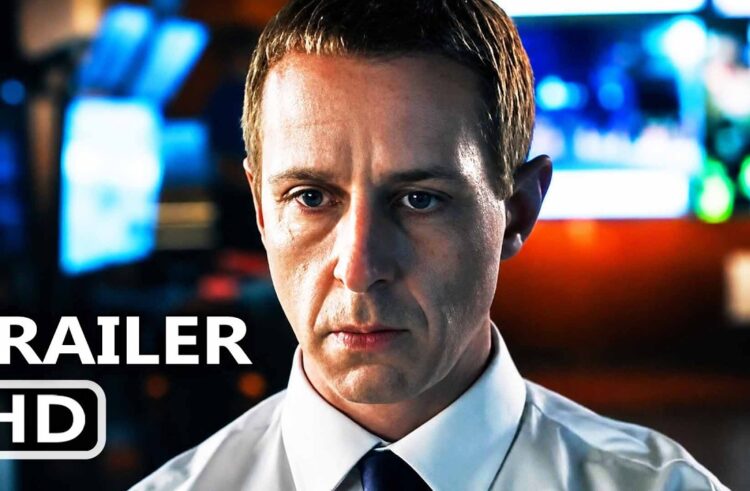

The villainy and the humanity behind the 2008 financial crisis get dissected in debut director J.C. Chandor’s gripping drama [amazon_link id="B006O2QNOU" target="_blank" ]Margin Call[/amazon_link]. The employees at an investment bank find themselves one step ahead on the eve of the crisis in this chilly looking but considerably warm look at morally complex characters. When Eric Dale (Stanley Tucci) is fired from the firm, he passes on information that could bring down the company to Peter Sullivan (Zachary Quinto). Sullivan is a low level employee that fills in the blanks and then takes the concerning information to his superiors. Over the course of one night, we follow the flow of information up the chain of the command in order to see how it will be dealt with in the fateful morning.
Refusing the temptation to give the characters detailed back stories and family lives; we see virtually nothing of these men (and one woman) out of the office. Setting the film over such a short time period strengthens the script and gives it a sense of urgency, confining the drama to the claustrophobic offices of the firm. It also shows the admirable dedication these men have to their careers. Their evening out is interrupted by a crisis and they are back in the office, spending a long and stressful night sorting it. Or at least sorting themselves out of it when the crisis threatens to have huge repercussions far beyond the company they work for.
Margin Call has so much more subtlety than any number of past films about bankers, bosses and businessmen. Forget the grandstanding, scenery chomping of Al Pacino, Alec Baldwin and Michael Douglas. There are no powerhouse speeches here, no alpha males ripping apart the underdogs and spitting out quotable dialogue. This is far more real and far more frightening. Beneath smiling exteriors lie coiled snakes, ready to strike.
Neither the script nor the performances create Gordon Gekko type monsters. Jeremy Irons’ CEO comes closest but even he has a mostly charming manner that reveals the practicalities of his sins with little hint of villainy. These are complex characters with clear motivations, more mundane than evil. Their moral dilemmas are relatable but if anything, director/writer Chandor lets them off too easily. Paul Bettany’s Will Emerson puts some of the blame back on ordinary people in one short speech, his complacency about the crisis and his attitude to ‘normal people’ is the one moment where audiences may feel hatred. But does he have a point? Chandor may think so and that could be cause for concern for some viewers, cause for cheer from an elite of others.
The majority of the film is colour graded to emphasise bleak blues. There is nothing but morbid blue and grey, as if a storm is brewing permanently above the city in which it is set. This is an environment that suffocates the viewer as it does the characters; only the shots from above New York hint at the power, domination and invincibility that these characters possess. Chandor exhibits few visual flourishes but it is a testament to the compelling script and handling of the potentially hideous characters that the style does not need to impress.
The workers of the firm are committed to the company; not their families and certainly not the ‘normal people’ Bettany’s character bitterly condemns. They are slaves to money like everyone else. The salary figures may be higher than most can imagine but these guys want to get paid because they have expensive lifestyles they feel entitled to. It is the lengths that they will go to keep their comfortable lives that leave the sourest aftertaste. Kevin Spacey’s Sam is the most morally compromised. The choices he makes in the film could have the biggest impact and there is never really much of a question as to what he will do. Surprisingly Sam remains sympathetic; no mean feat in a film about the men who cause a crisis of such magnitude.
Working with this ensemble must be a debut director’s dream. It might be a capitalist nightmare but the dream team of actors makes it far from sleep inducing. Kevin Spacey, Jeremy Irons, Zachary Quinto and Stanley Tucci all deliver the required power and restraint in their respective performances. It is hard to pick a standout but the elders command the film with Irons, Spacey and Tucci giving credible performances of real complexity. They are helped hugely by the gift of a script with Tucci particularly giving the film some emotional charge with his fired then sought after Eric Dale opening the story and then returning for a pivotal scene.
[amazon_link id="B005FITIGO" target="_blank" ]Margin Call[/amazon_link] shows the lure of this banker’s life and the inevitability of these people’s actions when huge sums of money are involved. They may work all through the night, breakfast in the office and family life discarded but the pay checks are at the forefront of everyone’s mind. Bettany’s Will Emerson is blasé about the money spent and wasted; a symbol for the decadent lifestyles of the creators of financial crises but also an idol for the men who work below him. These characters live on a ledge; they are the risk takers and gamblers that a capitalist society requires. It is also the story of a society where the greatest minds have sold out. Engineers and rocket scientists forget their callings and flock to the big money of banking. It is a requiem for a world in which engineers built bridges and rocket scientists built rockets. Money buys everything and everyone but means nothing and makes nothing.This is Wall Street for a new generation crippled by irresponsible acts of capitalist greed. Compelling, sad and refreshingly free from boo-hiss villainy in favour of surprising humanity given the circumstances, [amazon_link id="B006O2QNOU" target="_blank" ]Margin Call[/amazon_link] is a must-see for anyone who wants to find out how the money men made critical mistakes but managed to save themselves with barely a scratch.
Rating: 


Margin Call Extras:
The extras on the DVD are very limited. There are a couple of deleted scenes with optional commentaries. They are both worth a watch if you enjoyed the film and could conceivably have been left in without damaging the pace. The Making of Margin Call is a diverting five minutes featuring many of the main players but revealing very little. The moments with cast and crew featurette is actually just a blink and you’ll miss it montage of people turning towards camera and giving thumbs up signs. It’s not funny, entertaining or interesting as outtakes can occasionally be. However the director and producer offer a interesting, often insightful commentary.
Extras Rating: 


Filmoria UK Film Blog – Movie News, Reviews, Interviews, Casting, Cinema